
Blog
Tutorials, Guides and Updates from the EkLine team
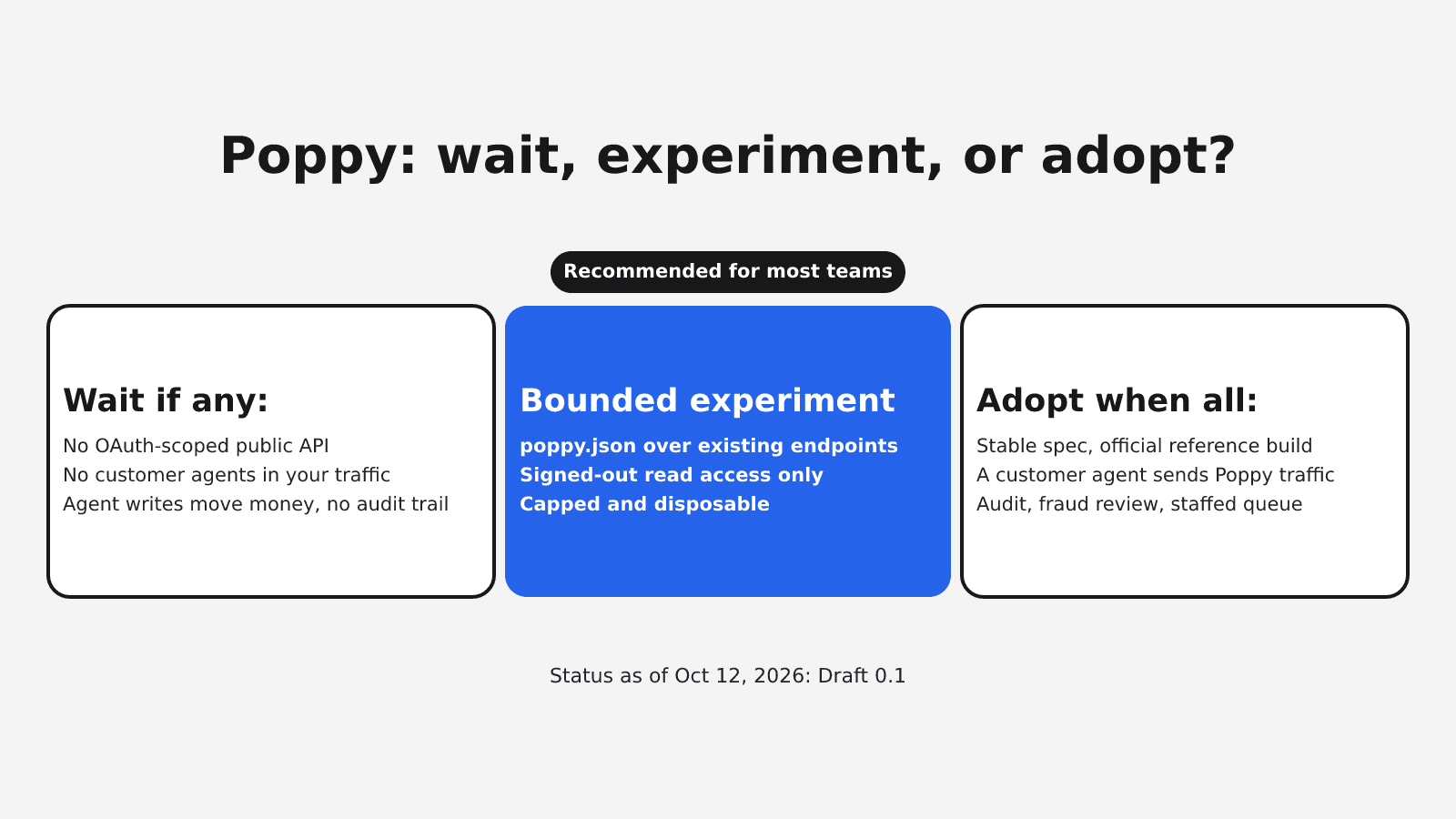
What Is Poppy? When Should Your API Support Customer Agents?
Poppy, the Personal Agent Protocol from Sierra and Meta, is a draft 0.1 consent and session layer for customers' AI agents. What it adds over OAuth and MCP, and whether your API should adopt, experiment, or wait.
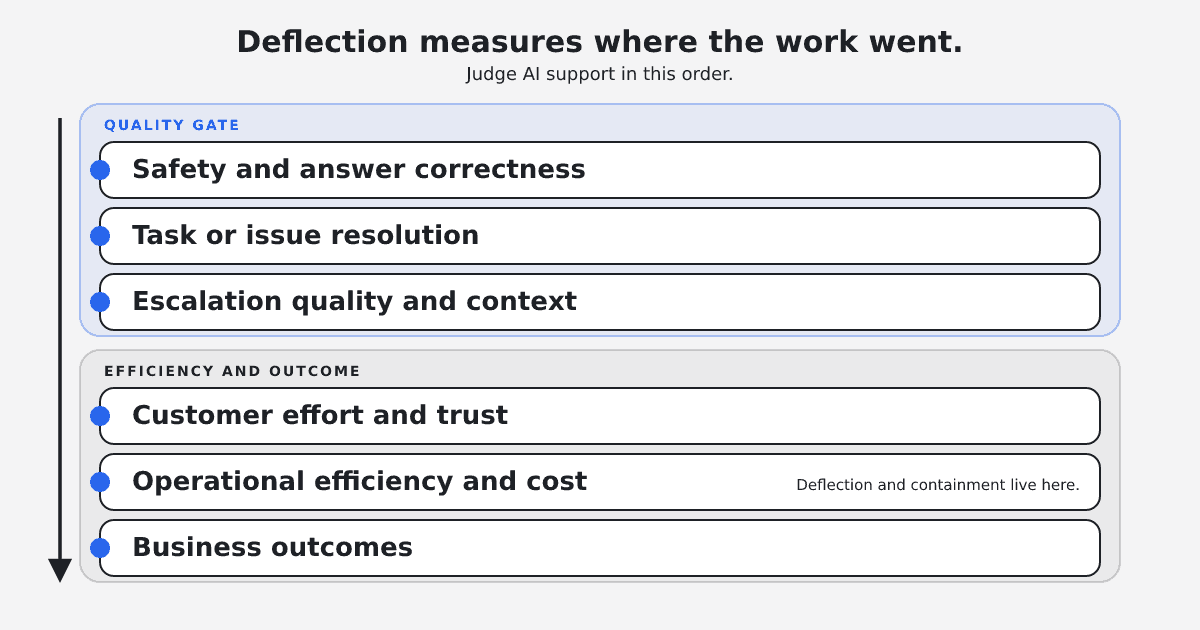
How do you evaluate AI support quality beyond deflection rate?
Deflection shows where the work went, not whether the answer was right. Metric definitions, a QA rubric, a scorecard, and a 30-day plan for judging AI support on correctness and outcomes.
How to keep Astro Starlight docs accurate after a green build
A green build tells you the site is well-formed: frontmatter matches its schema, internal links resolve once you add a validator, and API pages render from your spec. It cannot tell you whether a sentence in a how-to is still true, which takes a content check driven by what changed in the product.
How to keep Docusaurus docs in sync with your source code
Docusaurus keeps docs in sync with source code through the repository. It gives you three real sync tools: a monorepo, code blocks imported from files, and a build that fails on broken links.
How to keep Fumadocs docs in sync with your code
To keep Fumadocs docs in sync with a Next.js app and its API, let Fumadocs generate every page it can from code (OpenAPI reference pages and TypeScript props tables), then give the hand-written guides around those pages an update loop of their own. A generated page changes when its source changes.
How to keep GitBook in sync with GitHub, and accurate
To keep GitBook in sync with GitHub without losing edits, and keep the content accurate, turn on Git Sync, choose the first sync direction on purpose, and edit each page in one place while a change is open. That keeps the editor and your repository identical.
How to keep Mintlify docs up to date when code changes
Mintlify already automates the structural half of keeping docs current: it builds API reference pages from your OpenAPI spec, checks links, validates builds, syncs with GitHub, and can draft pull requests when code merges. The half that slips is the prose and the examples whose facts live in other repositories, tickets, and threads.
How to keep ReadMe docs in sync with your code and OpenAPI spec
When you re-sync an OpenAPI file, ReadMe updates the spec-derived parts of each API page in place and leaves the Markdown you wrote alone. Your guides, recipes, and examples are that Markdown, so they need an update path of their own.
How to keep VitePress docs in sync with your code
To keep VitePress docs in sync with your code, import every code sample from your source files and leave dead-link checking on, so the build fails when a linked page goes missing and, on the VitePress 2.0 alpha line, when an imported file goes missing. Then review the sentences next to those samples on each release, because no VitePress setting checks that prose against the code.
Material for MkDocs maintenance mode: keep your docs accurate now
As of October 8, 2026, you can stay on MkDocs 1.x for now, wait for Zensical, or move. None of those choices makes a stale page true, so audit and fix accuracy first: stale pages migrate with you, and the fixes count under any choice.
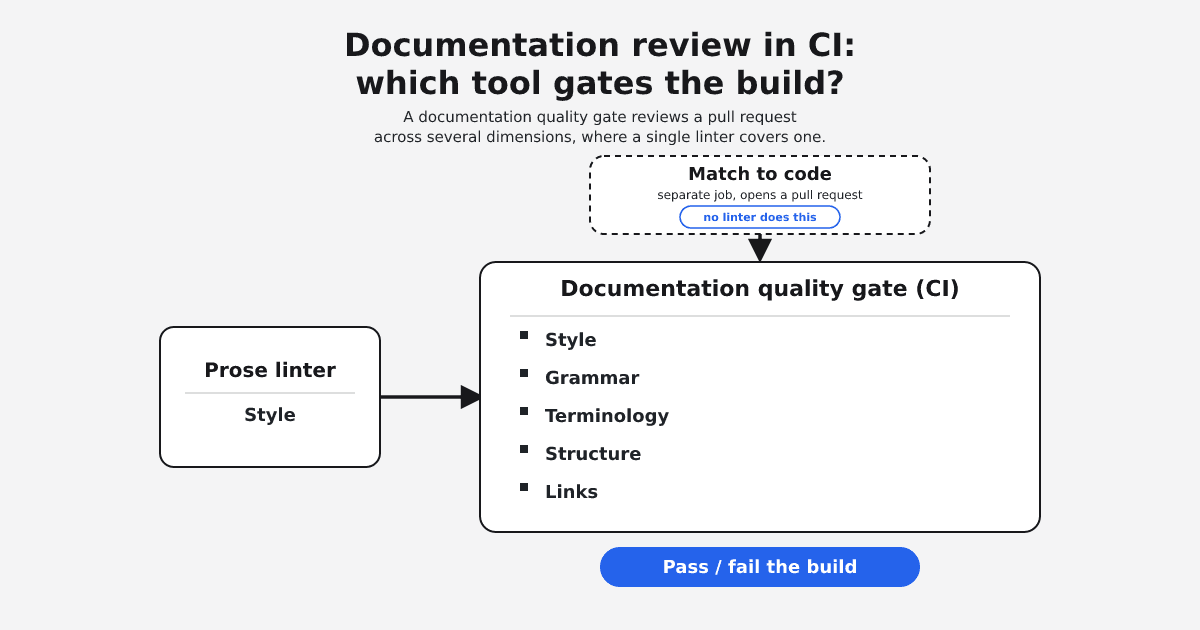
Documentation review in CI: a quality gate for docs
How to gate documentation in CI the way you gate code, and how Vale, markdownlint, lychee, and six other doc linters compare with EkLine on what each checks, what it misses, and how it is set up.
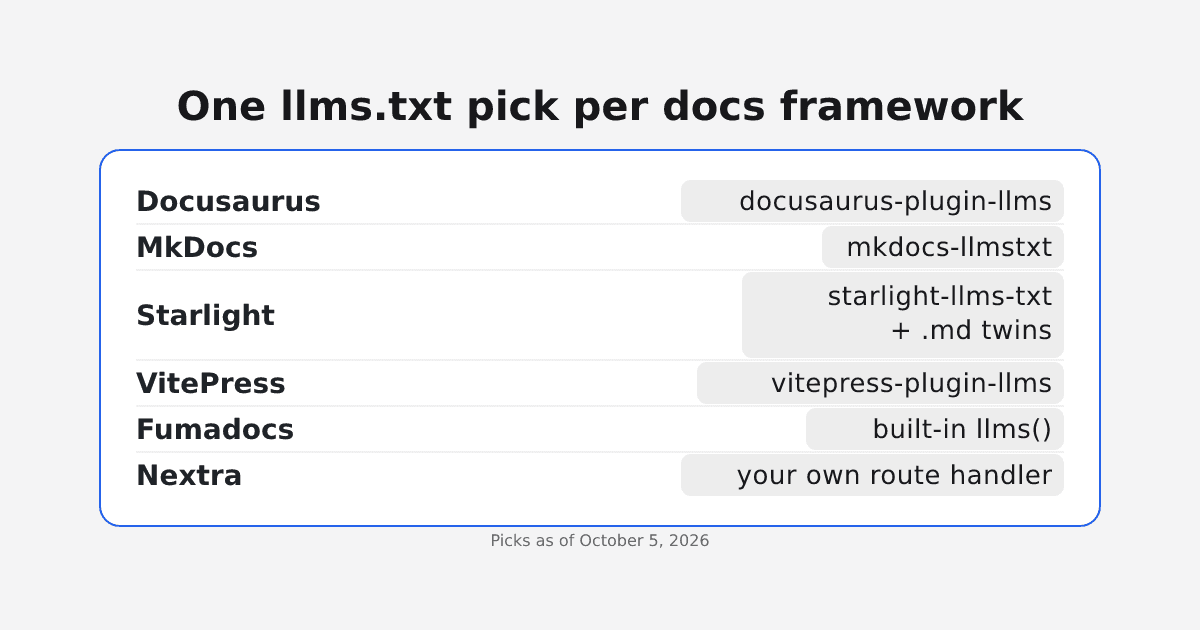
The right llms.txt plugin for each docs framework, and which to skip
One llms.txt pick each for Docusaurus, MkDocs, Starlight, VitePress, Fumadocs, and Nextra, judged on GitHub stars, recent releases, llms.txt v2 accuracy, and extensibility, with the contenders we rejected and why.
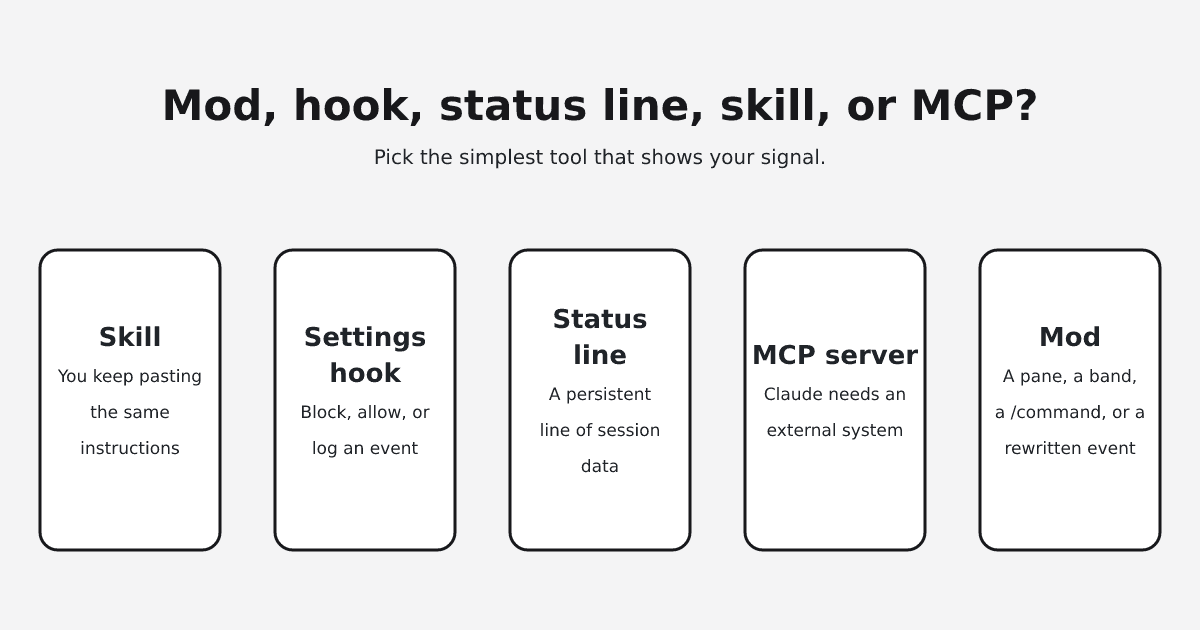
Claude Code mods: what they are and when to build one
Claude Code mods are small TypeScript or JavaScript plugins that draw panes, guard tool calls, and add commands inside Claude Code. What they are, why hooks were not enough, creative first mods, and when to skip one.
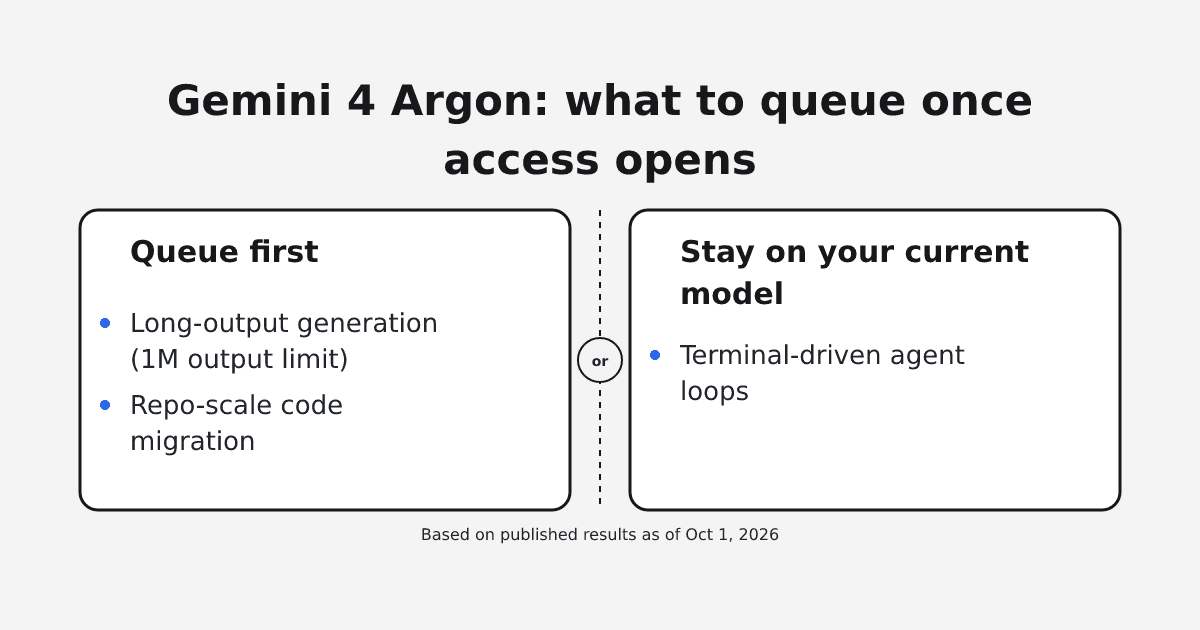
Gemini 4 Argon: What It Does and Where It Falls Short
Google's Gemini 4 Argon leads its own benchmark table but trails on terminal agents and independent scoring, and you cannot call it yet. What it does, where it falls short, and which workloads to queue.
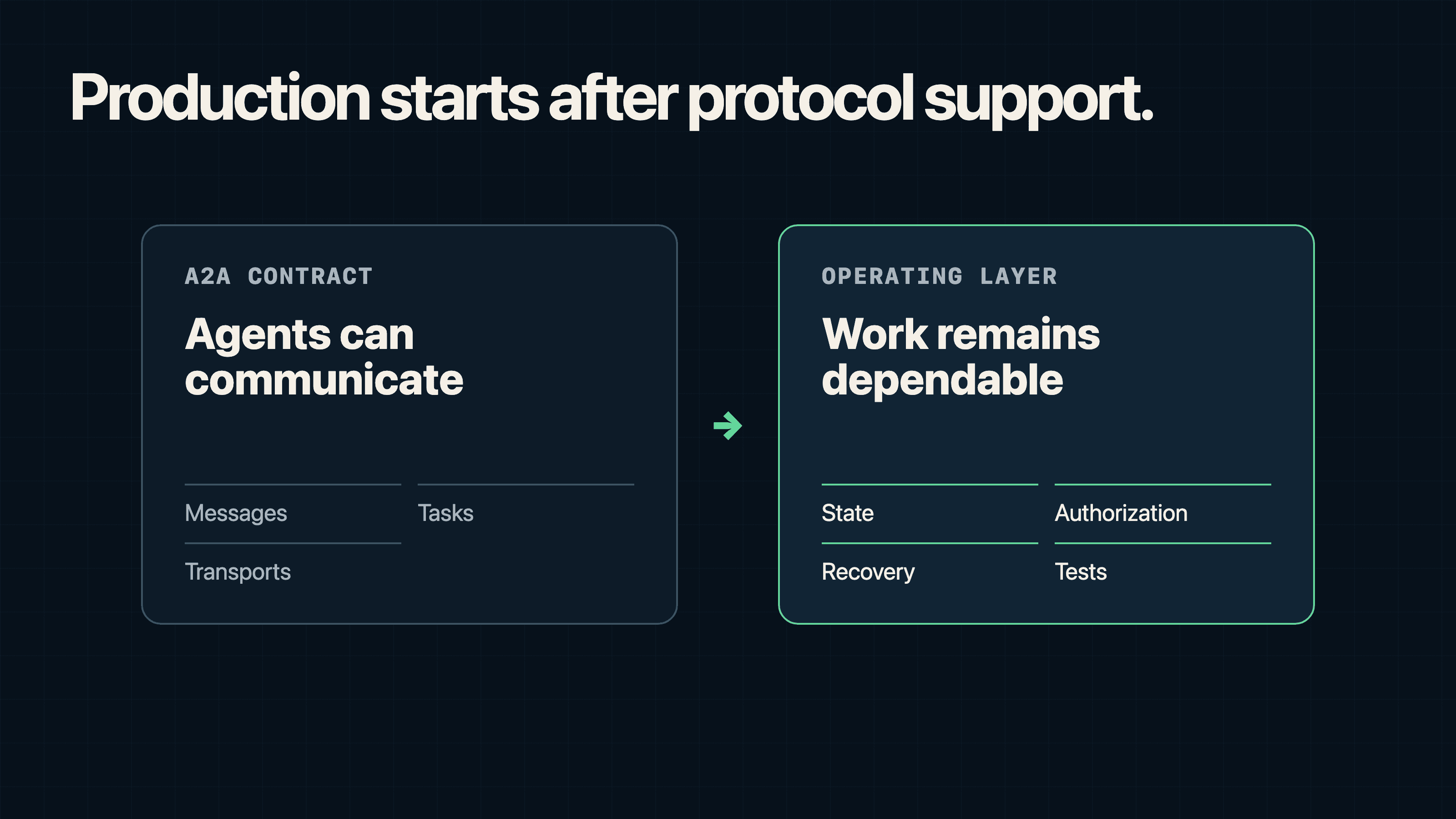
A2A Production Readiness: What It Takes Beyond Protocol Support
A2A standardizes agent communication. Production systems still need durable tasks, retry safety, authorization, recovery, and real interoperability tests.
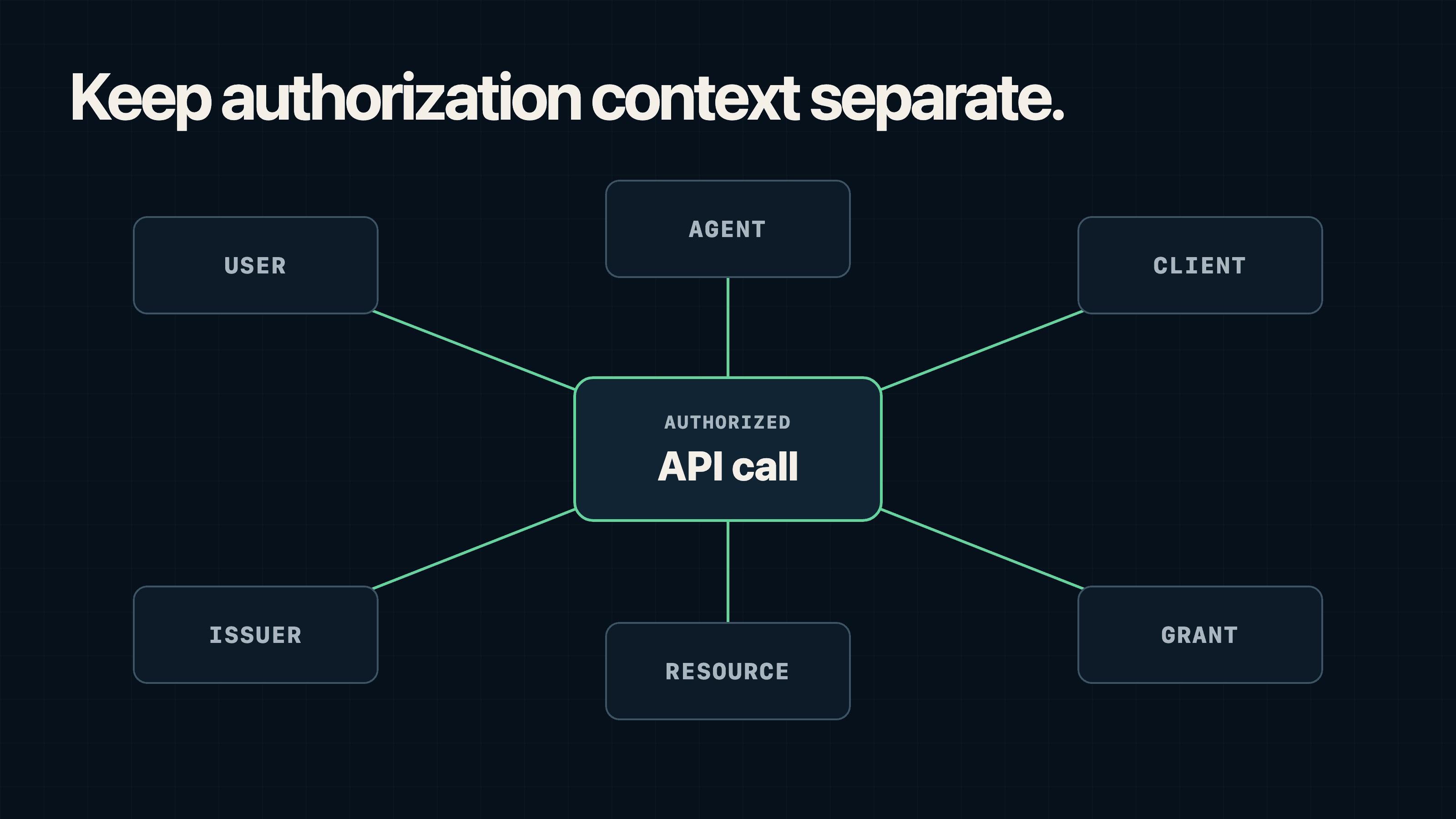
OAuth for AI Agents: Why General-Purpose Agents Strain the Integration Model
General-purpose AI agents turn OAuth into a multi-identity, multi-provider state problem. Here is what integration platforms should change.
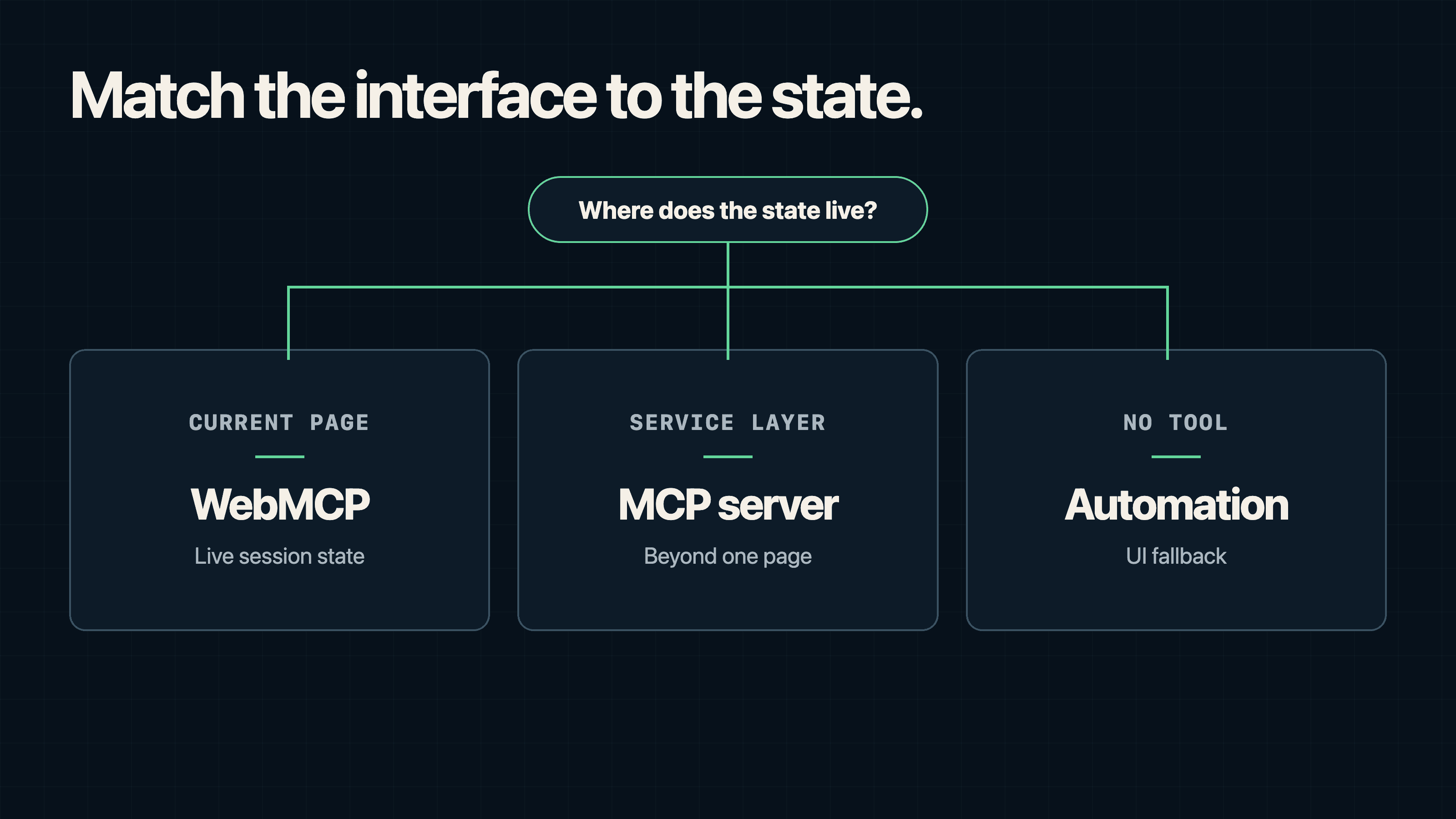
What Is WebMCP? When to Expose Browser Tools to AI Agents
WebMCP lets a web app expose structured actions to browser agents. This guide compares it with browser automation and MCP servers.
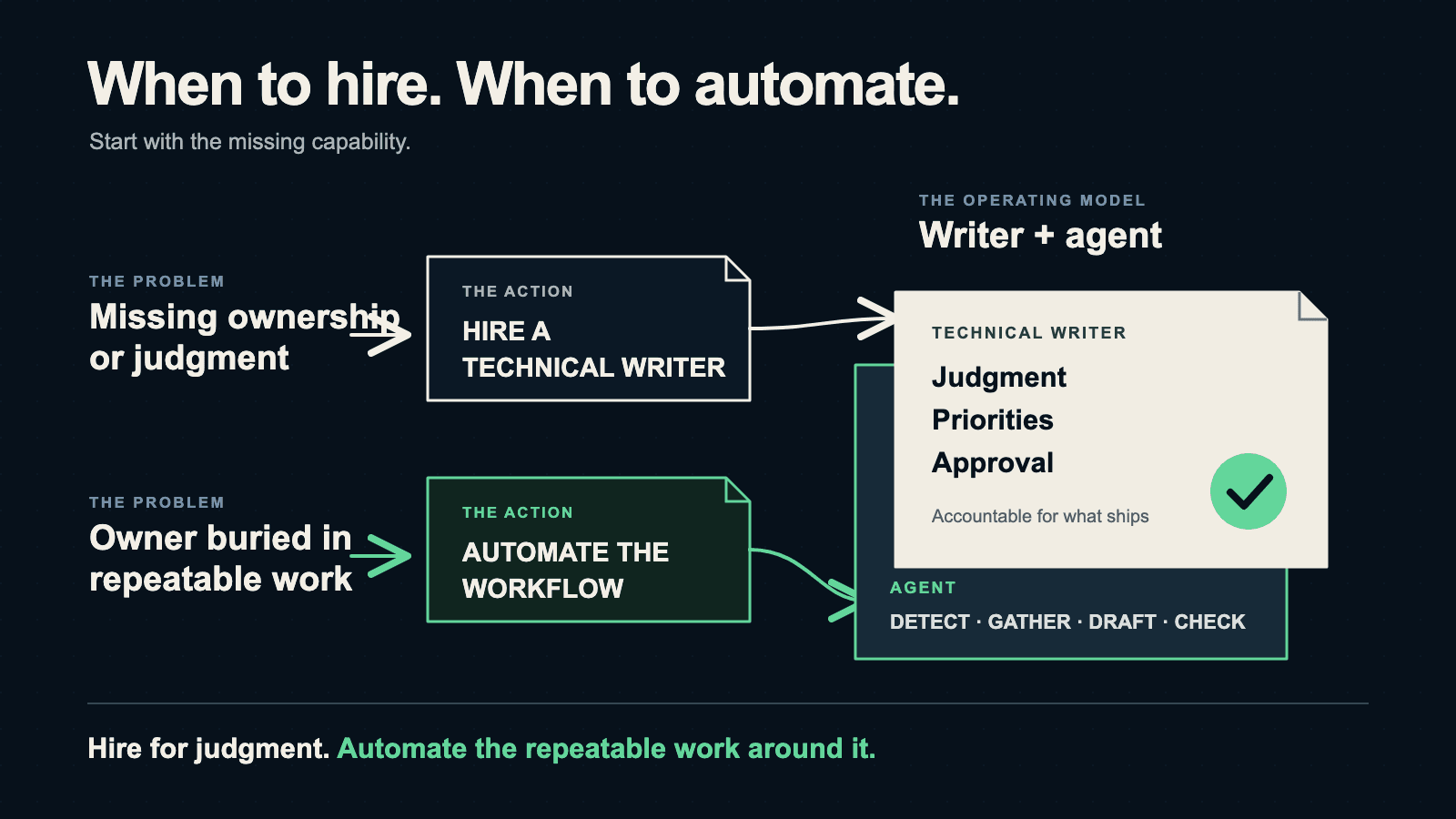
When to Hire a Technical Writer, When to Automate, and How They Work Together
Decide whether your documentation problem needs a technical writer, automation around an existing owner, or both.
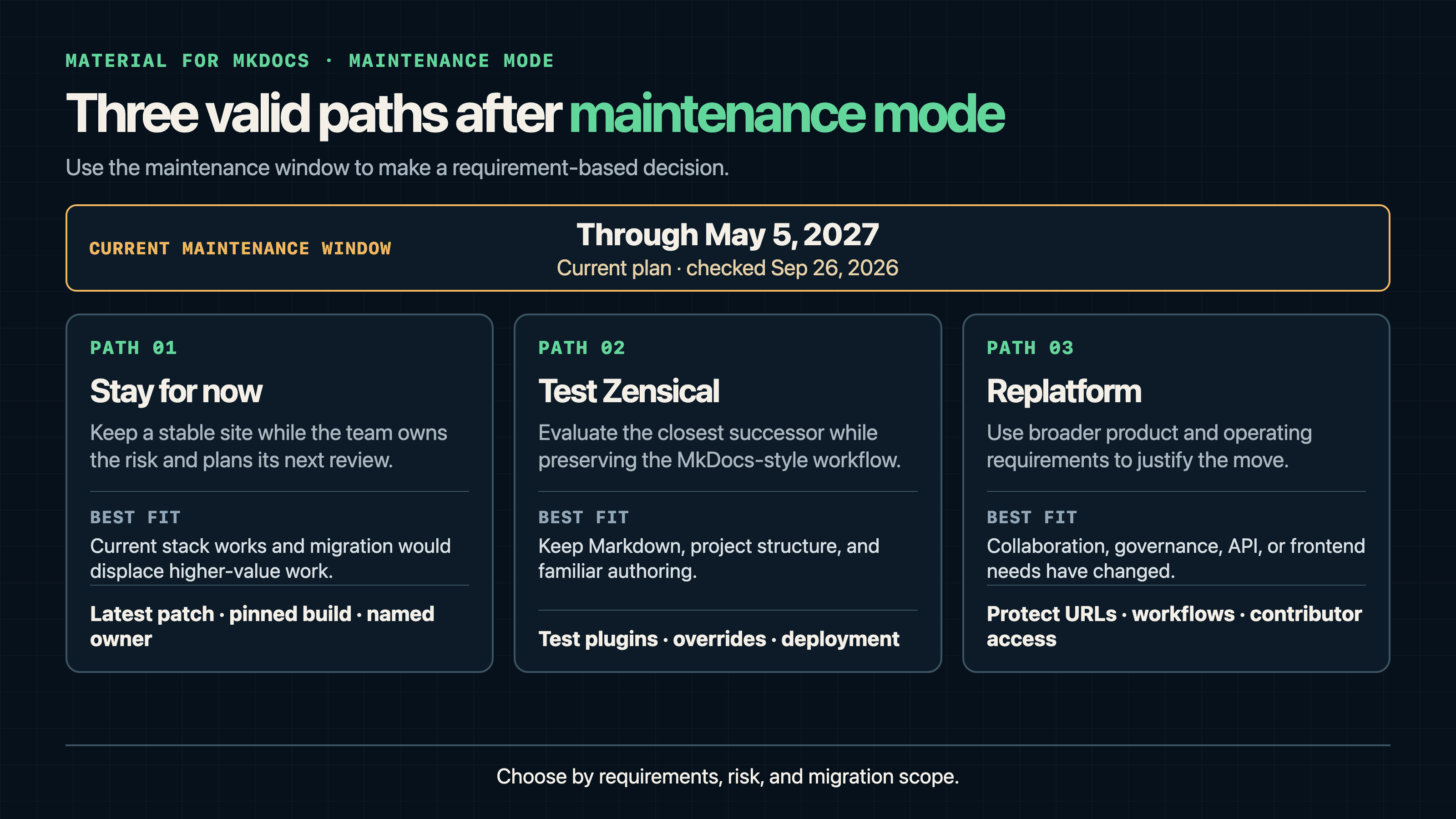
Material for MkDocs Is in Maintenance Mode: What It Means for Your Docs
A practical decision guide for staying on Material for MkDocs, testing Zensical, or moving to another documentation stack after maintenance mode.
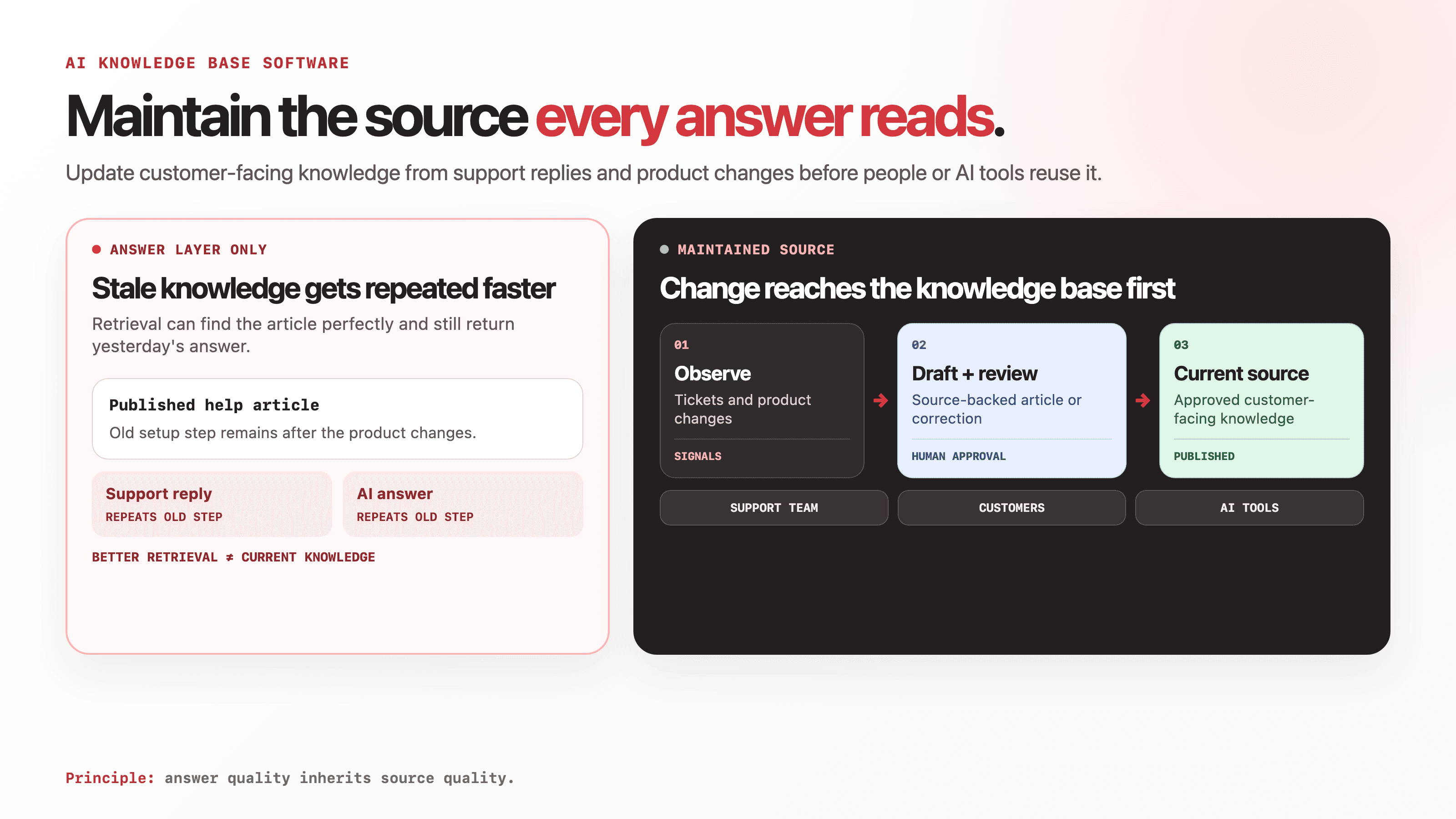
AI Knowledge Base Software for Customer-Facing Docs
Learn how to evaluate AI knowledge base software that finds missing answers, fixes stale customer-facing docs, preserves review control, and serves current product knowledge to AI tools.
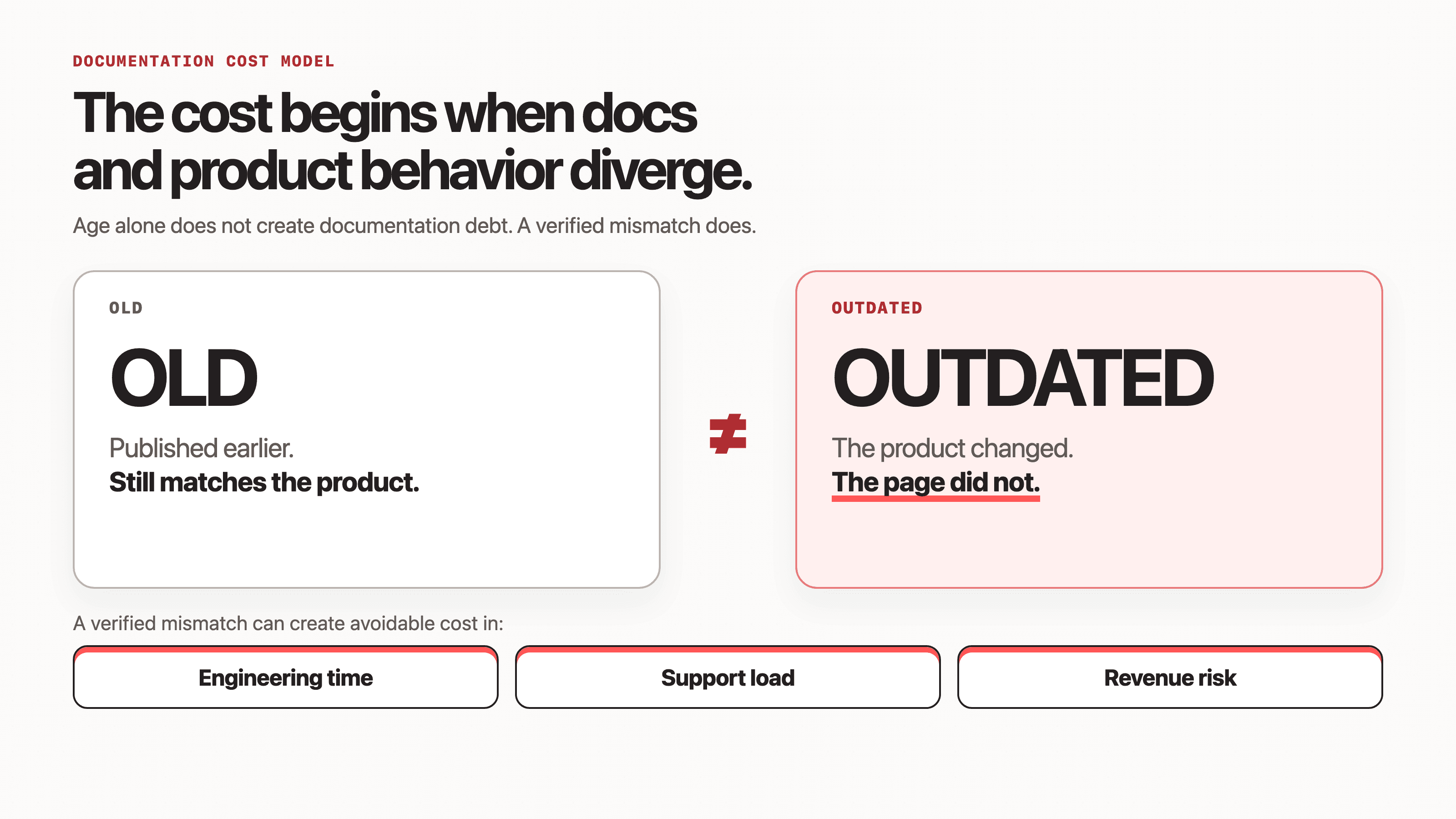
The cost of outdated documentation: how to estimate engineering time, support load and revenue risk
Estimate outdated documentation cost across engineering interruptions, support workload, remediation debt and revenue risk with a practical 30-day model.
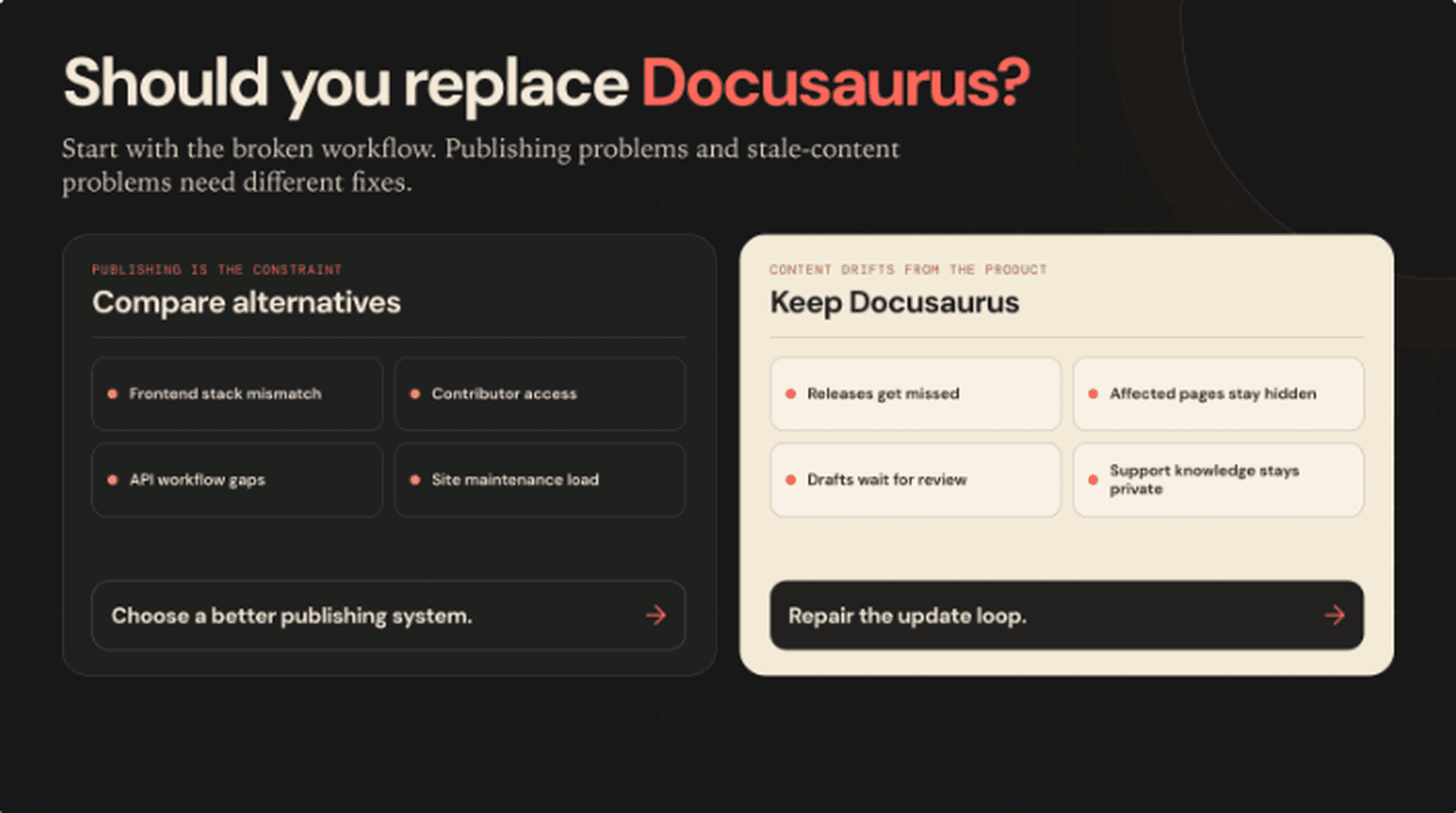
10 Docusaurus alternatives in 2026: pricing, fit, and tradeoffs
Compare ten Docusaurus alternatives by pricing, framework, API support, contributor workflow, and operating cost. Includes when staying with Docusaurus is the better choice.
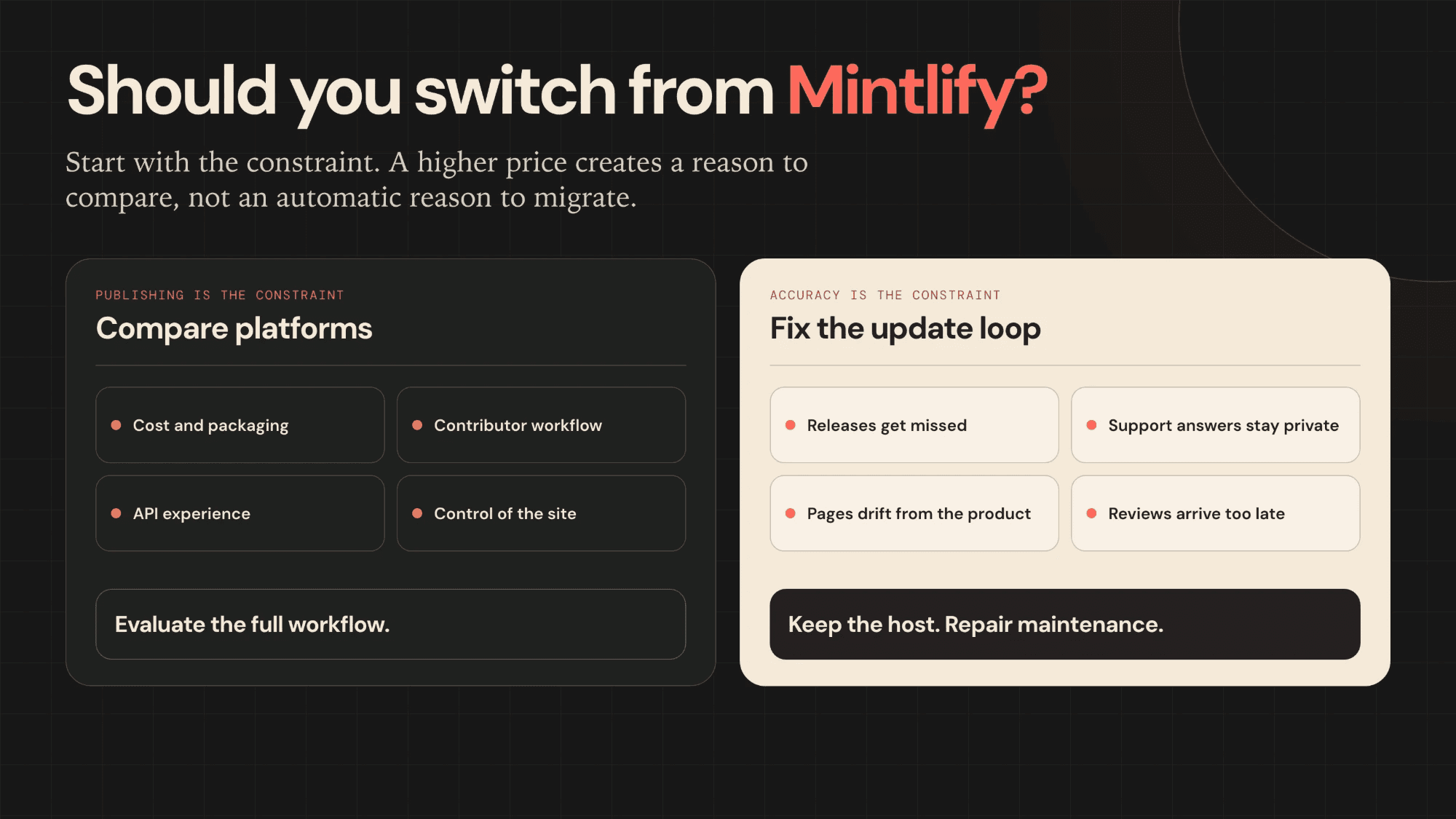
10 Mintlify alternatives in 2026: pricing, fit, and tradeoffs
Compare ten Mintlify alternatives by current pricing, workflow, API support, and team fit. Includes Mintlify's $450/month Pro tier and when staying is the better choice.
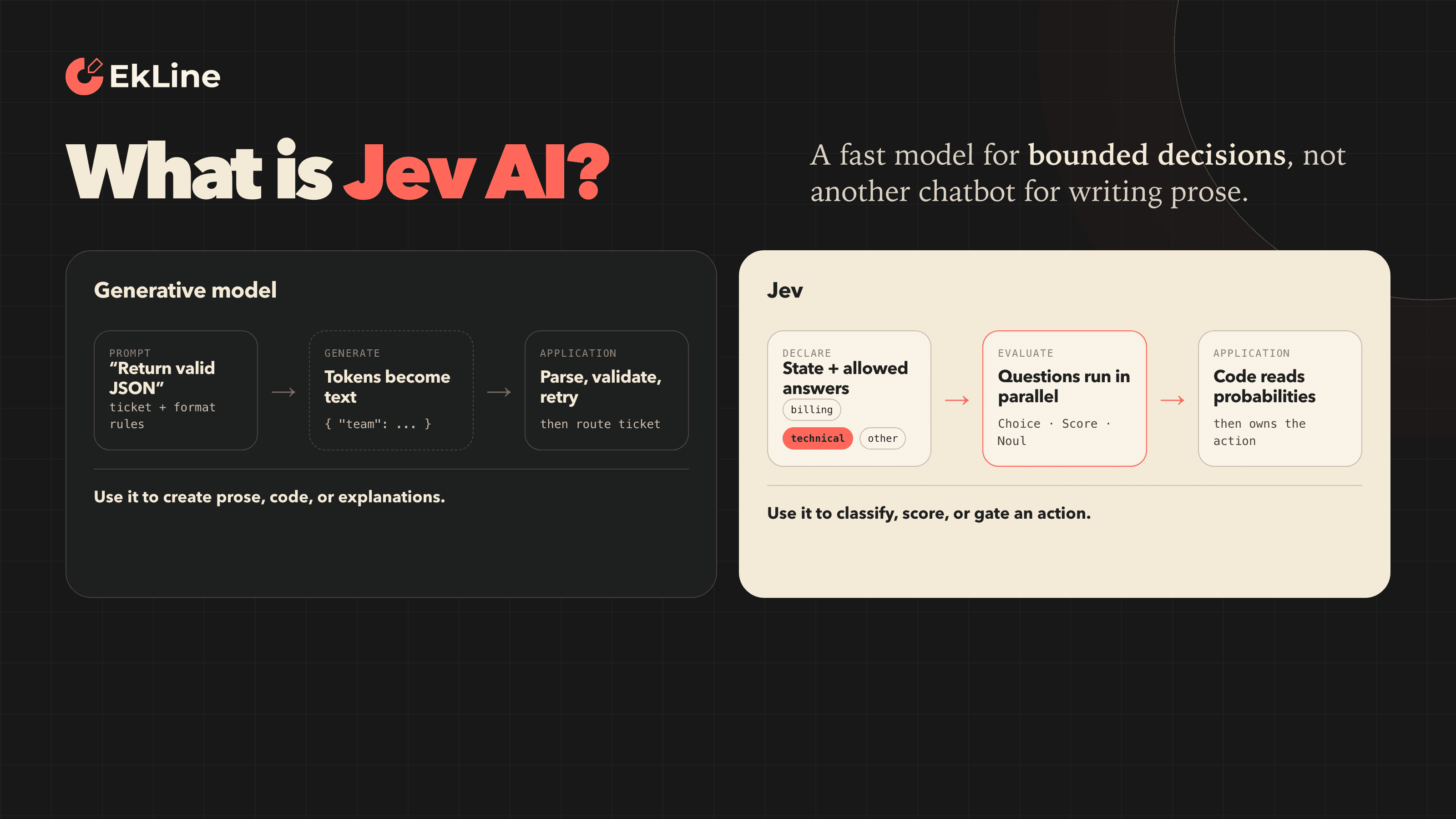
What Is Jev AI? How It Works, Why It Is Getting Hype, and Real Use Cases
Jev is TypeSafe AI's fast decision model. Learn how Choice, Score, and Noul work, why developers care, its limits, and practical use cases.
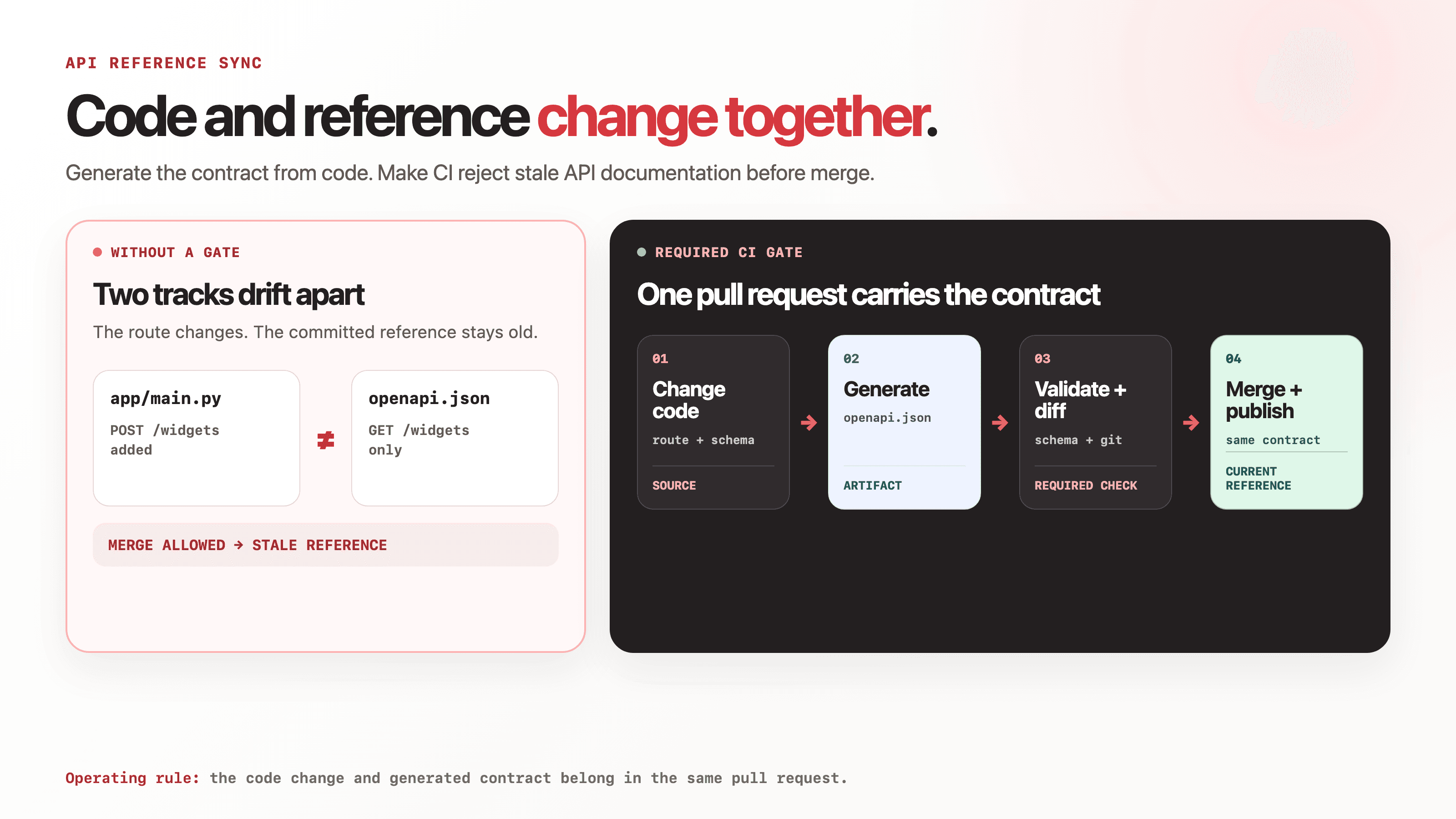
How to keep your API reference in sync with code
Generate your OpenAPI document from code, validate it in GitHub Actions, and fail pull requests when the committed API reference is stale.
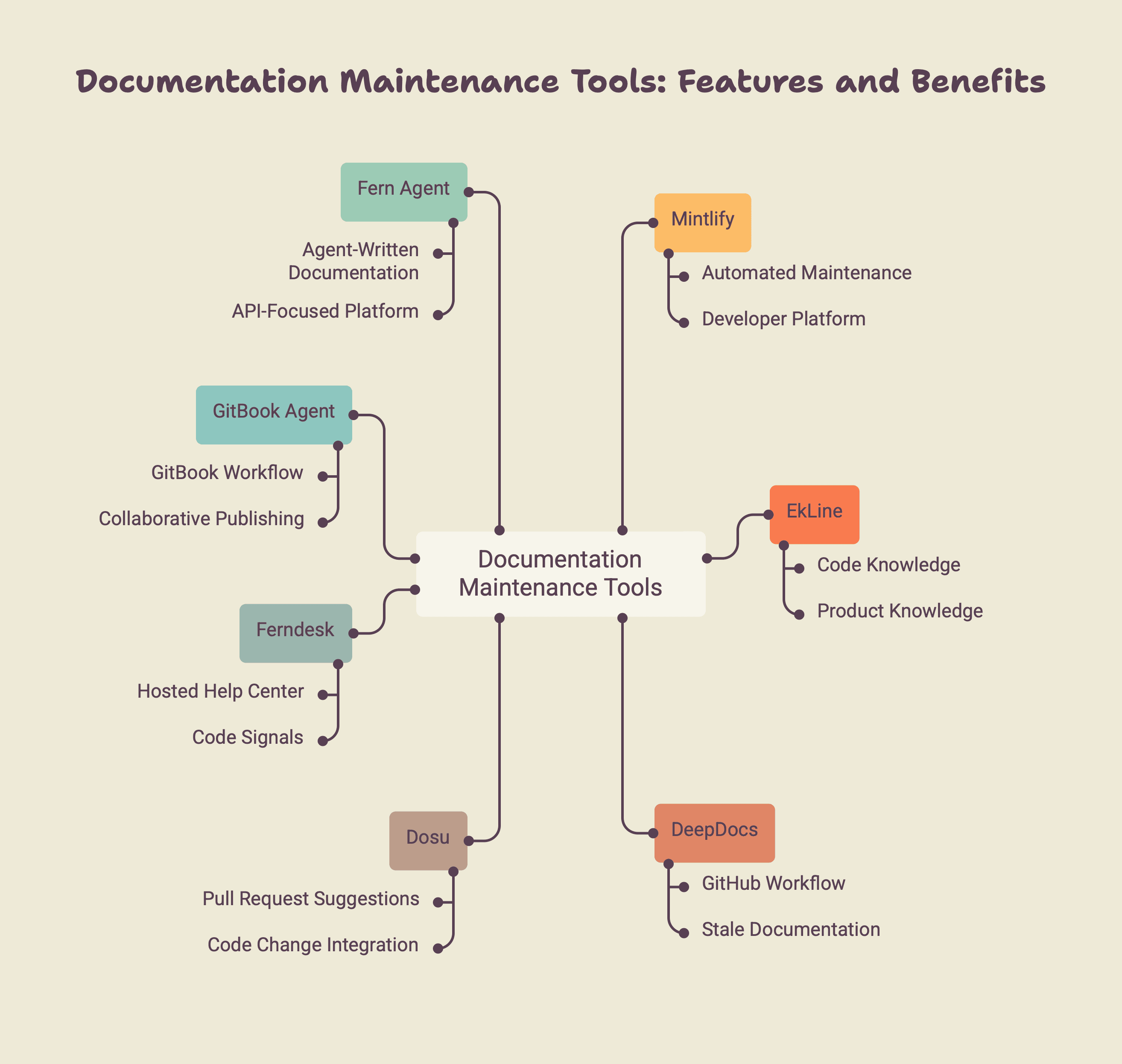
Tools That Automatically Update Documentation When Code Changes in 2026
Compare seven tools that detect code or product changes, find affected documentation, draft updates, and route those changes through review.
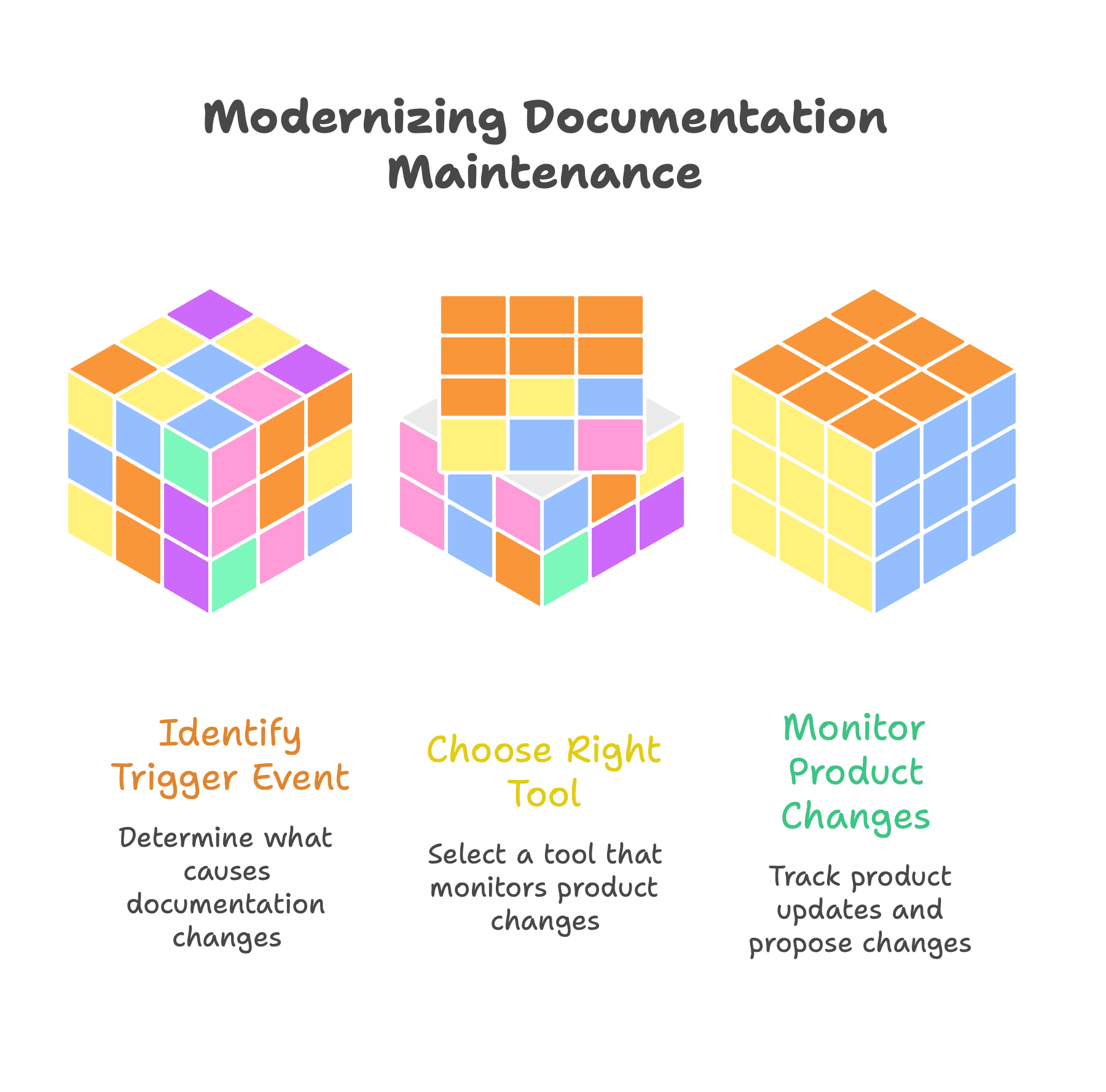
Documentation Maintenance Tools in 2026: A Buyer's Guide
Compare seven documentation maintenance tools for 2026 by how each detects outdated content, which sources it uses, and how proposed updates are reviewed and approved.
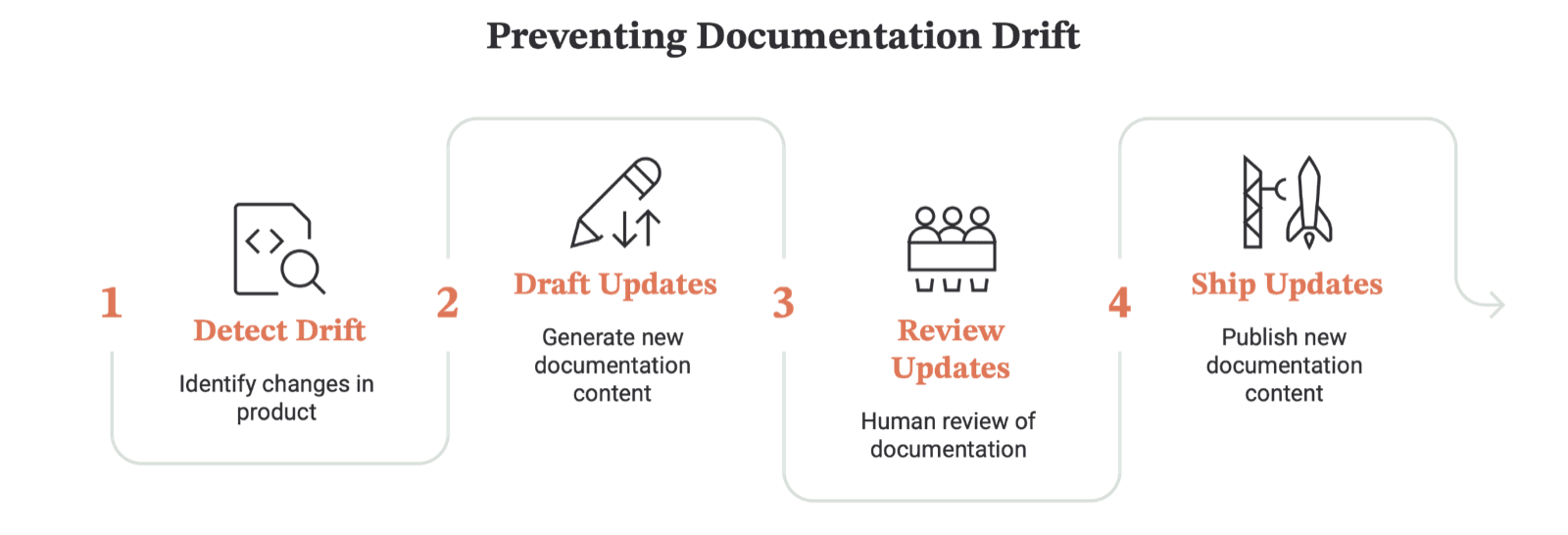
Documentation drift: what it is, how to detect it, and how to stop it (2026)
Documentation drift makes product pages, API guides, and AI answers stale. Learn how to detect, measure, and prevent it with a repeatable workflow.
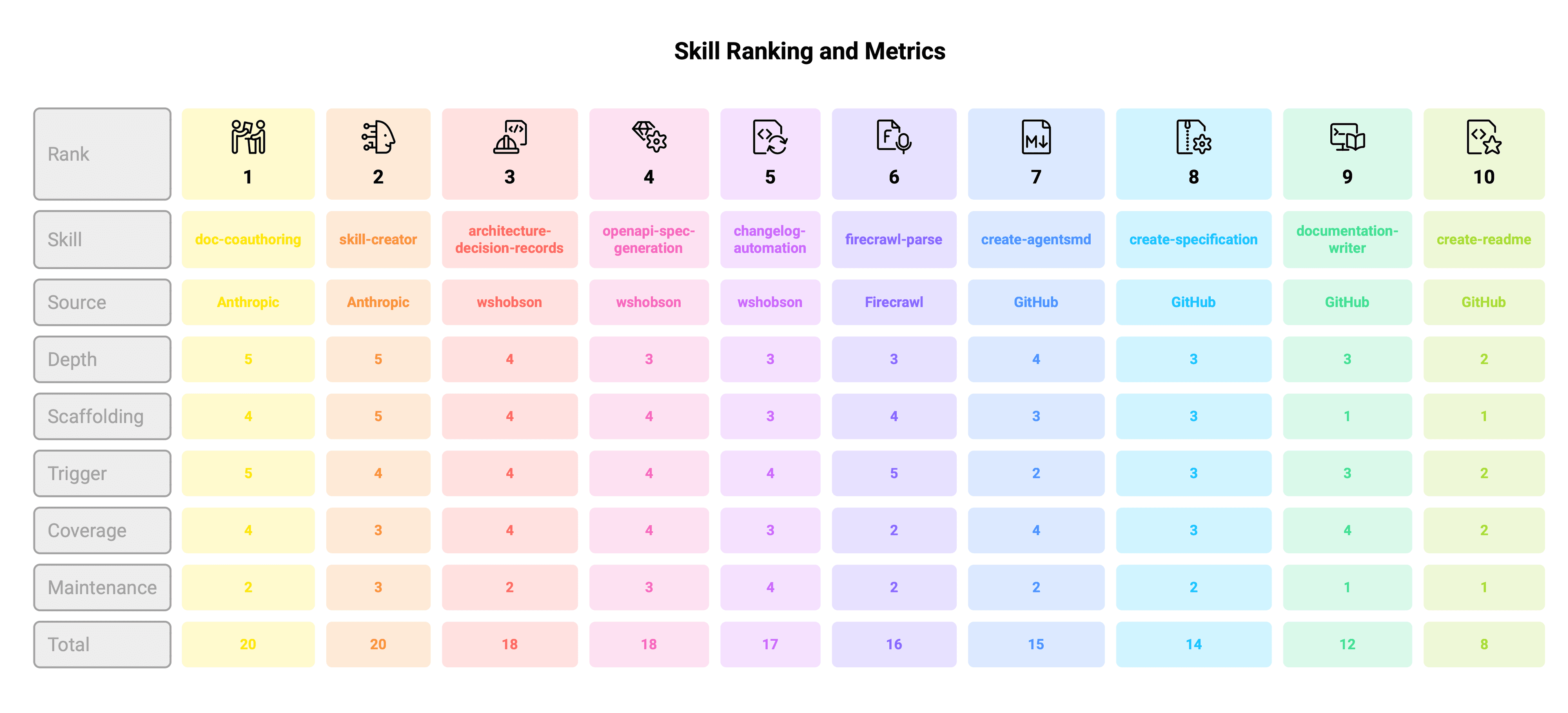
The 10 best Claude skills for documentation, ranked
I read the source of 10 Claude skills for docs, API docs, and SDK references, scored them on a five part rubric, and picked a winner: Anthropic's doc-coauthoring.
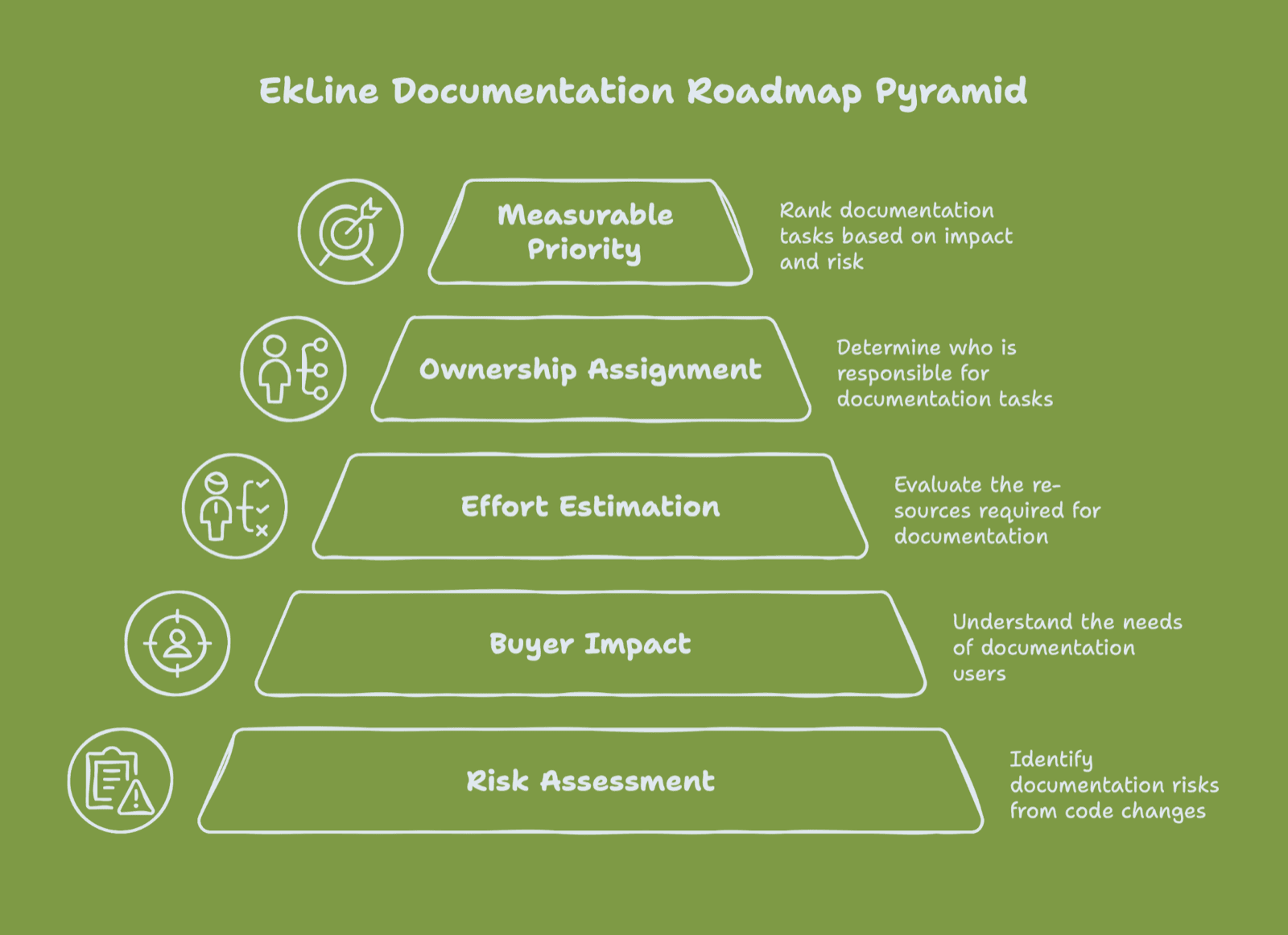
EkLine Quarterly Documentation Roadmap: How to Turn Reports Into Prioritized Content Work
Turn EkLine reports into a quarterly documentation roadmap using risk, buyer impact, effort, ownership, and measurable priority criteria.
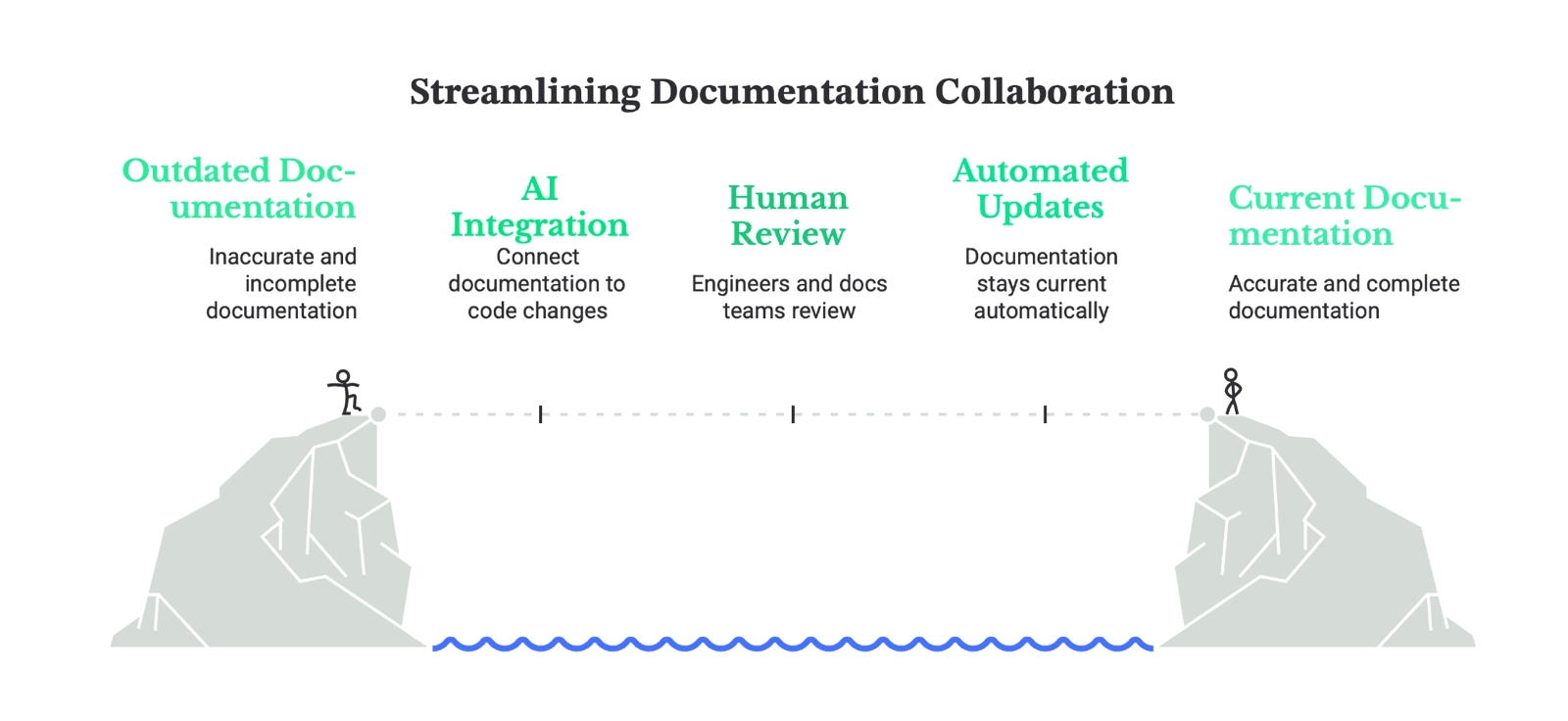
Docs and Engineering Collaboration With AI: Roles, Review Gates, and Documentation Workflows
Define how docs teams and engineers collaborate with AI documentation tools across source ownership, drafting, review, governance, and metrics.
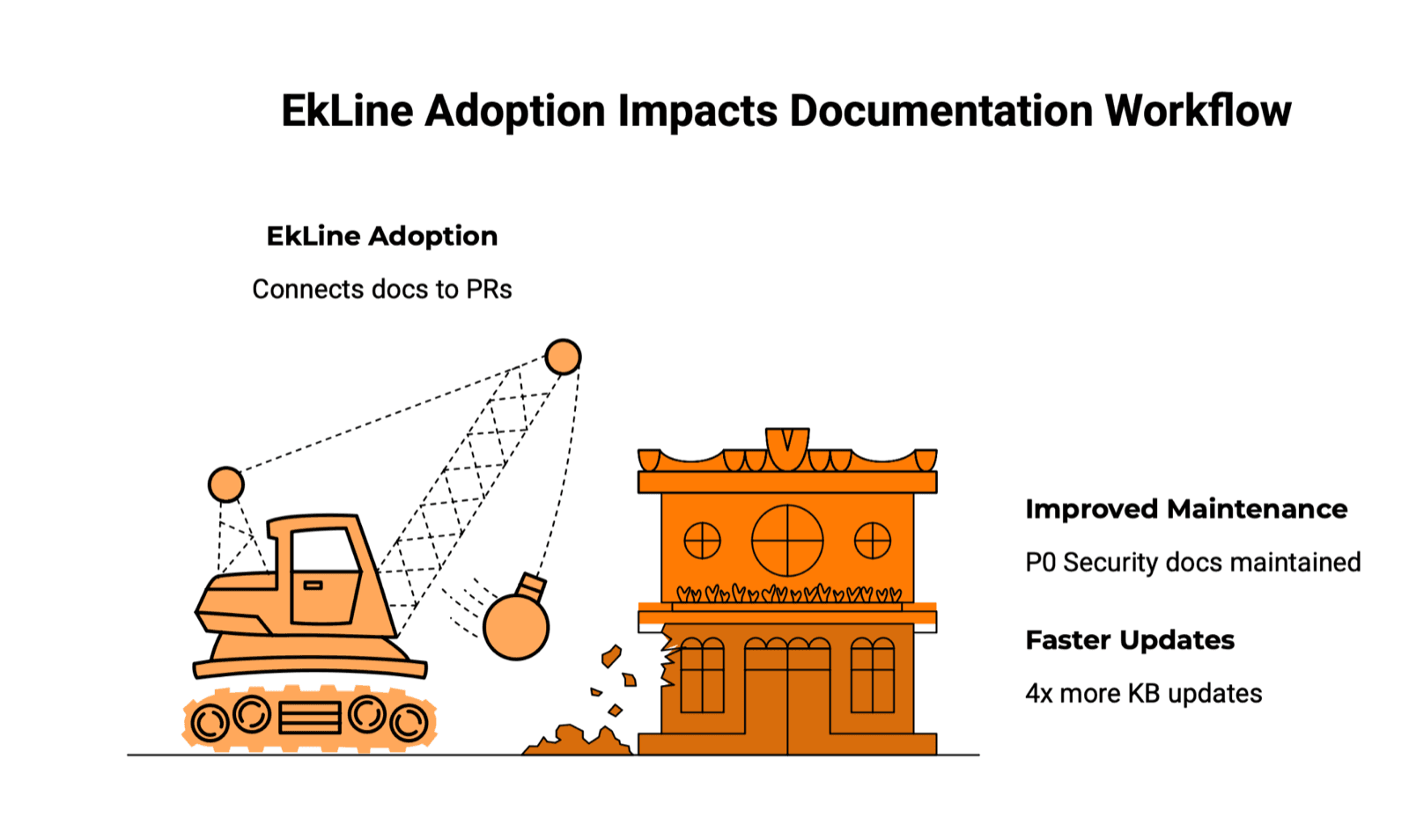
When Not to Use EkLine: Poor-Fit Workflows, Missing Prerequisites, and Better Alternatives
Identify when not to use EkLine, which prerequisites are missing, what poor-fit workflows look like, and which alternatives are more appropriate.
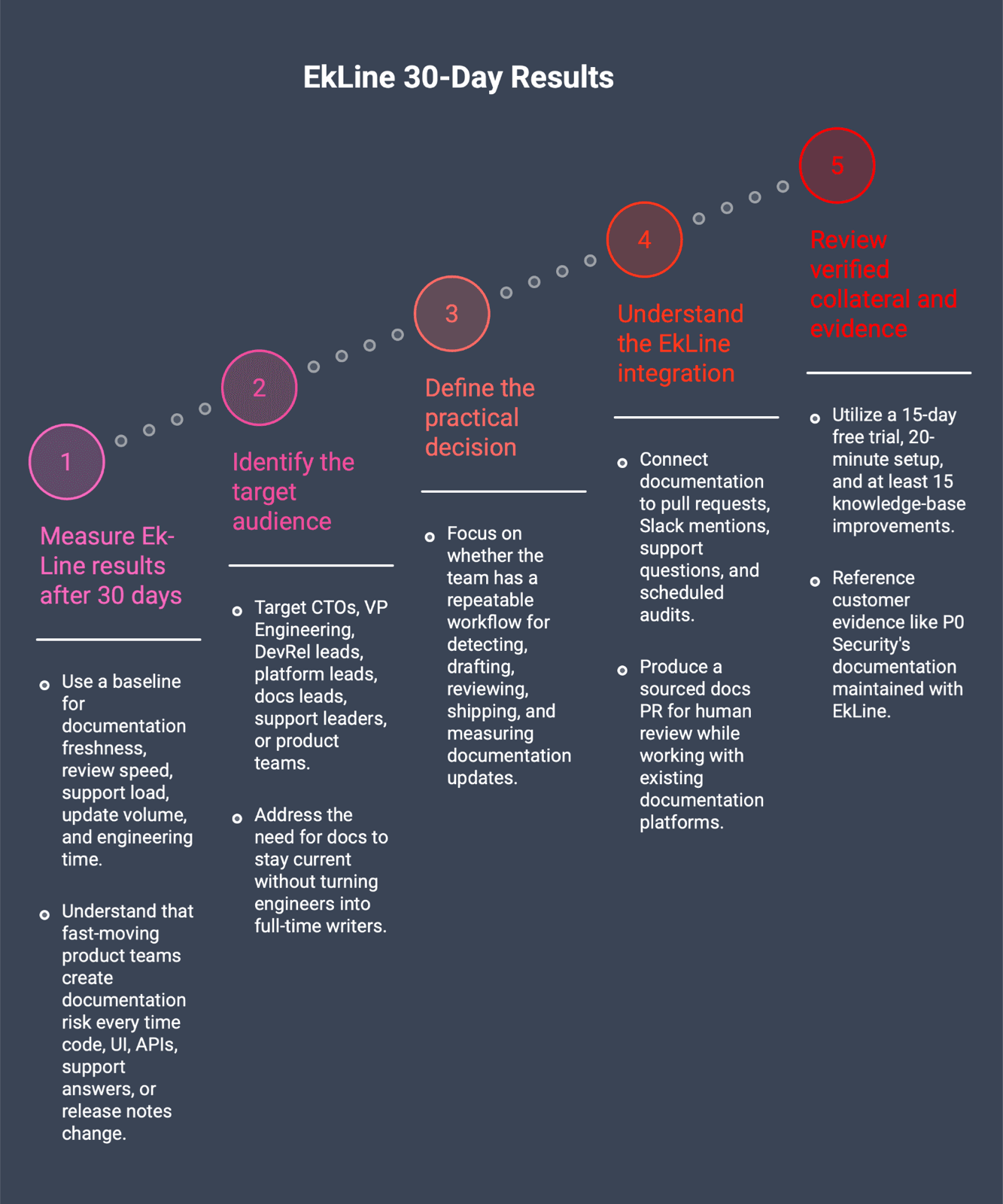
EkLine Results After 30 Days: Metrics for Documentation Quality, Speed, and Engineering Time
Measure EkLine results after 30 days using a baseline for documentation freshness, review speed, support load, update volume, and engineering time.
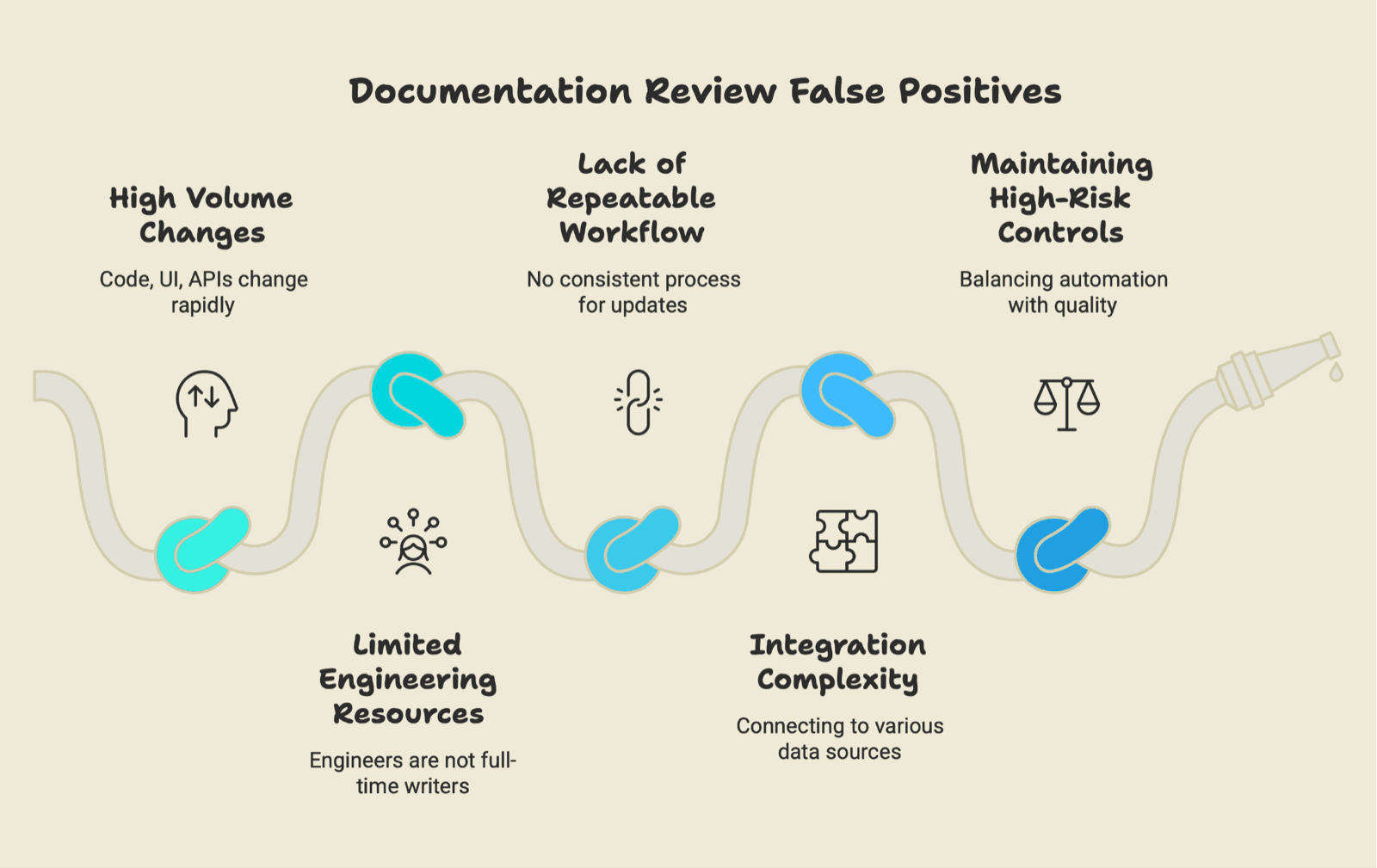
Documentation Review False Positives: How to Tune Rules Without Weakening Quality
Reduce documentation review false positives by tuning rules, triaging findings, measuring precision, and preserving high-risk quality controls.
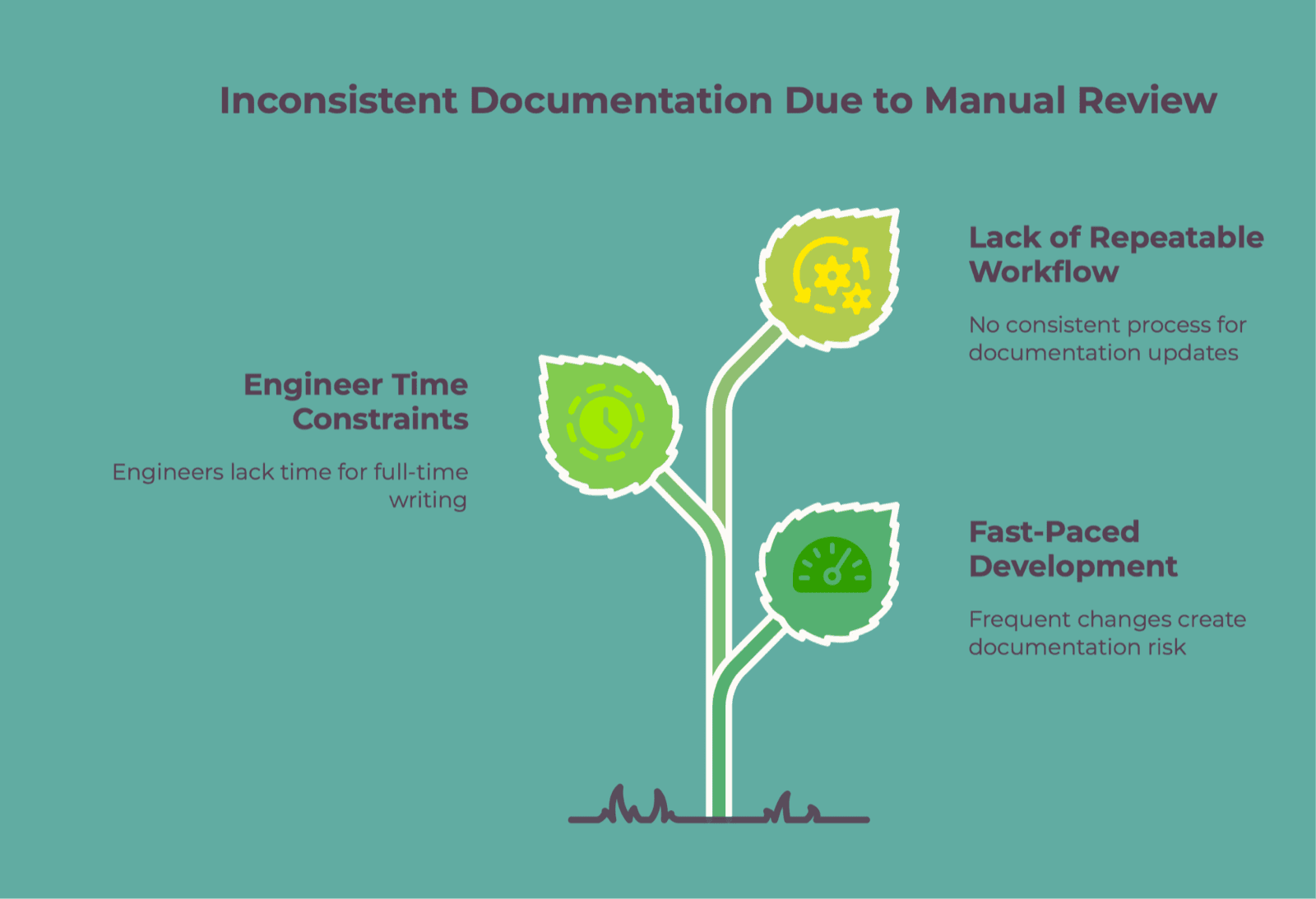
Automated Documentation Review Rollout: How to Introduce It Without Blocking Engineers
Roll out automated documentation review to engineers with clear rules, staged repositories, false-positive controls, ownership, and adoption metrics.
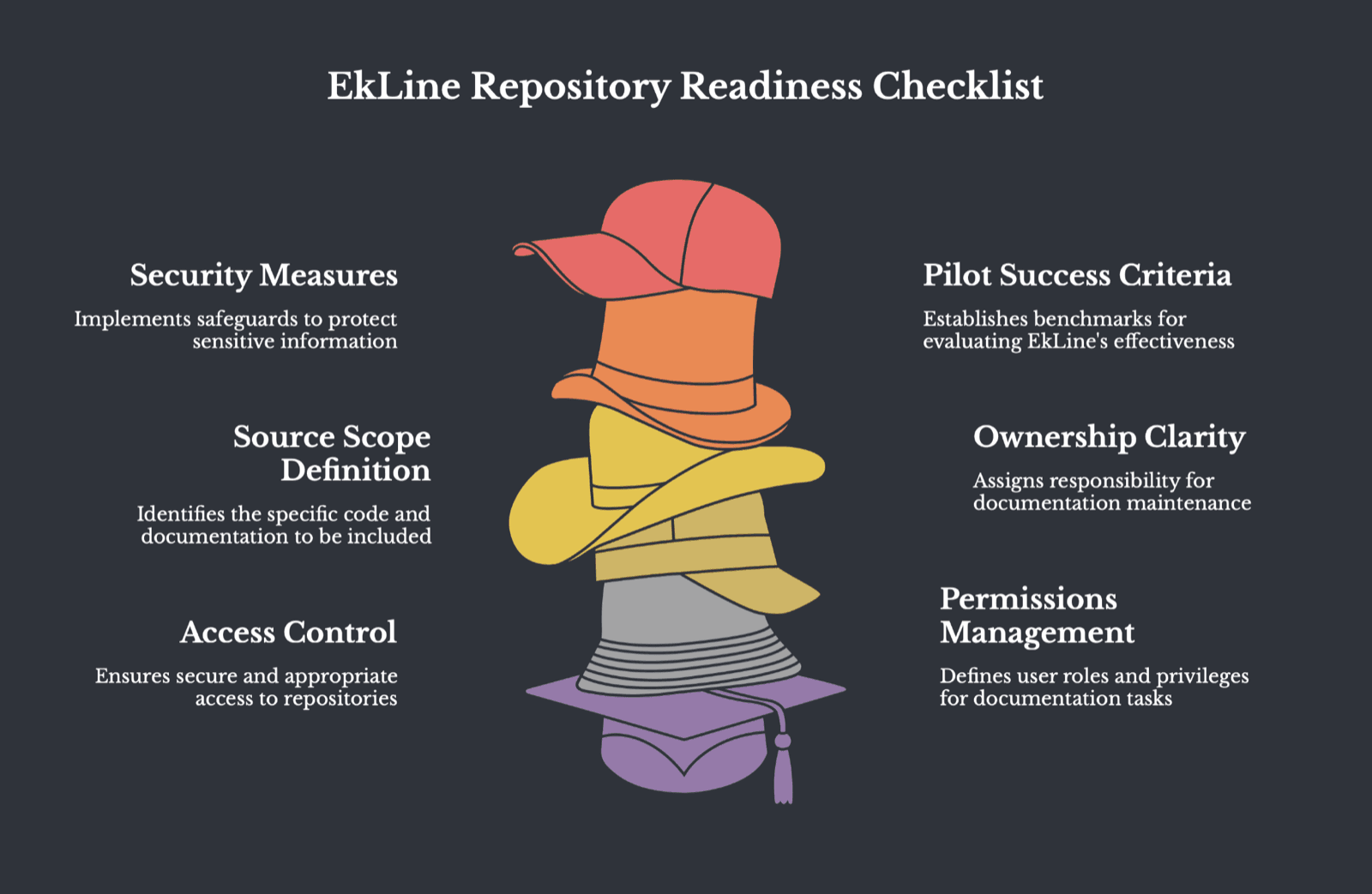
EkLine Repository Readiness Checklist: What to Review Before Connecting GitHub or GitLab
Use this EkLine repository readiness checklist to review access, permissions, source scope, ownership, security, and pilot success criteria.
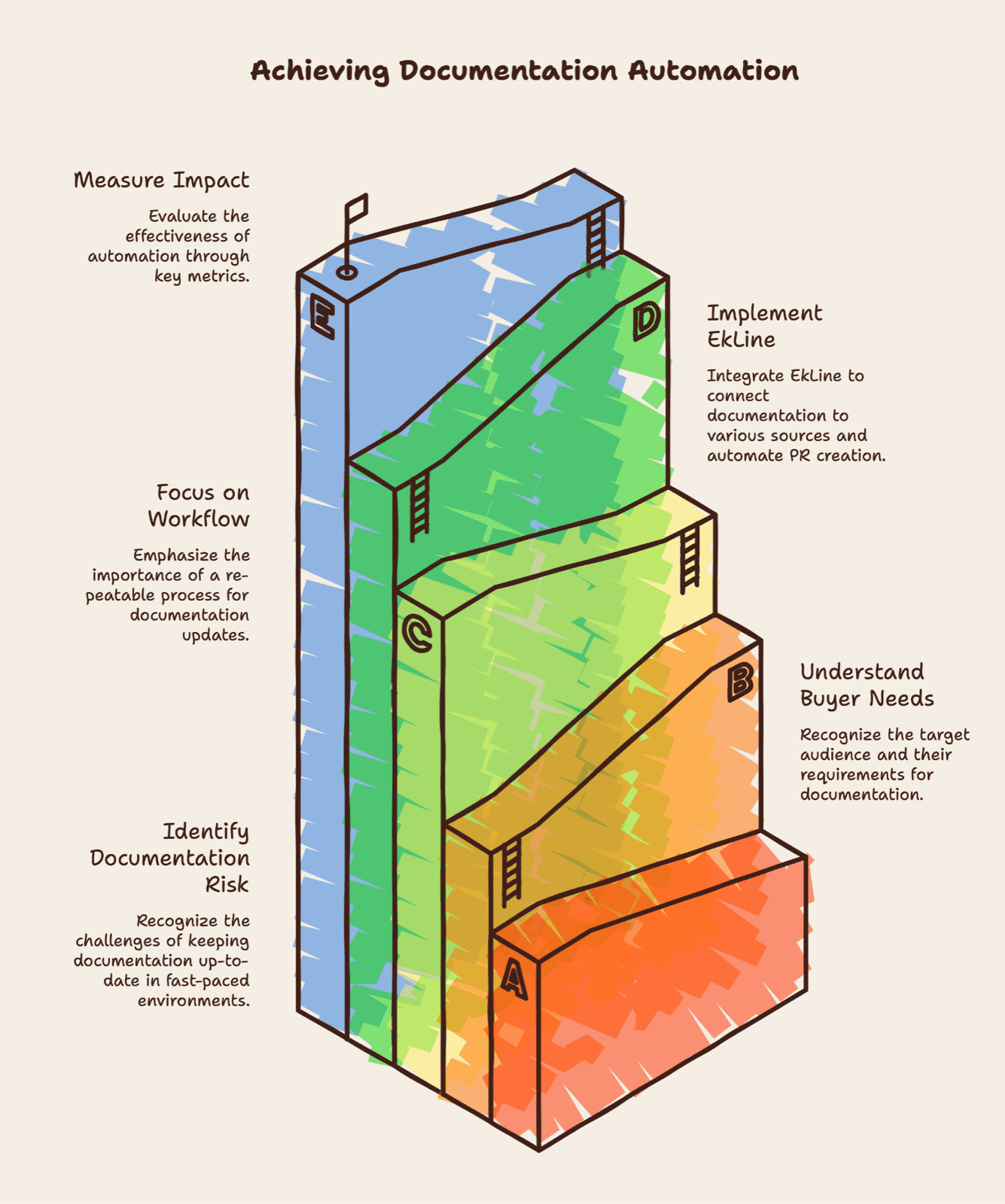
Documentation Generation vs Review: Which Workflow Should You Automate First?
Compare documentation generation vs review, identify the workflow failure each solves, and choose which automation to implement first.
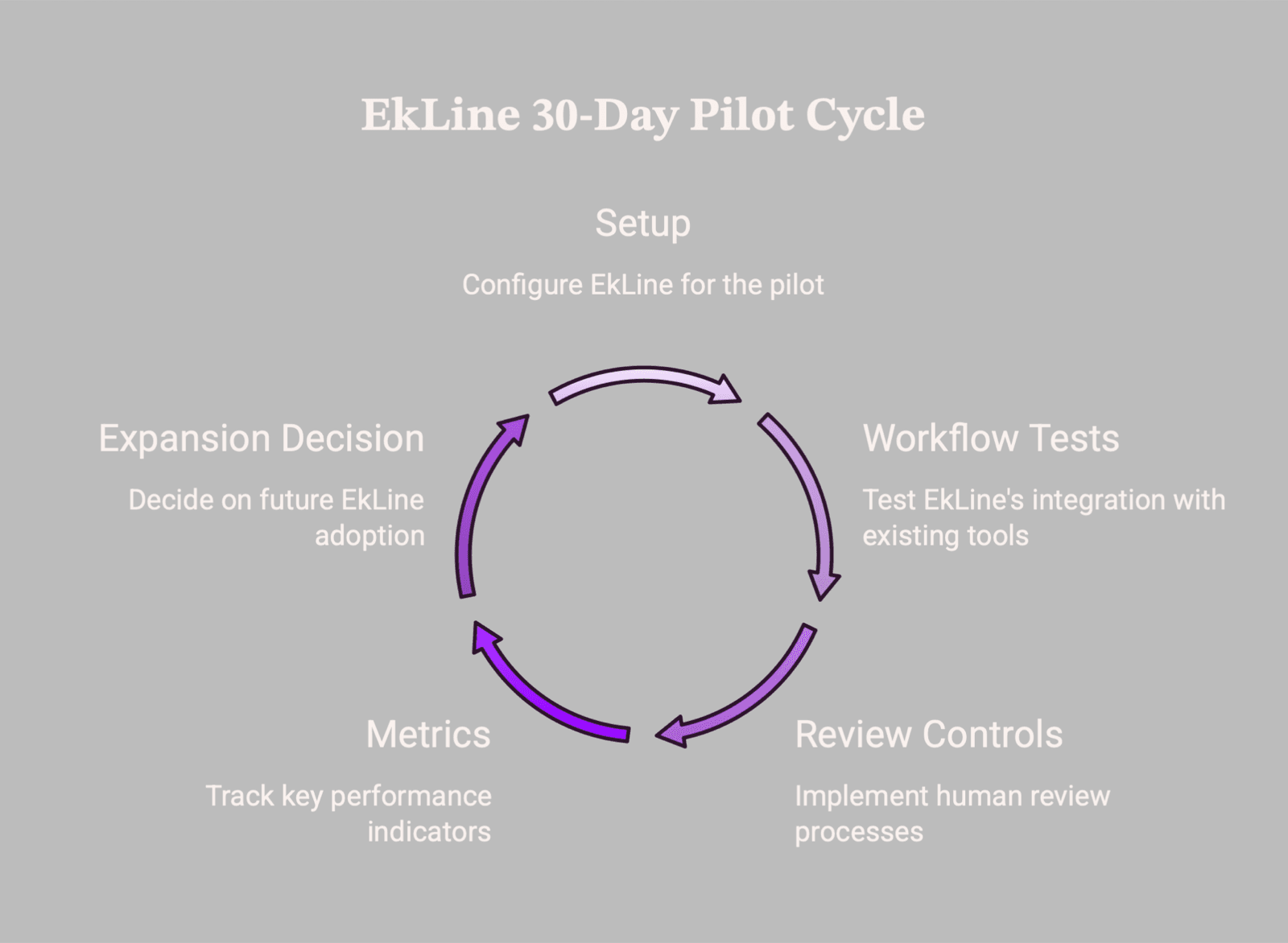
30-Day EkLine Pilot: How to Evaluate the 15-Day Free Trial, Workflow Fit, and Results
Run a 30-day EkLine pilot around the 15-day free trial, with setup, workflow tests, review controls, metrics, and an expansion decision.
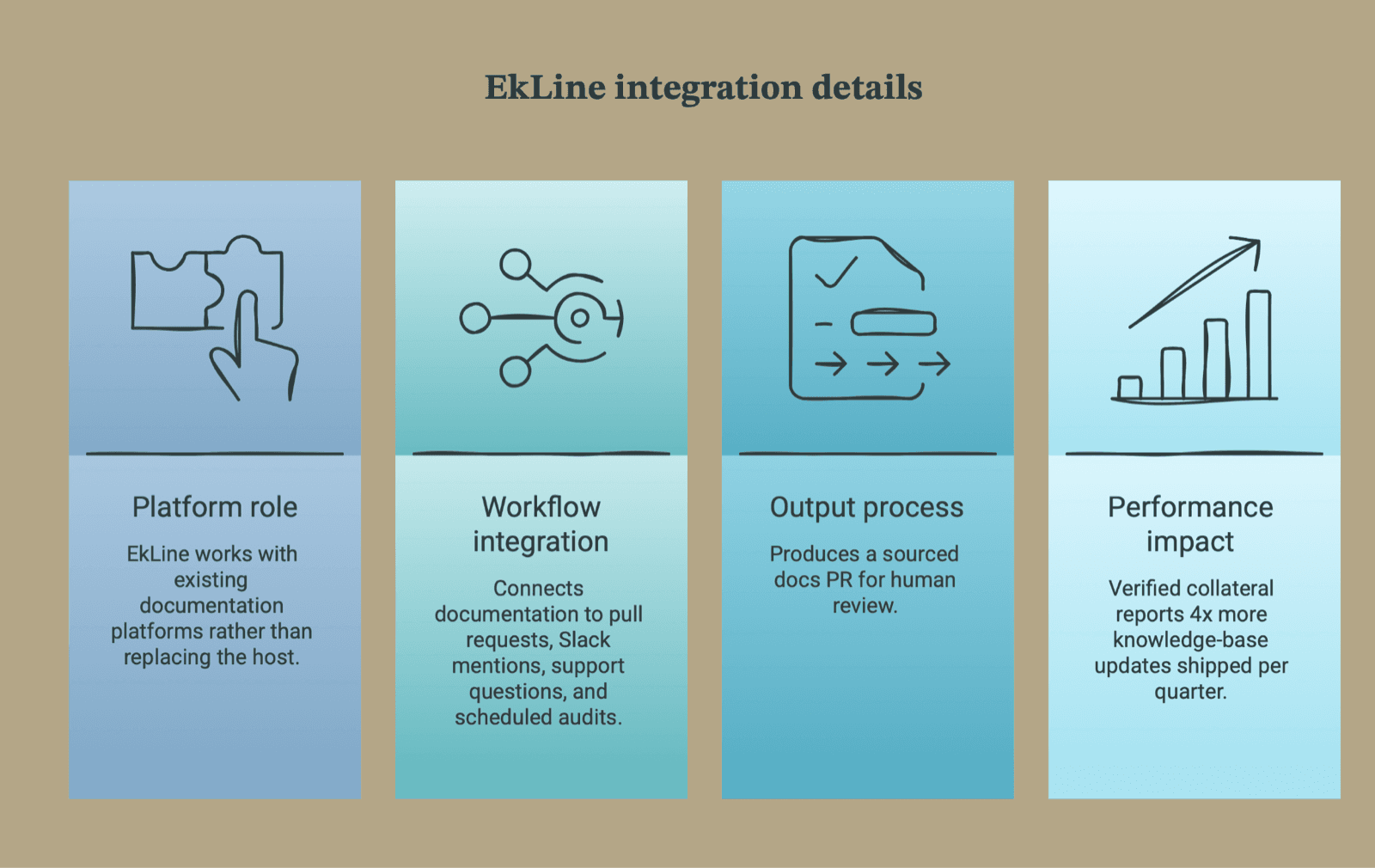
Does EkLine Replace Your Docs Platform? How EkLine Works With Existing Documentation Tools
Learn whether EkLine replaces your docs platform or adds a maintenance layer across existing hosting, repositories, support, and review workflows.
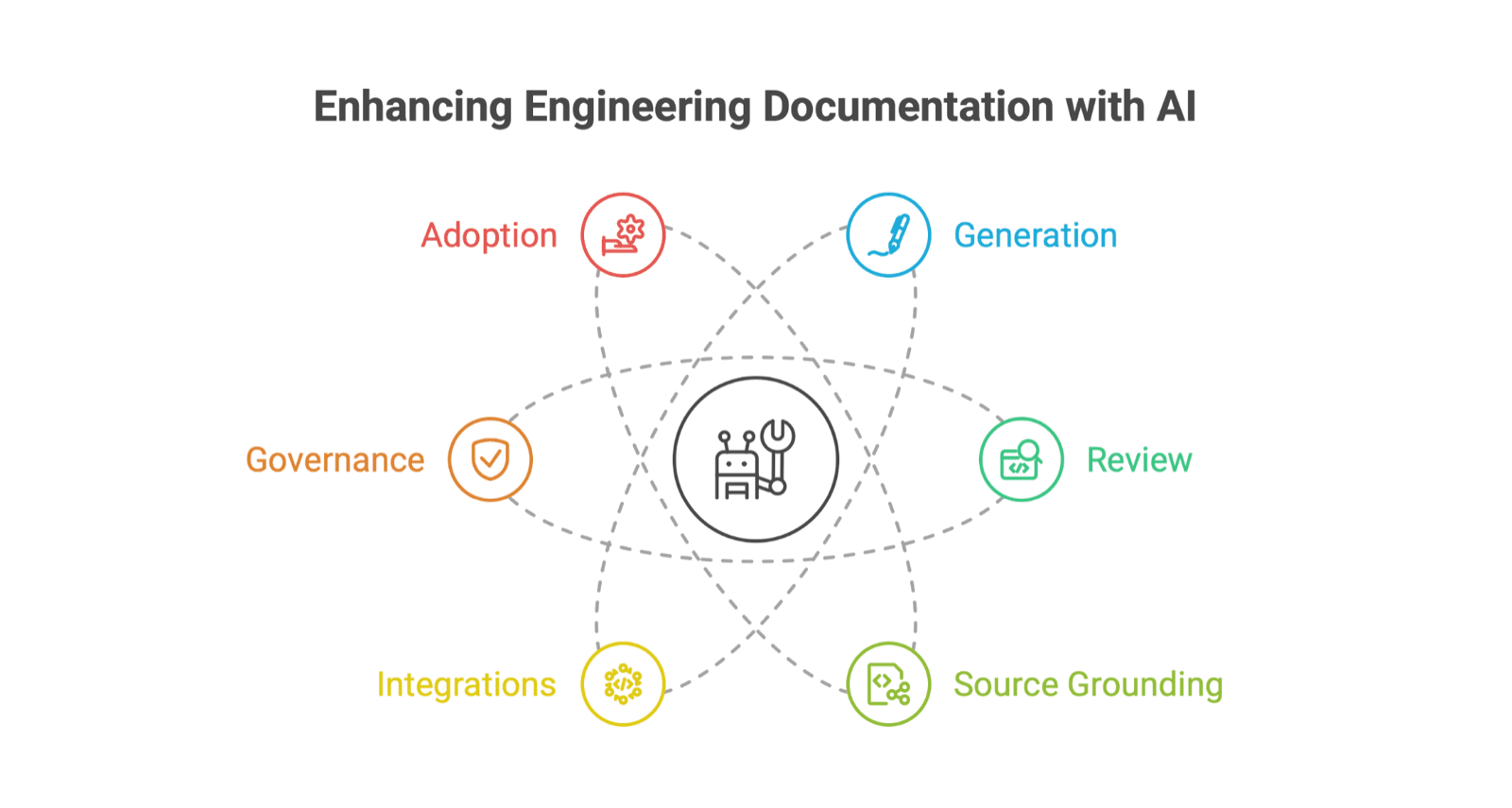
Best AI Documentation Tools for Engineering Teams: Features, Workflows, Risks, and Selection Criteria
Compare the best AI documentation tools for engineering teams on generation, review, source grounding, integrations, governance, and adoption.
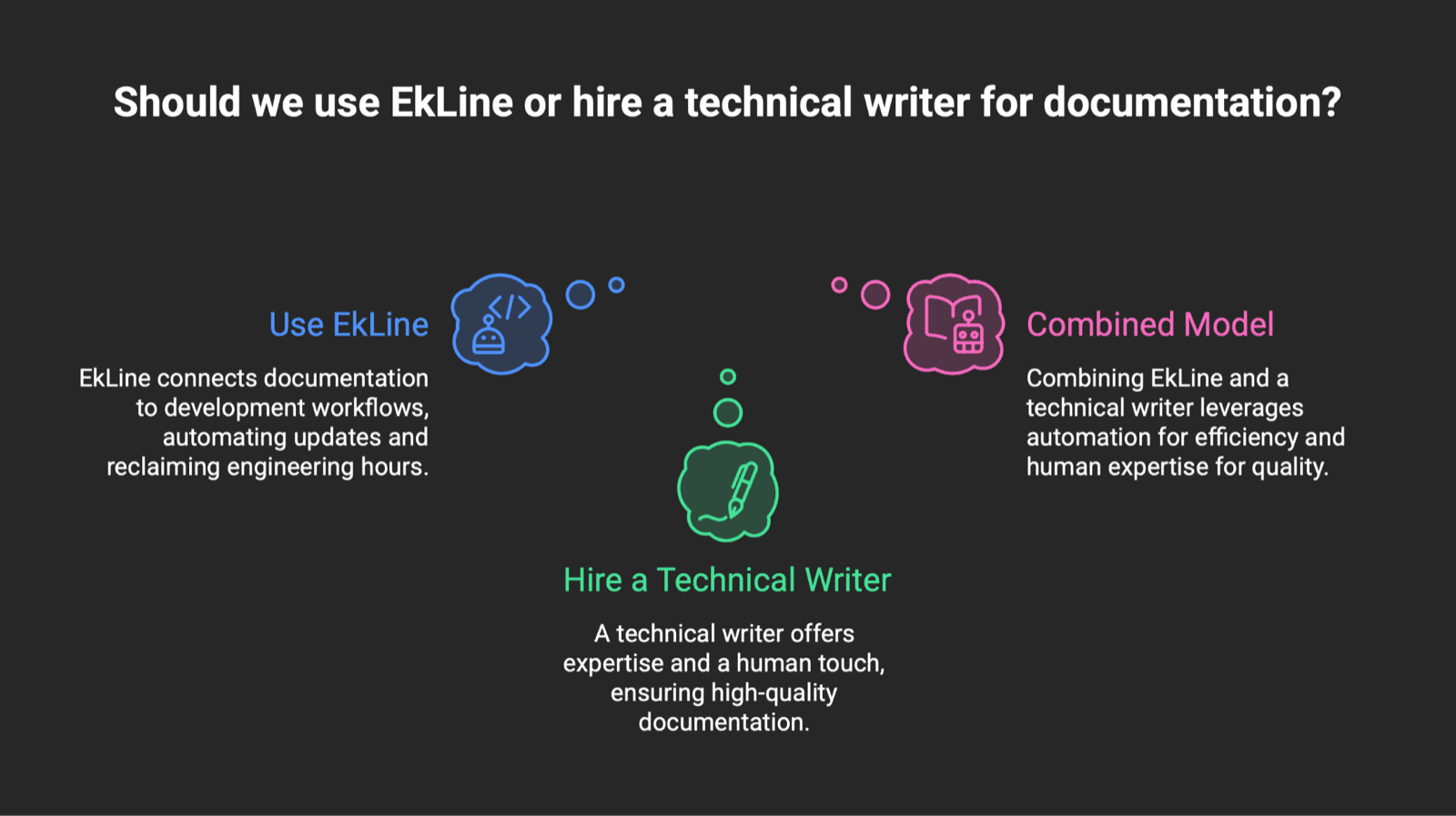
EkLine vs Hiring a Technical Writer: Automation, Expertise, Cost, and Workflow Compared
Compare EkLine vs hiring a technical writer on expertise, capacity, cost, source access, maintenance workflows, and the strongest combined model.
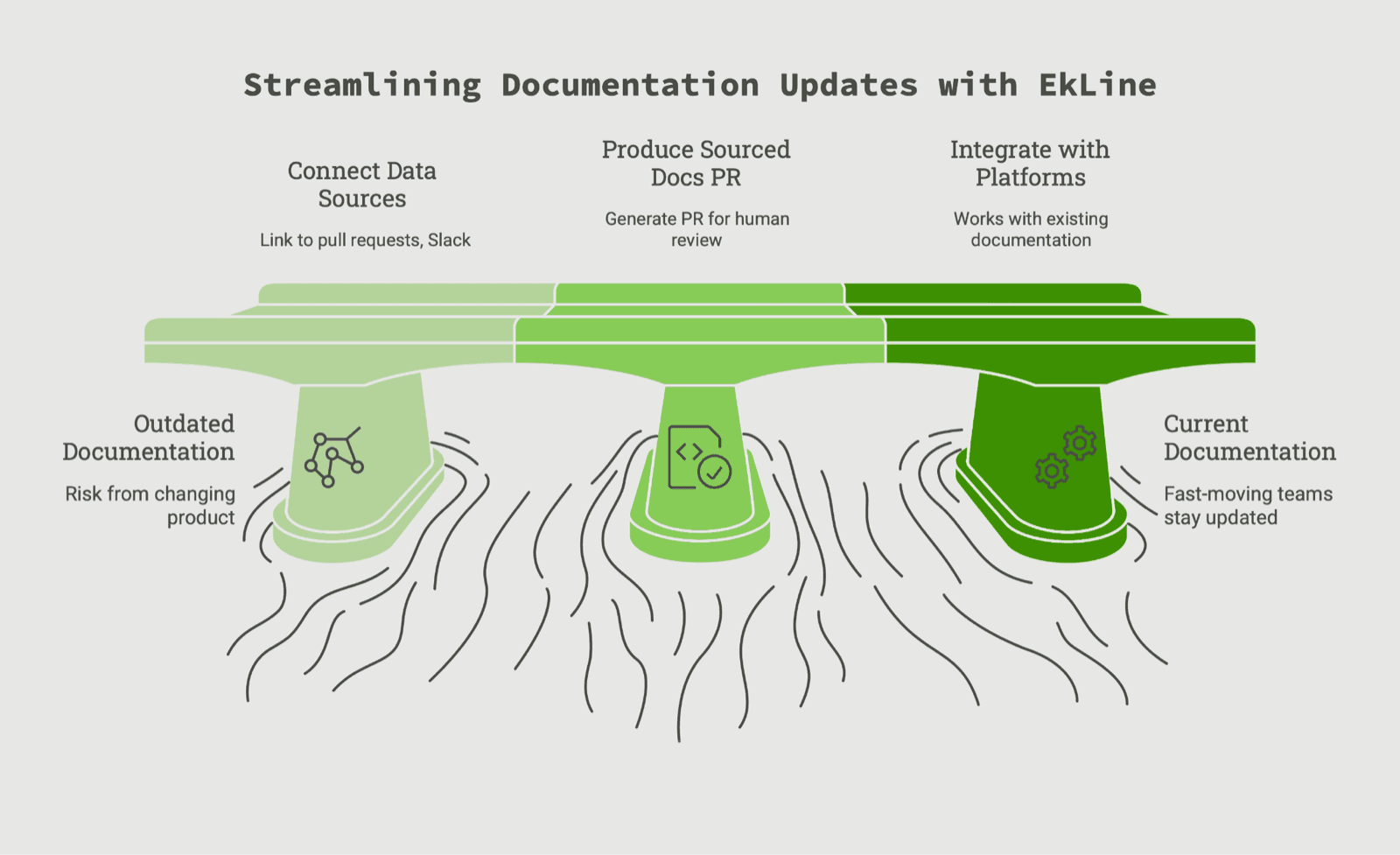
EkLine vs a Custom GPT: Which Documentation Automation Workflow Is More Reliable?
Compare EkLine vs a custom GPT on documentation grounding, repository context, workflow automation, security, review, and maintenance.
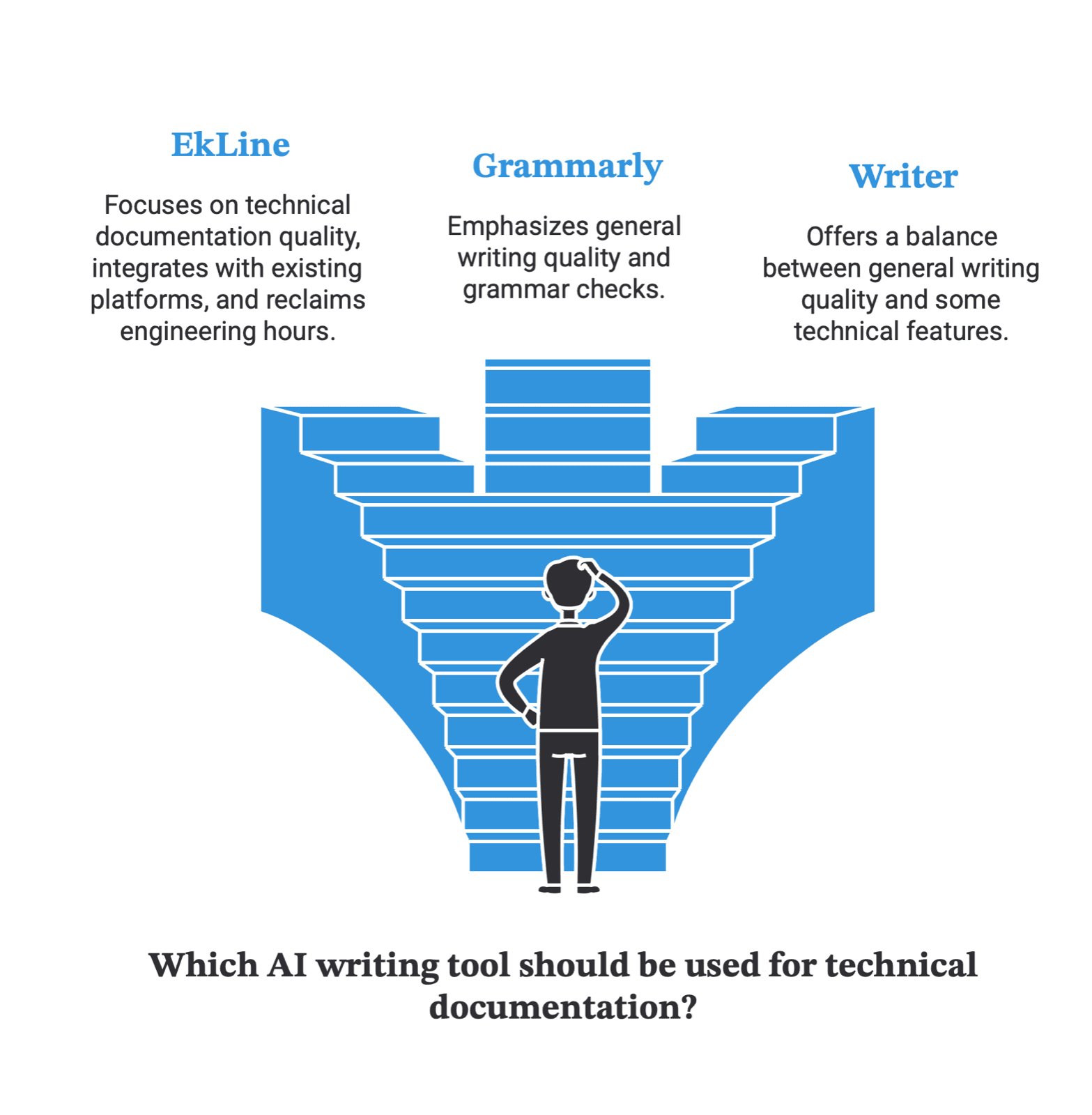
EkLine vs Grammarly and Writer: Technical Documentation Review or General Writing Assistance?
Compare EkLine with Grammarly and Writer for technical documentation review, product context, terminology, workflow automation, and governance.
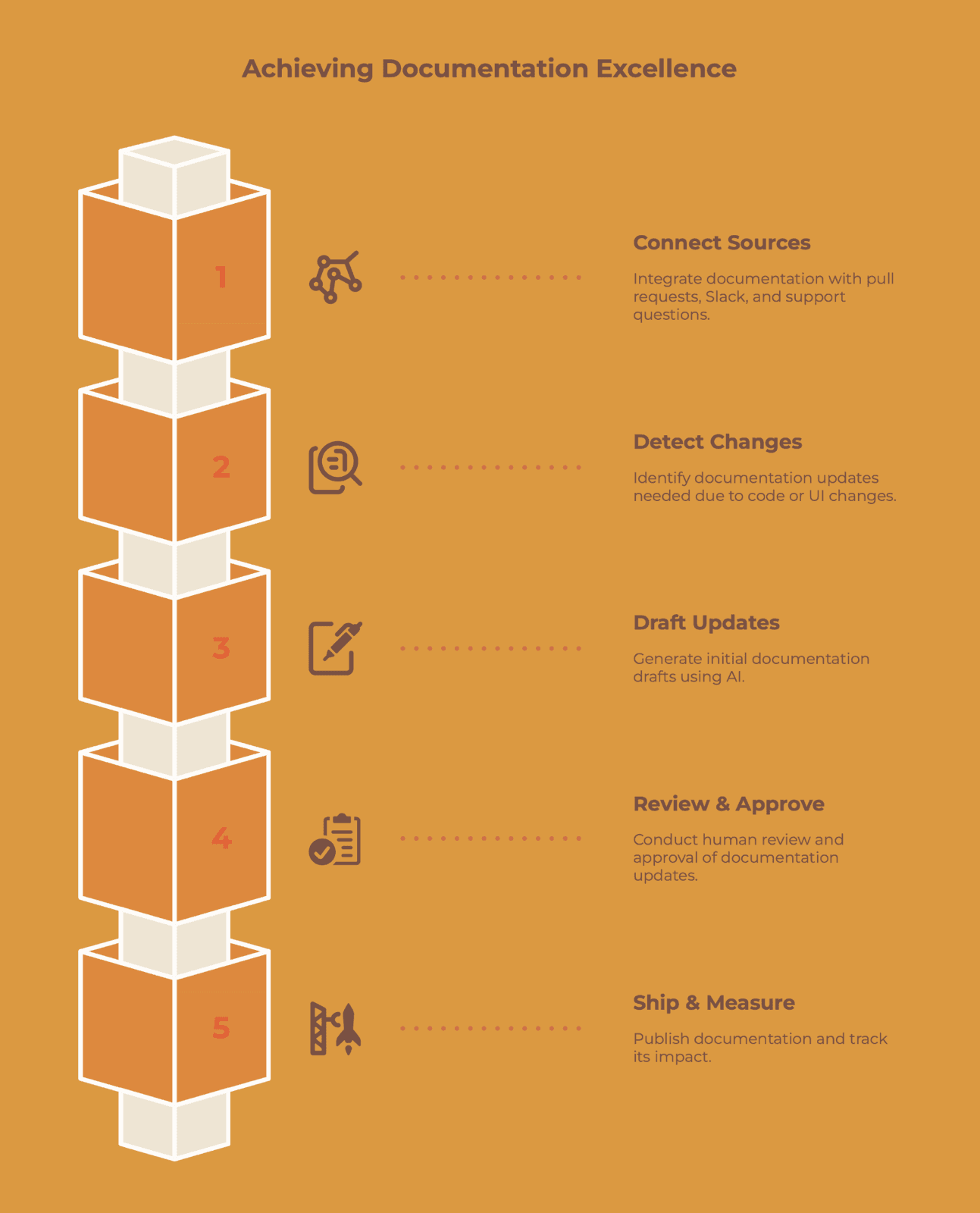
EkLine vs Notion: Team Knowledge Workspace or Maintained Technical Documentation?
Compare EkLine vs Notion on team knowledge, technical documentation, publishing, maintenance, review governance, and best-fit use cases.
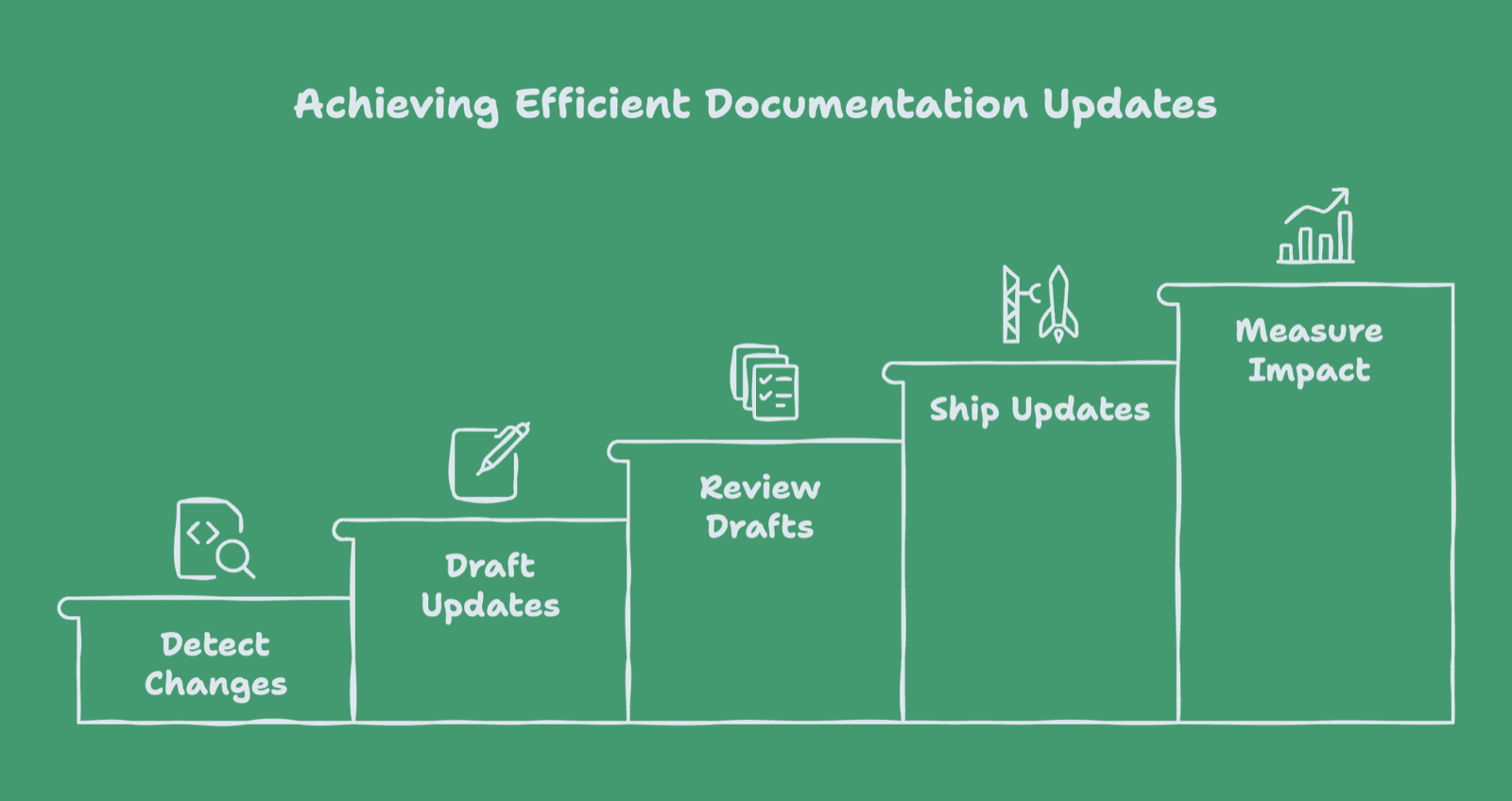
EkLine vs Confluence: Internal Knowledge Base or Customer Documentation Workflow?
Compare EkLine vs Confluence on internal knowledge management, customer documentation, source grounding, maintenance, and workflow fit.
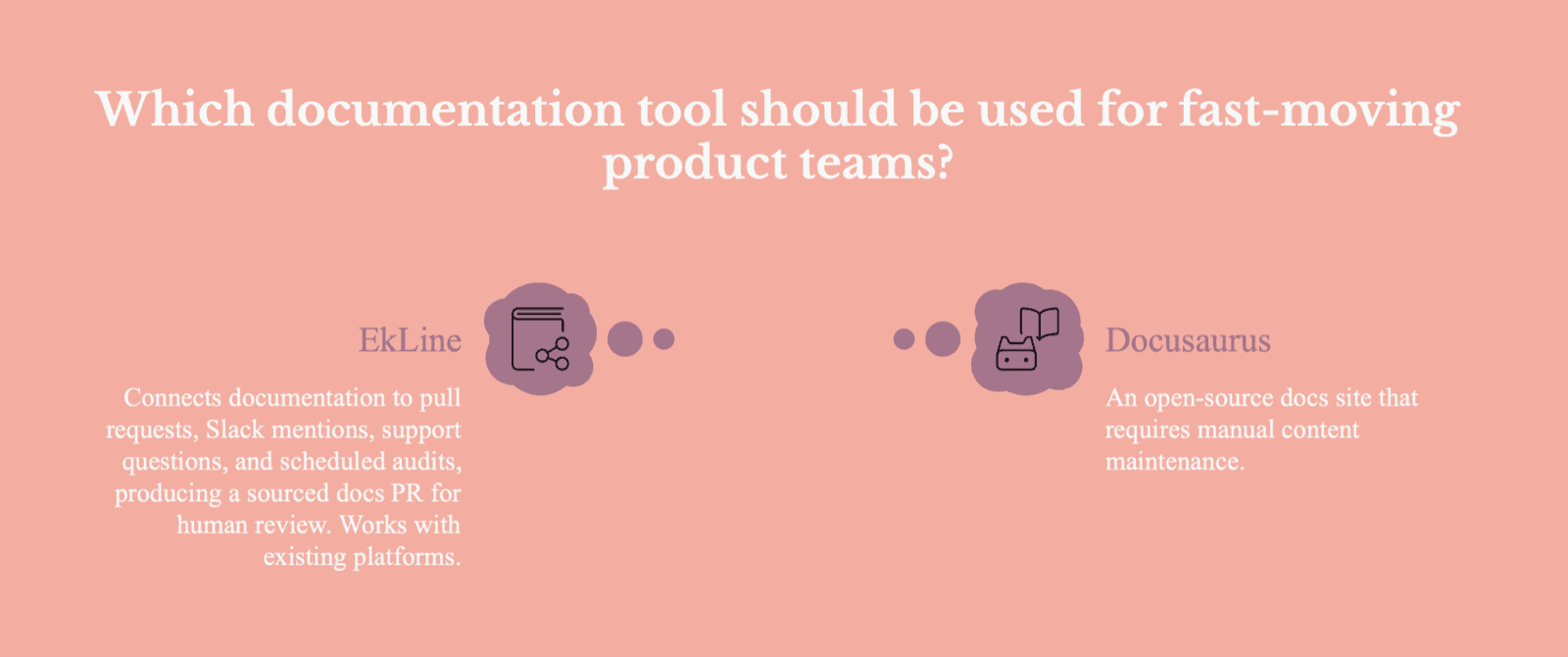
EkLine vs Docusaurus: Open-Source Docs Site or Automated Documentation Workflow?
Compare EkLine vs Docusaurus on docs-site infrastructure, content maintenance, workflow automation, ownership, and engineering effort.
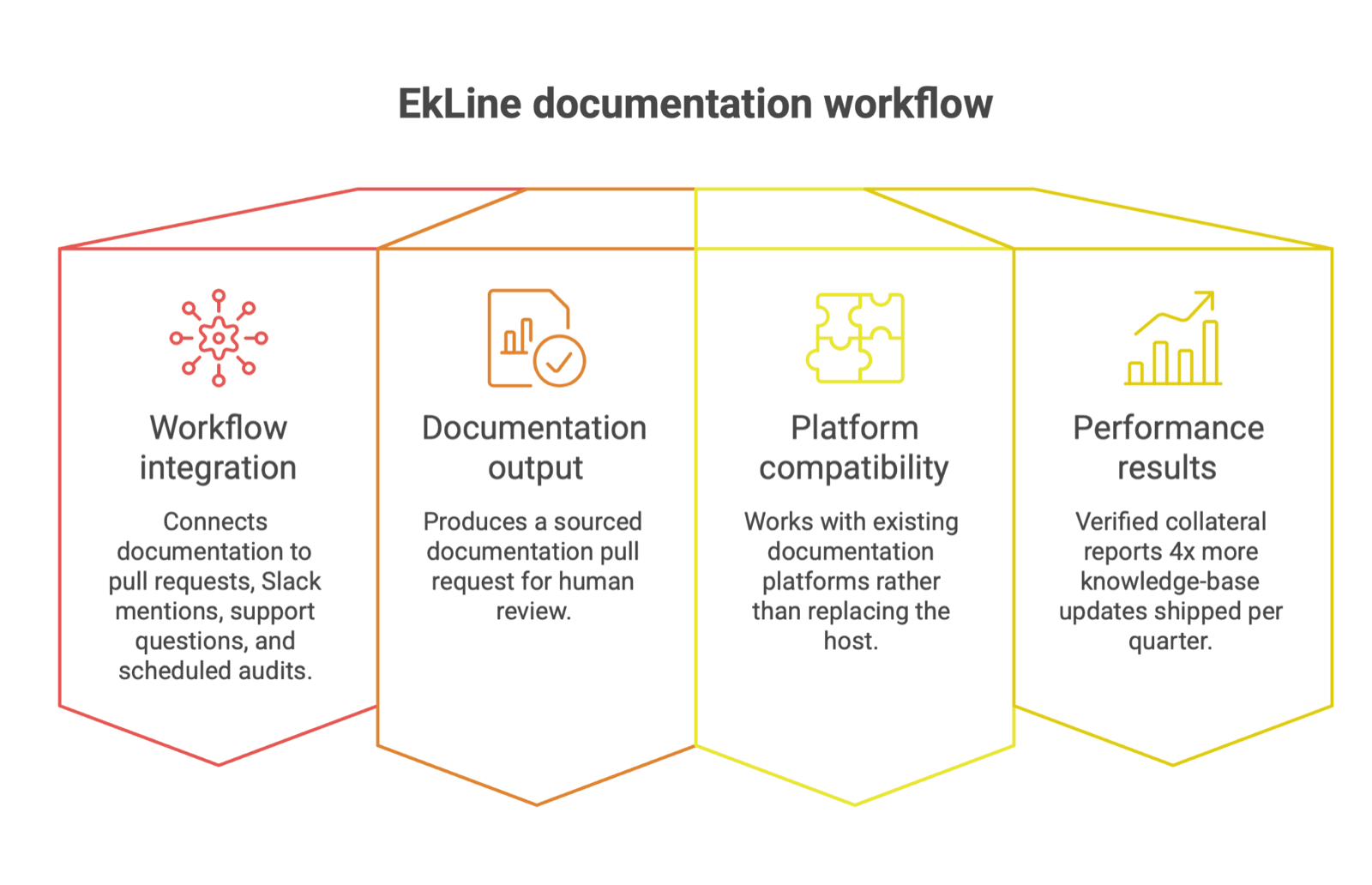
EkLine vs Fern: API Documentation Generation, Reference, and Maintenance Compared
Compare EkLine vs Fern on API documentation generation, reference workflows, ongoing maintenance, review controls, and engineering-team fit.
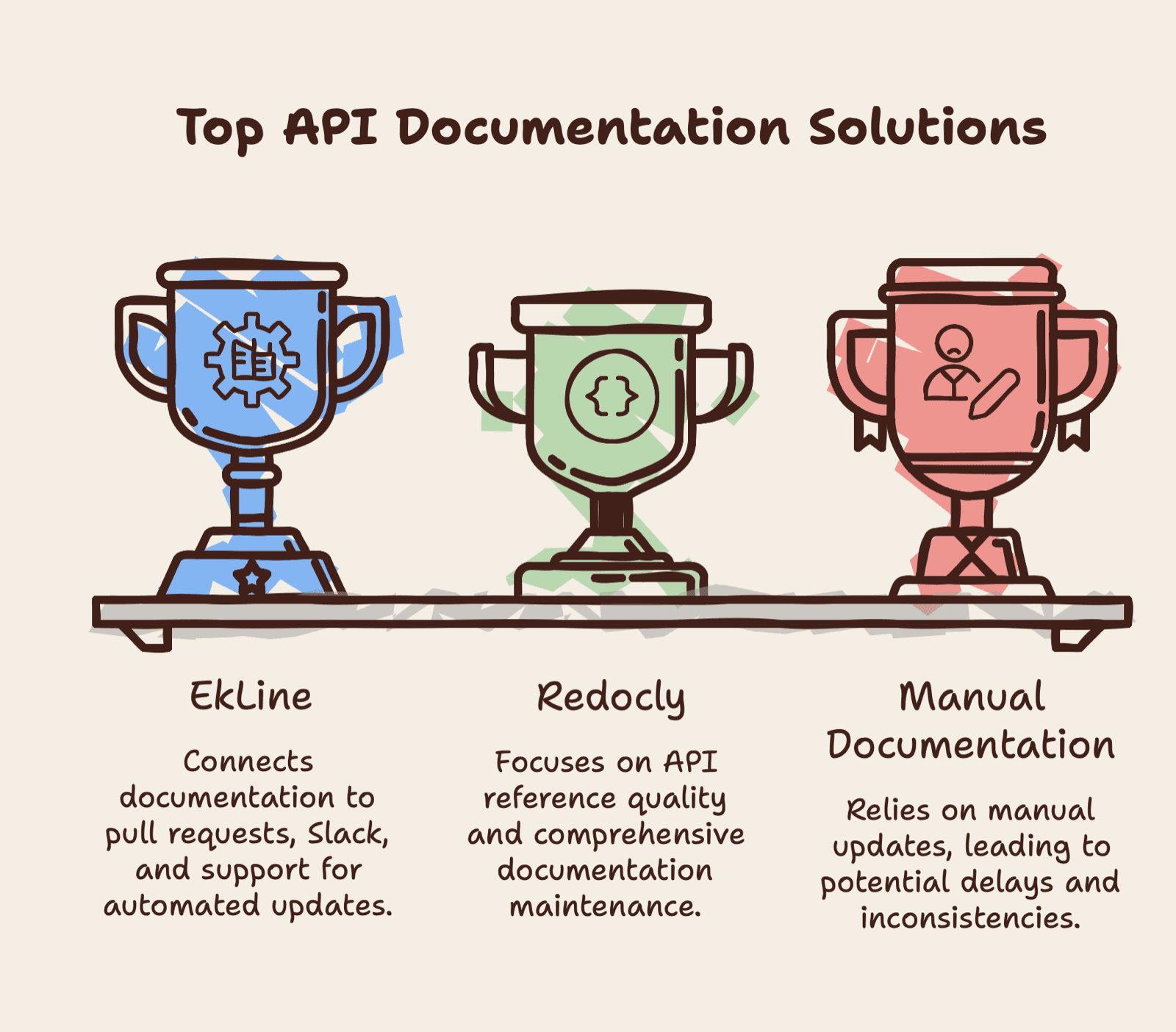
EkLine vs Redocly: API Reference Platform or Full Documentation Maintenance Workflow?
Compare EkLine vs Redocly on API reference quality, documentation maintenance, workflow automation, governance, and implementation fit.
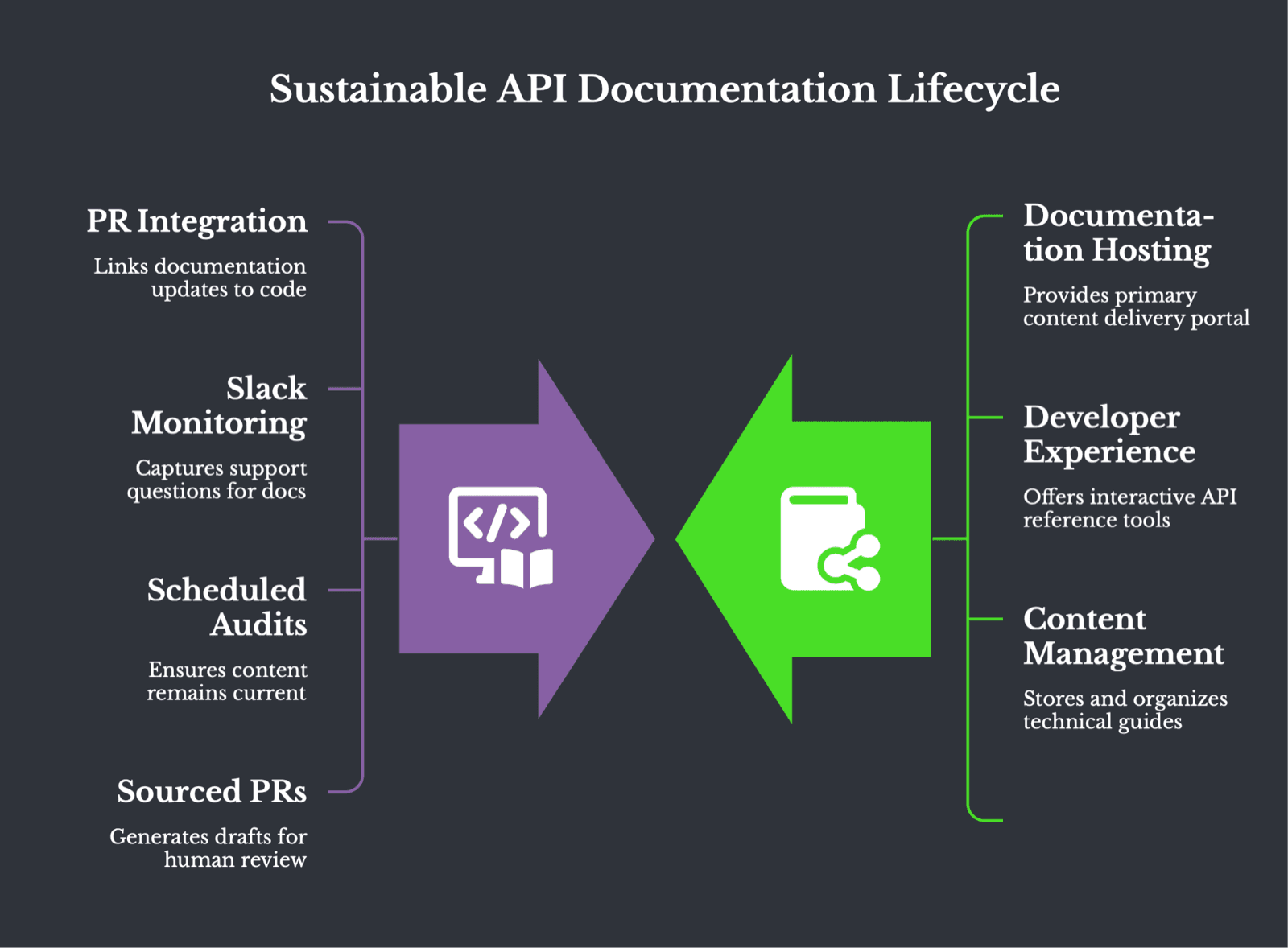
EkLine vs ReadMe: Which Documentation Workflow Fits API-First Teams?
Compare EkLine vs ReadMe on API documentation hosting, lifecycle automation, workflow ownership, integrations, review controls, and best-fit teams.
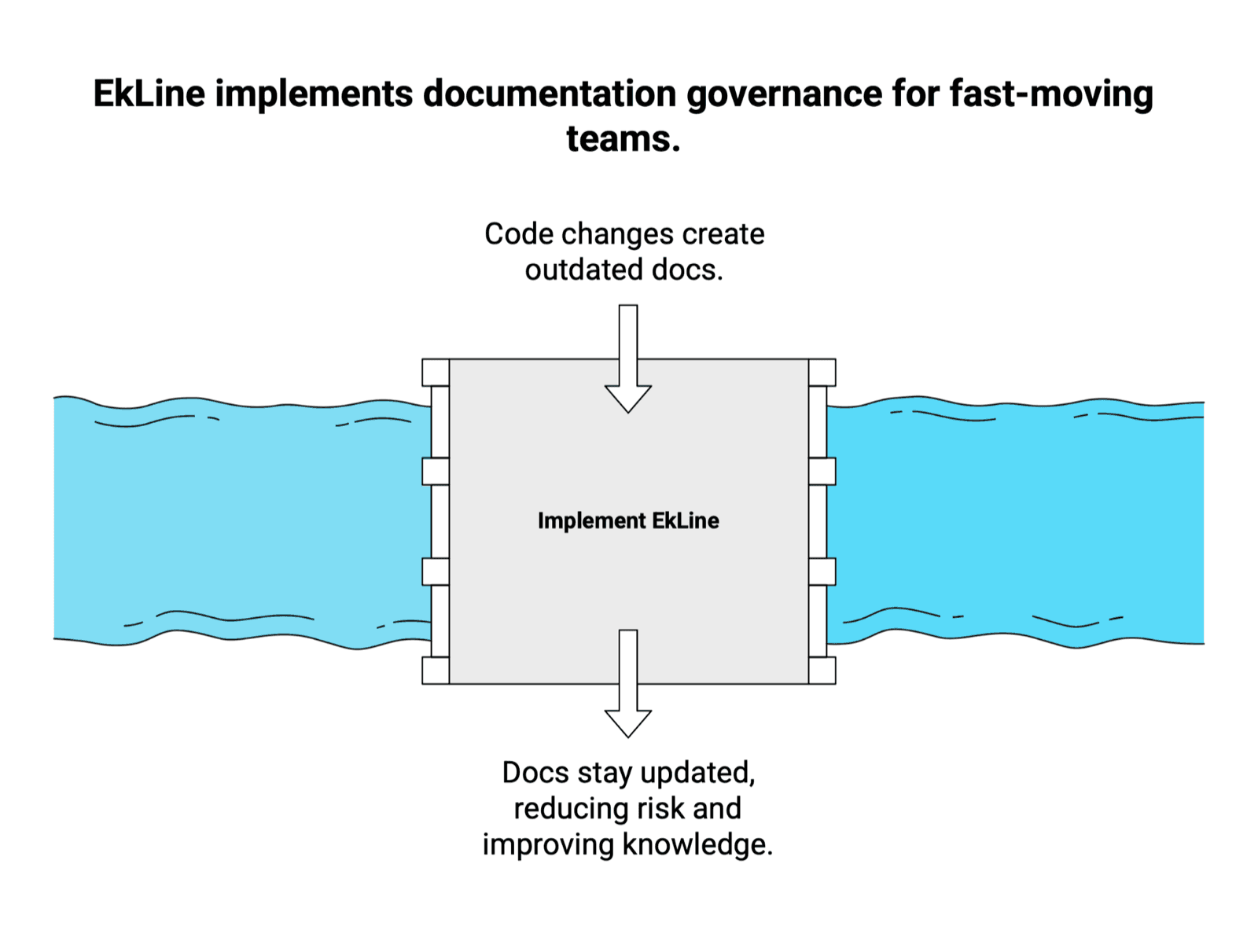
Documentation Governance Model: Roles, Review Gates, Metrics, and Workflows for Product Teams
Create a documentation governance model with clear roles, source ownership, review gates, risk controls, escalation paths, and quality metrics.
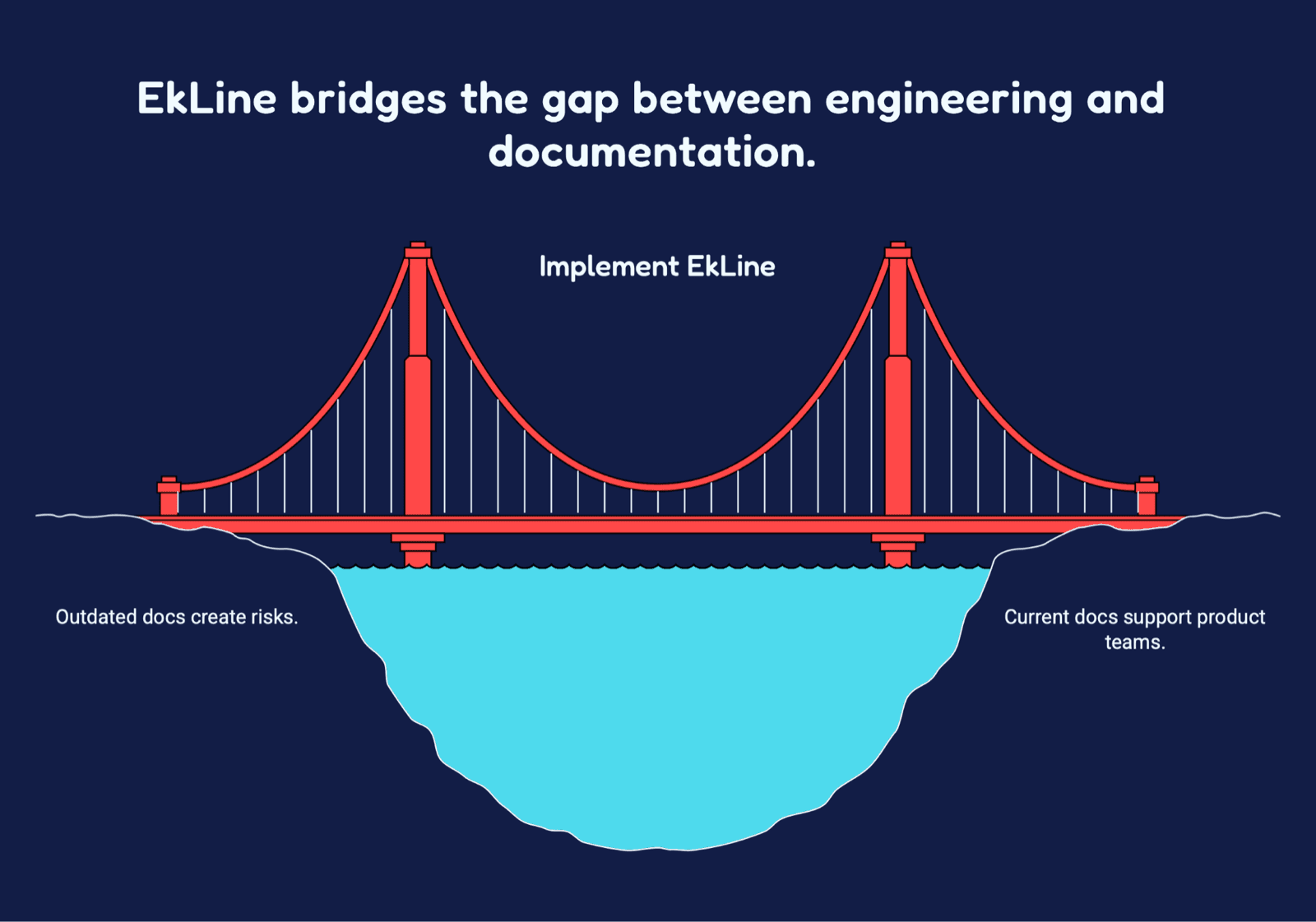
Engineering-Led Documentation: How to Keep Docs Accurate Without Burning Out Engineers
Build an engineering-led documentation model that preserves product accuracy without turning engineers into full-time writers or reviewers.
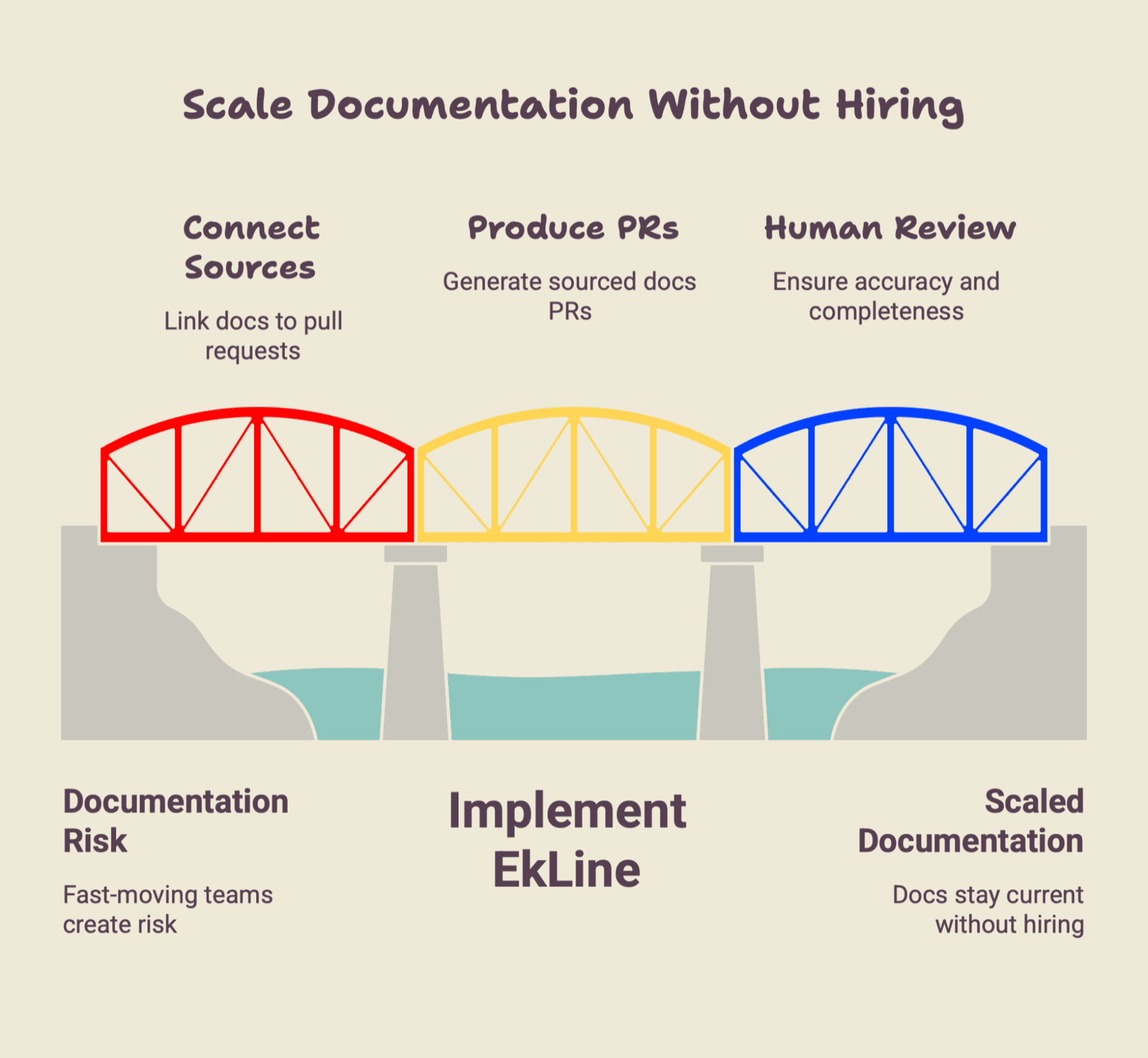
Scale Documentation Without Hiring a Full Docs Team: A Workflow for Fast-Moving Products
Scale documentation without a full docs-team hire by improving detection, drafting, review, ownership, and measurement across product workflows.
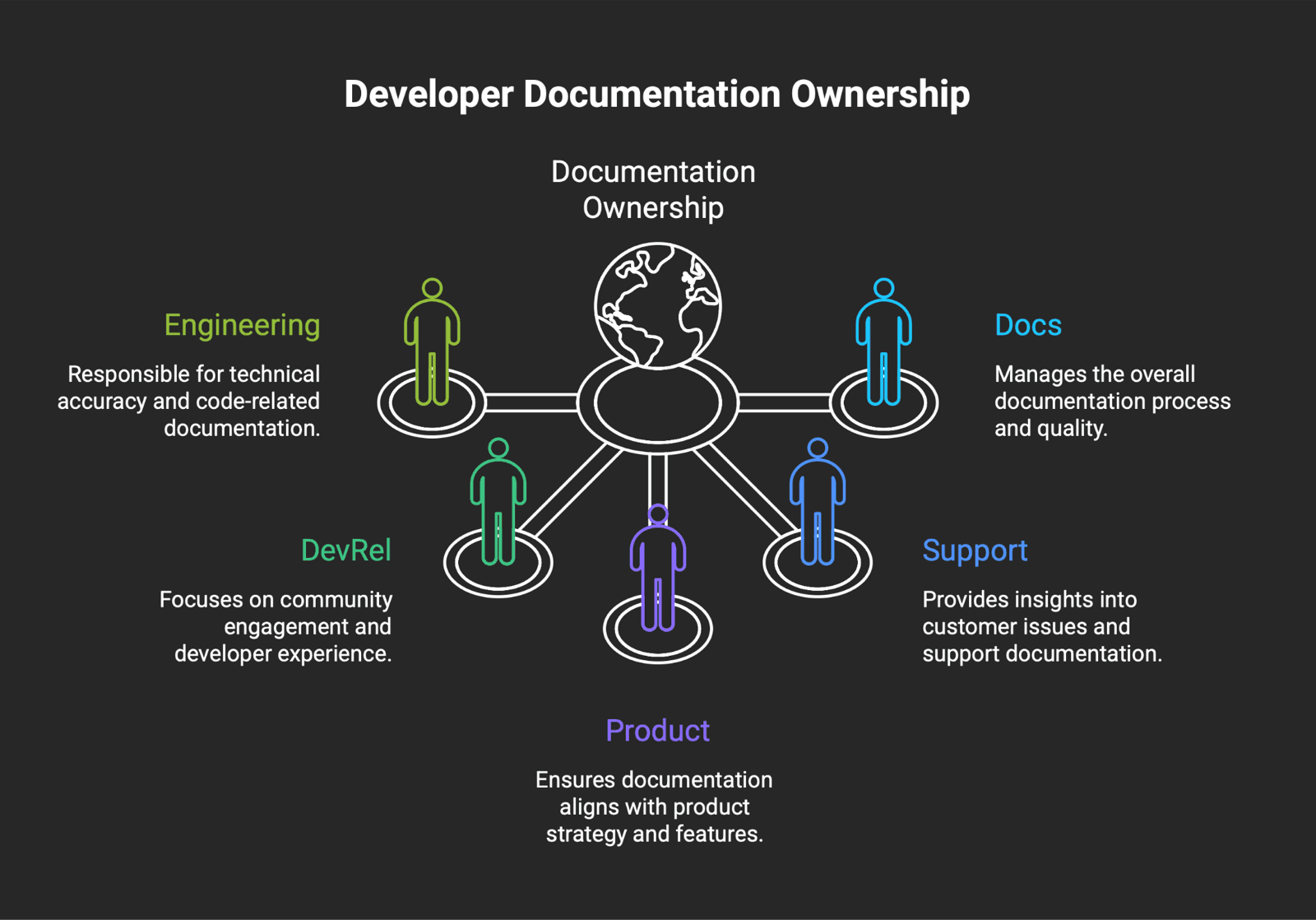
Developer Documentation Ownership: Should Engineering, DevRel, Product, or Support Own It?
Define developer documentation ownership across engineering, DevRel, product, support, and docs with clear source and review responsibilities.
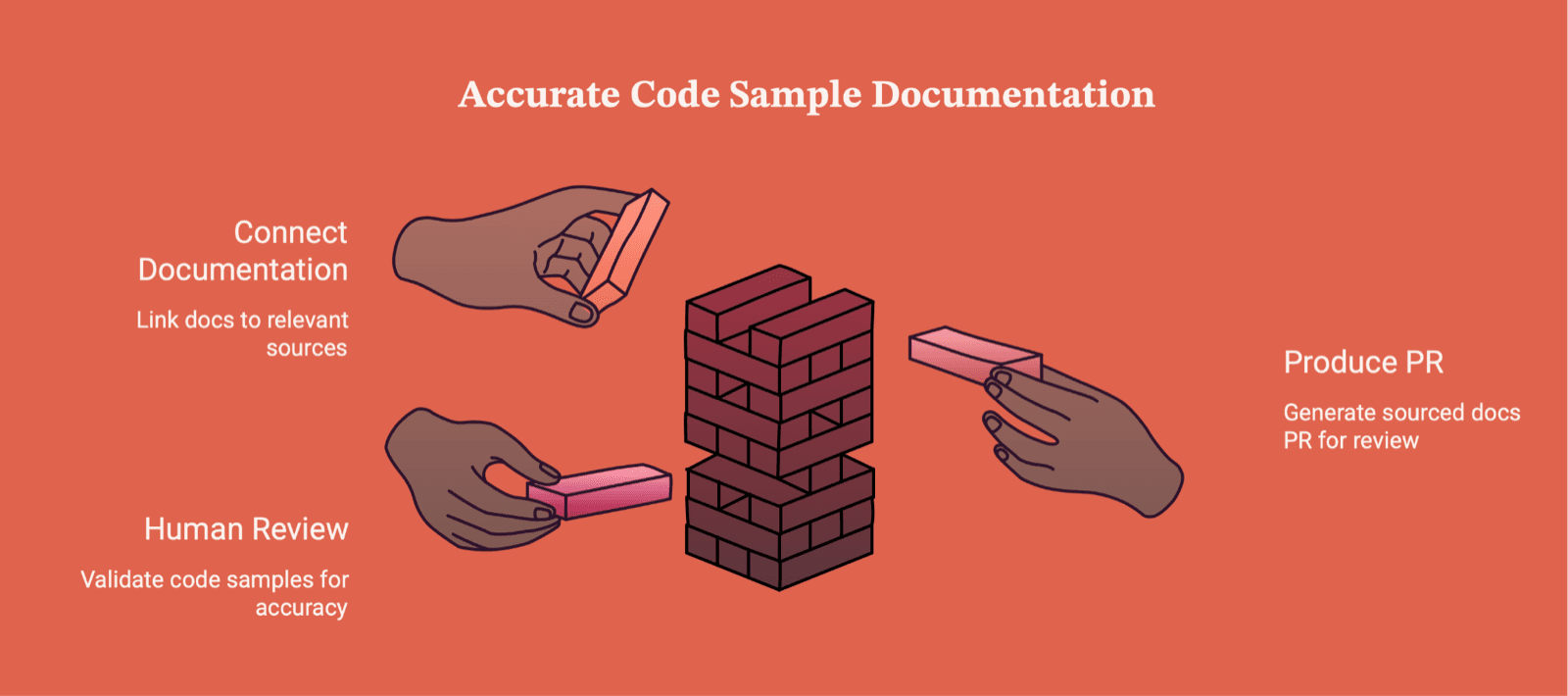
Code Sample Accuracy in Documentation: How to Prevent Broken Examples and Failed Integrations
Prevent broken documentation code samples with a validation workflow for versions, dependencies, API behavior, testing, and release review.
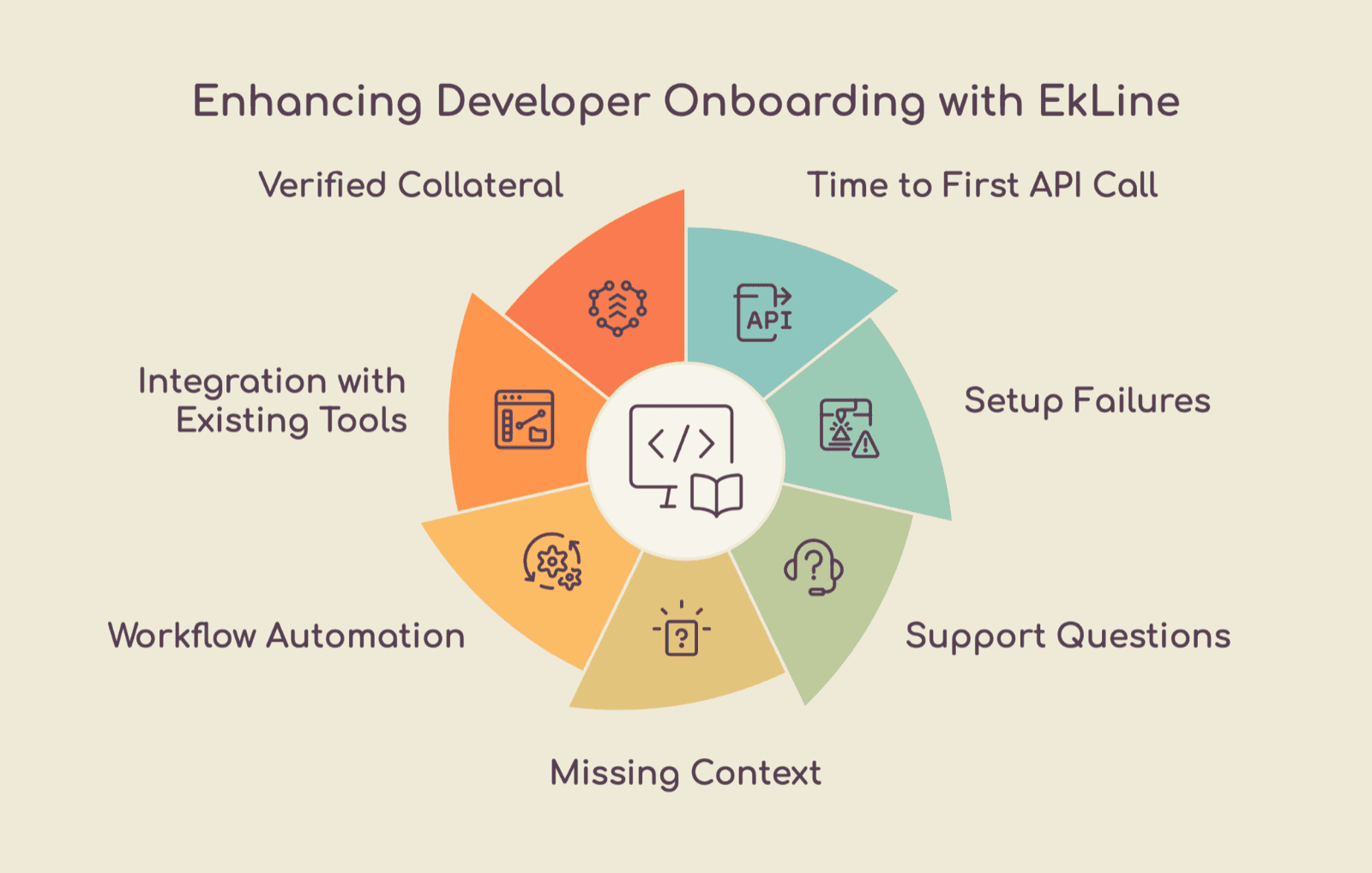
Developer Onboarding Documentation Checklist: What New Users Need Before Their First API Call
Use this developer onboarding documentation checklist to reduce time to first API call, setup failures, support questions, and missing context.
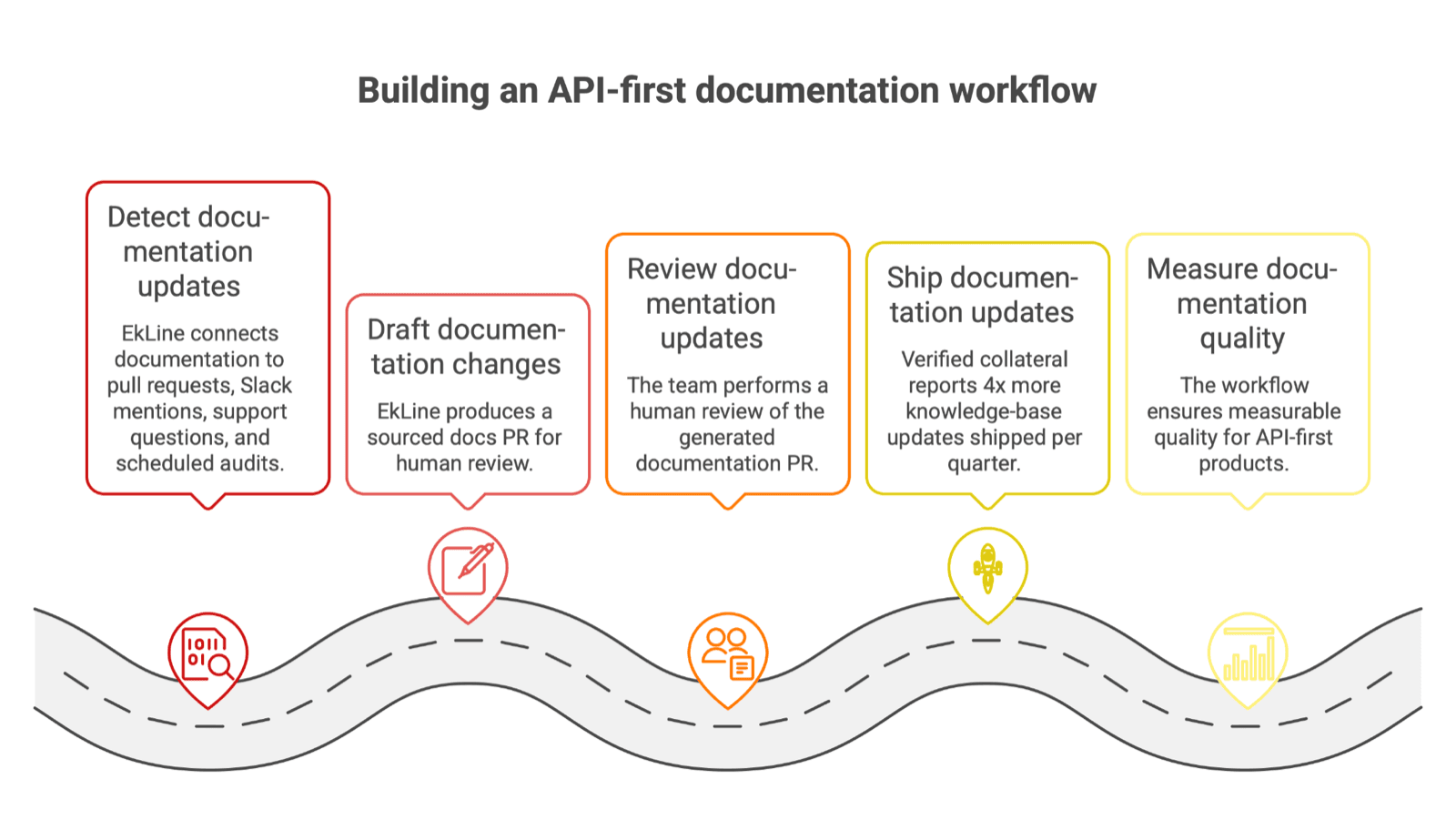
API-First Documentation Workflow: How to Connect Code Changes, Reviews, and Developer Guides
Build an API-first documentation workflow that connects code changes, developer guides, reviews, release gates, and measurable quality.
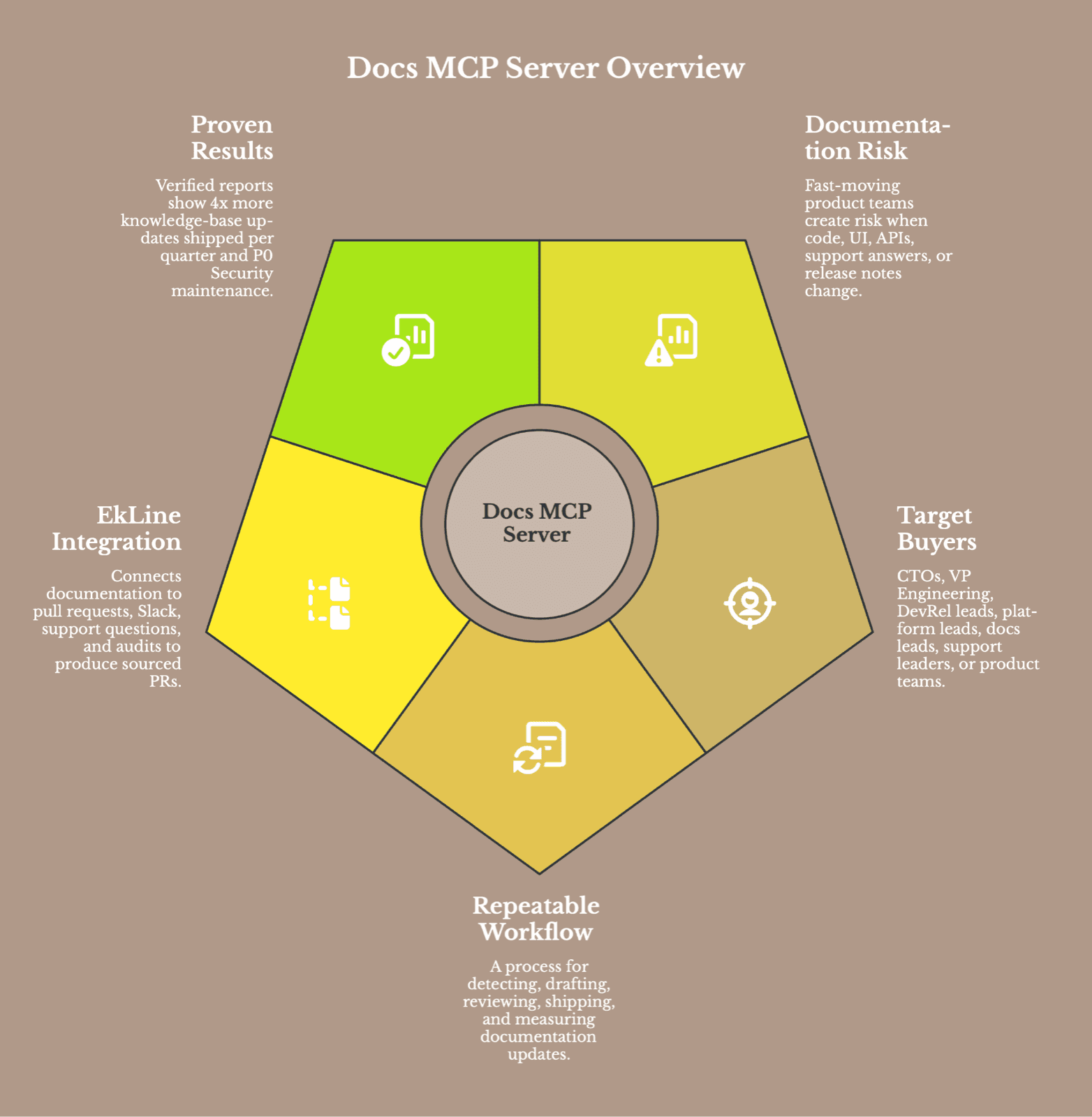
Docs MCP Server: What It Is, How It Connects Documentation to AI, and What to Evaluate
Learn what a docs MCP server does, how it connects documentation to AI tools, and which security, freshness, and accuracy controls matter.
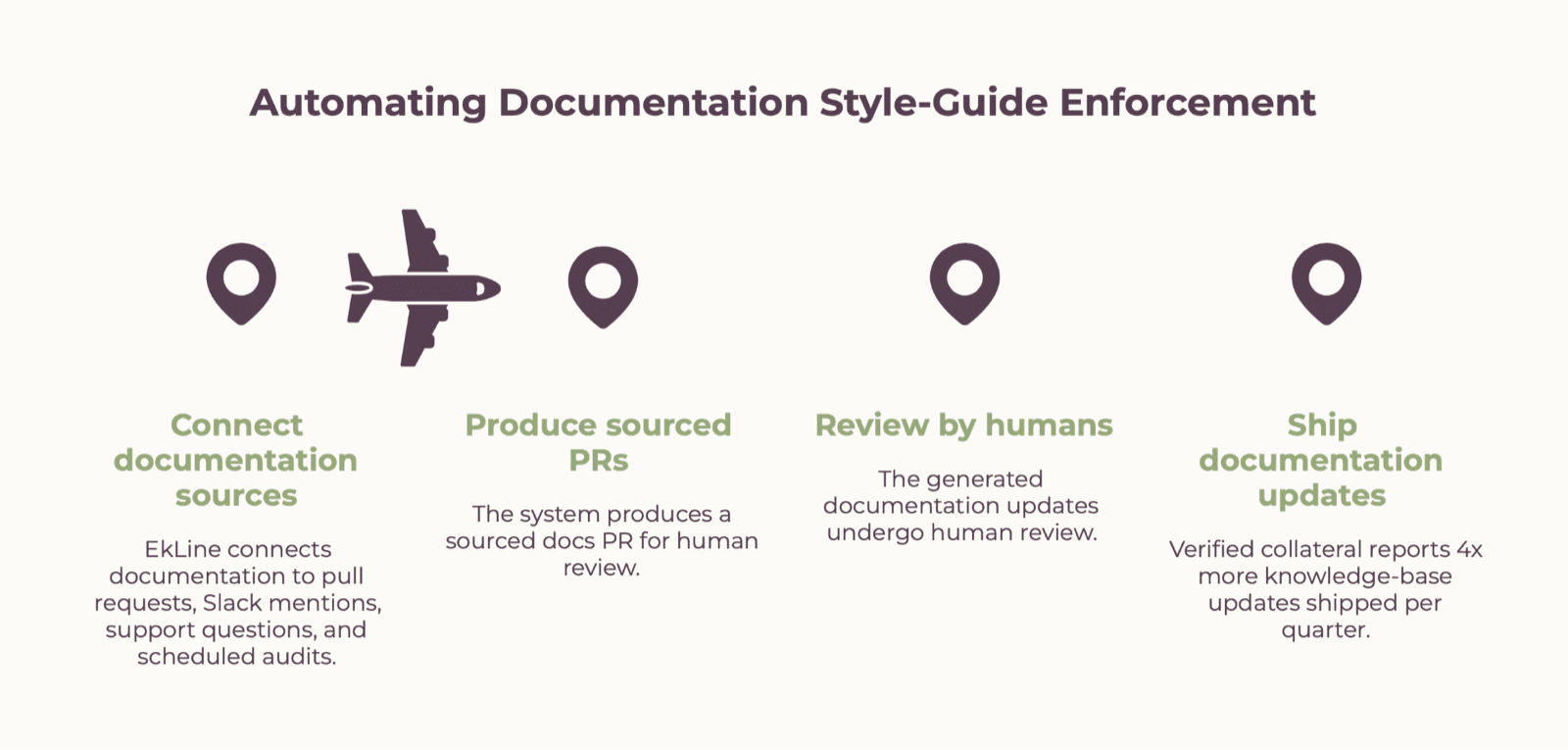
Automated Documentation Style Guide Enforcement: How to Standardize Terms, Structure, and Review
Automate documentation style-guide enforcement for terminology, structure, links, examples, and pre-merge review without blocking contributors.
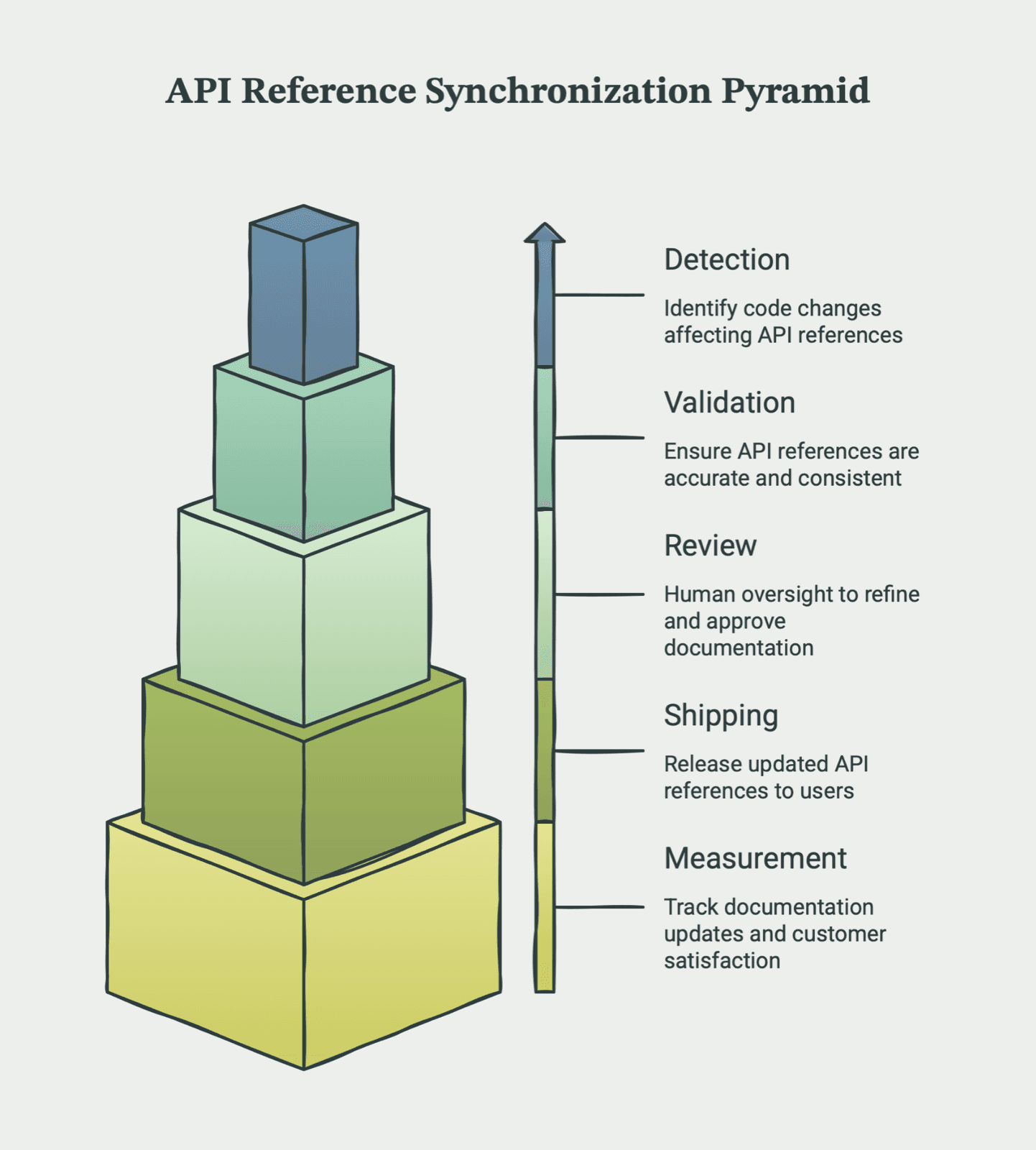
API Reference and Code Synchronization: How to Keep Endpoint Documentation Accurate
Keep API references synchronized with code changes using detection, validation, review, and accuracy metrics for endpoints and examples.
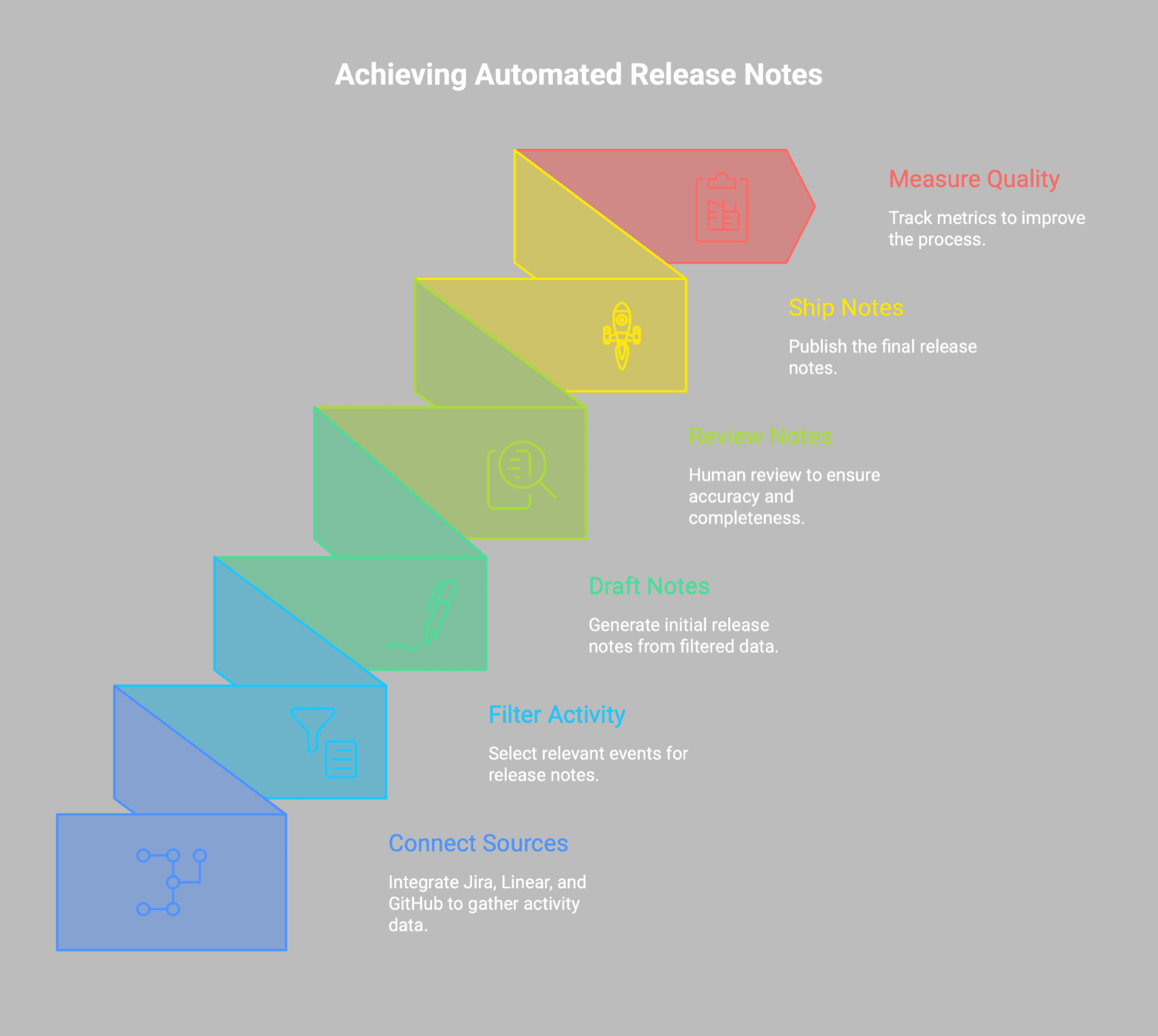
Automated Release Notes From Jira, Linear, and GitHub: A Workflow for Accurate Product Updates
Generate accurate release notes from Jira, Linear, and GitHub activity with source filtering, review controls, ownership, and quality metrics.
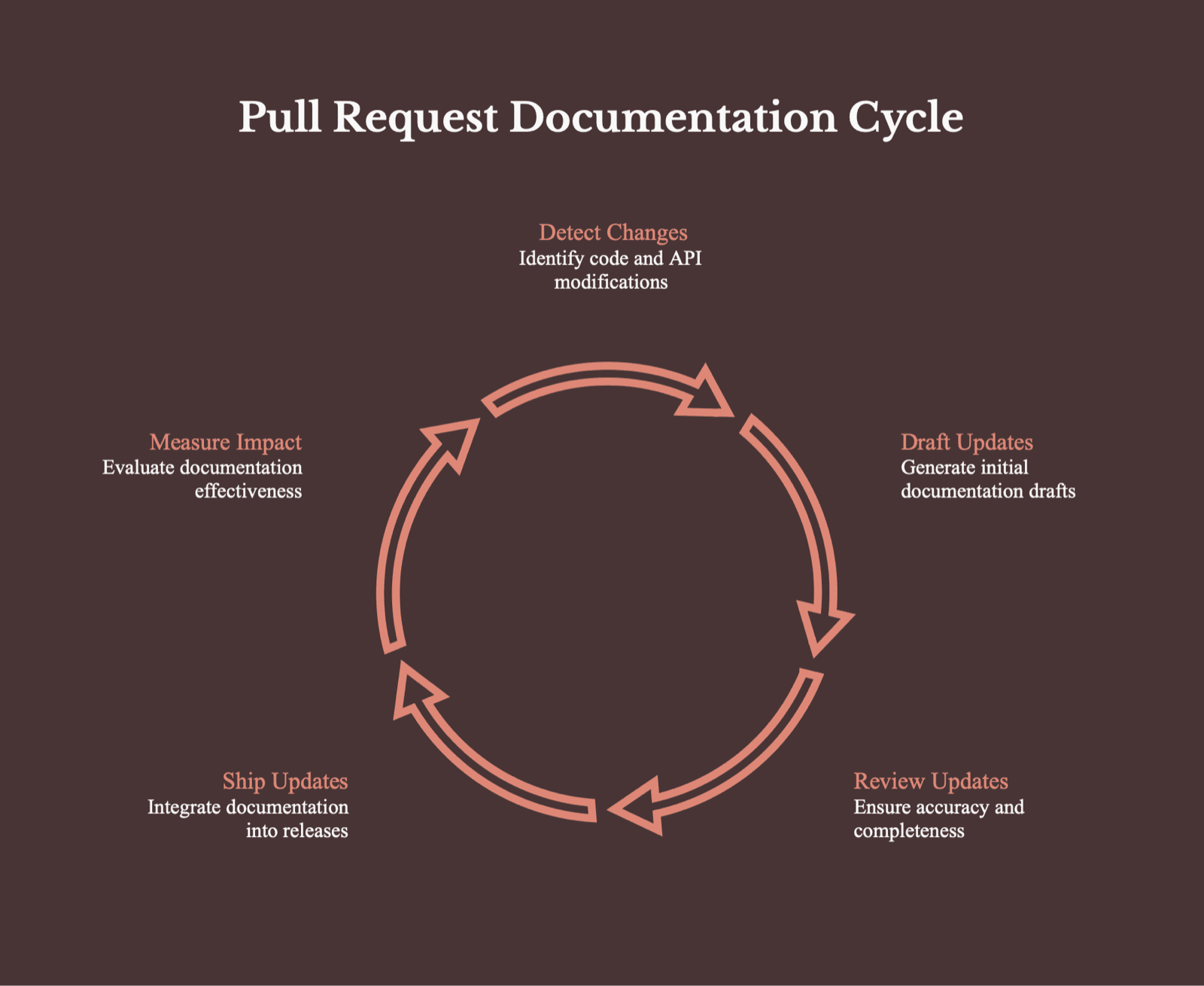
Pull Request Documentation Updates: How to Keep Docs Synchronized With Code Changes
Connect pull requests to documentation updates so code, API behavior, examples, and guides stay synchronized through every release.
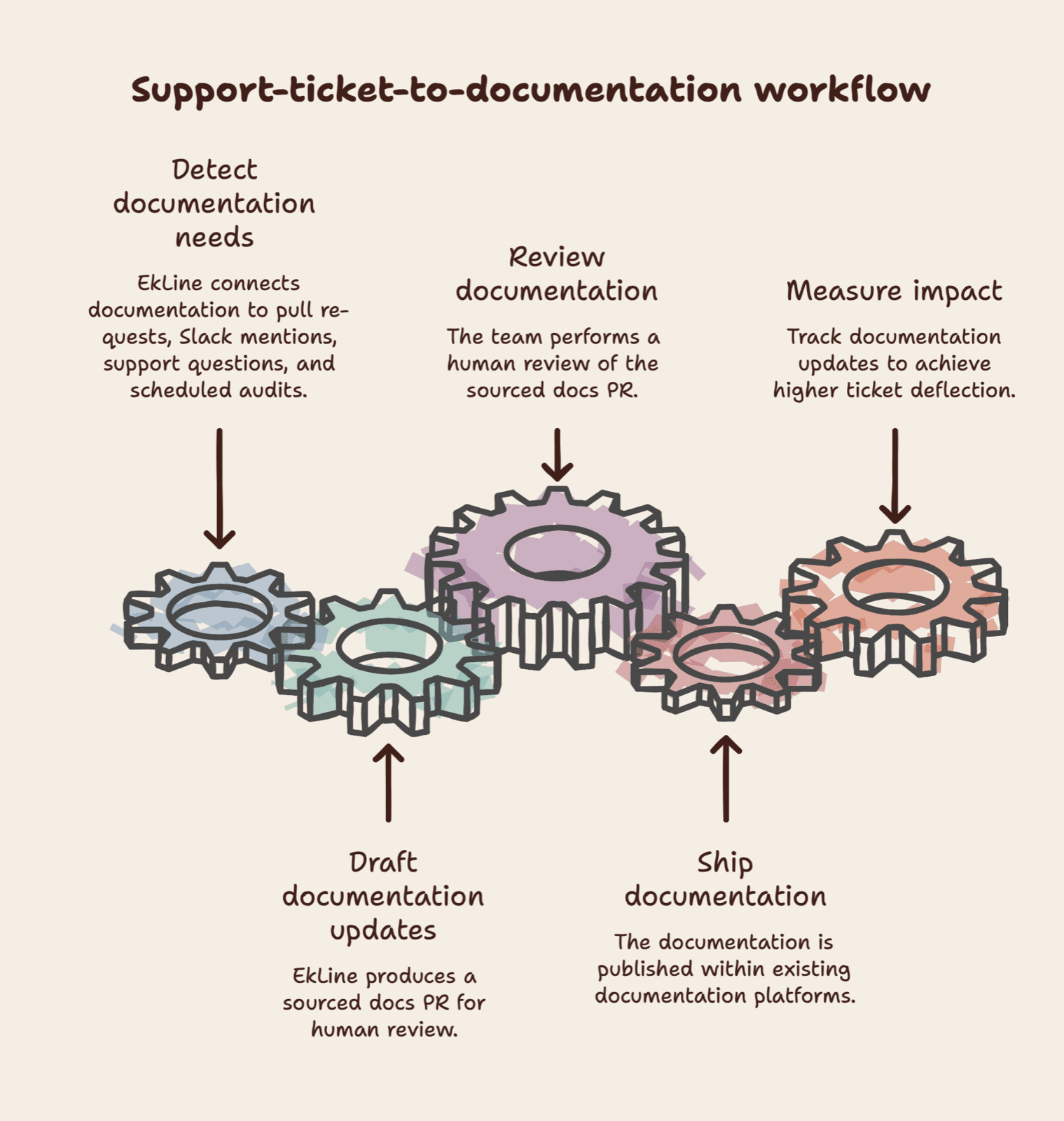
Support Tickets to Documentation: How to Turn Repeated Questions Into Maintained Help Content
Turn repeated support tickets into maintained documentation with a workflow for triage, drafting, review, publishing, and measurement.
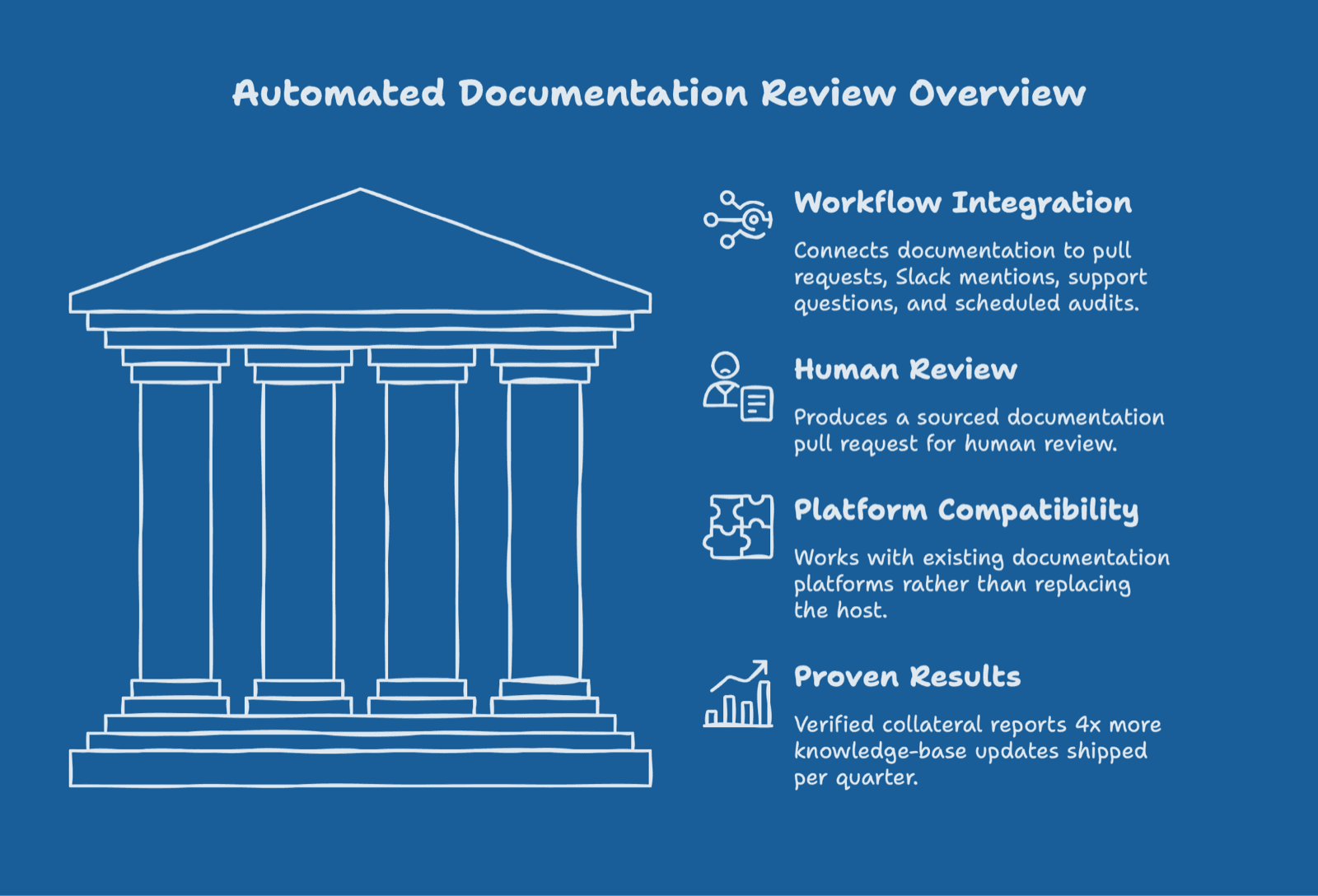
Automated Documentation Review: What It Checks, How It Works, and When to Use It
Learn what automated documentation review checks, how pre-merge workflows work, and which accuracy, style, and adoption risks to control.
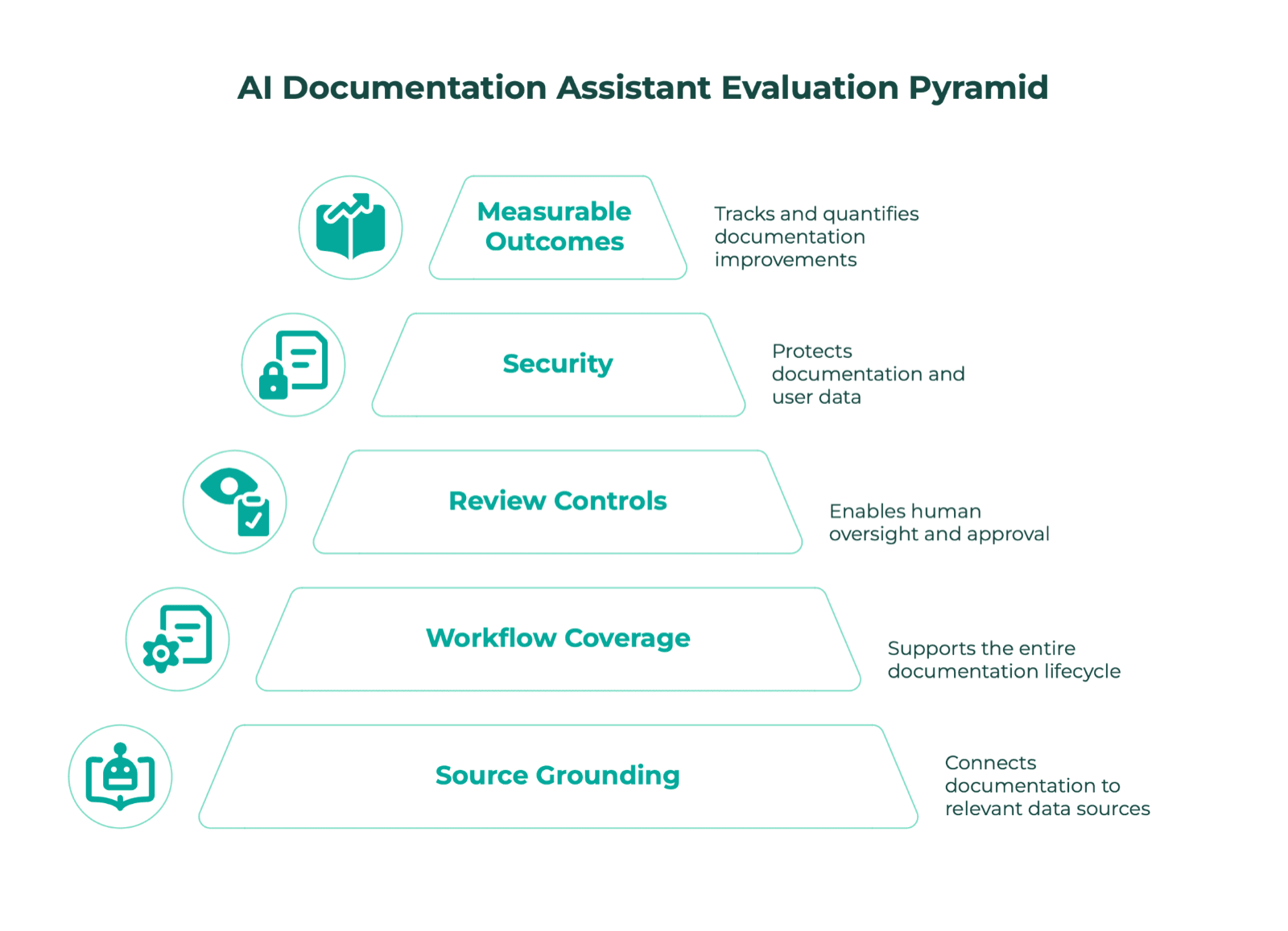
AI Documentation Assistant: What It Does, How to Evaluate It, and Where Human Review Fits
Evaluate an AI documentation assistant on source grounding, workflow coverage, review controls, security, and measurable documentation outcomes.
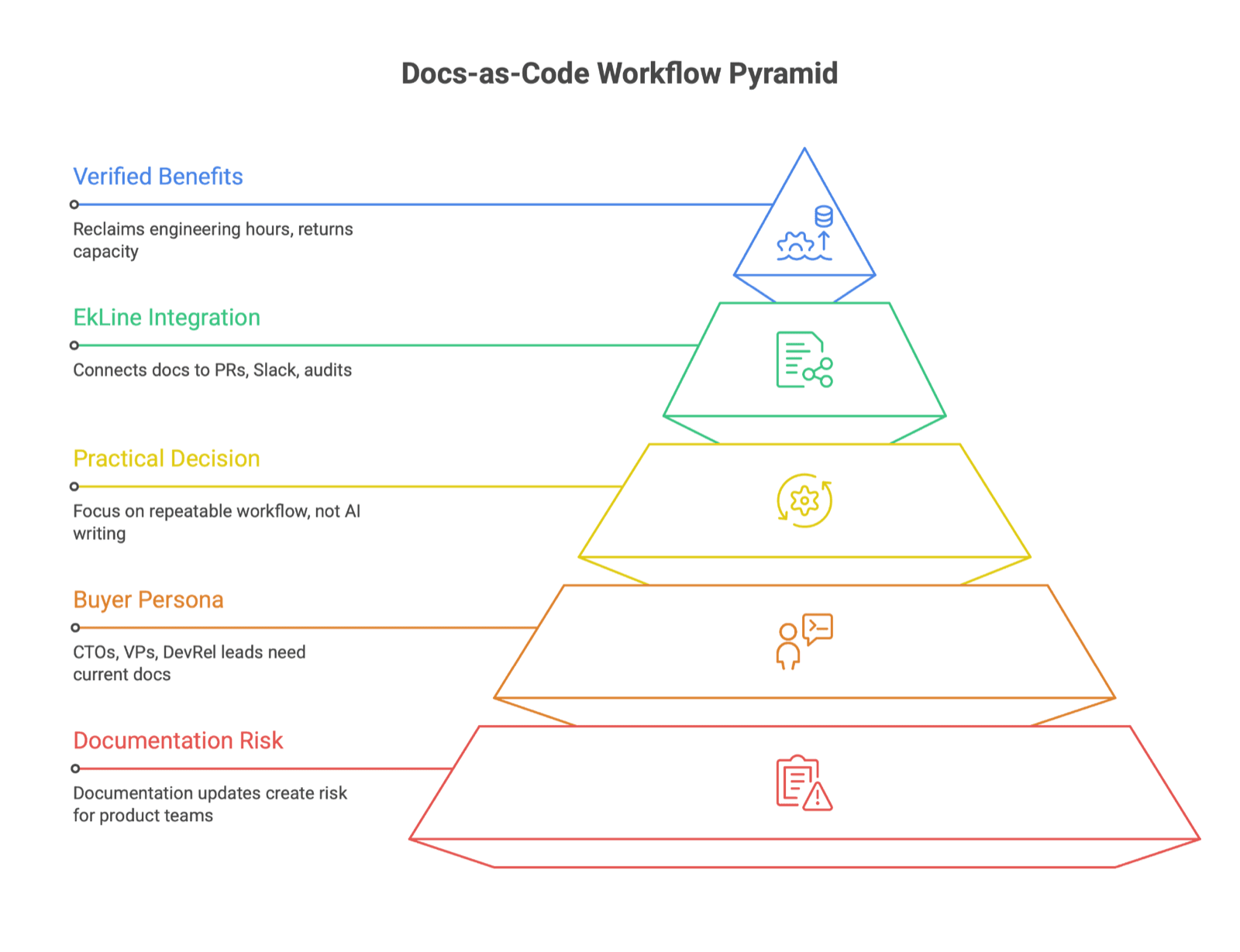
Docs as Code for Engineering Teams: How It Works, What It Solves, and Where It Falls Short
Learn how docs as code works for engineering teams, what Git-based review solves, where gaps remain, and how to improve the workflow.
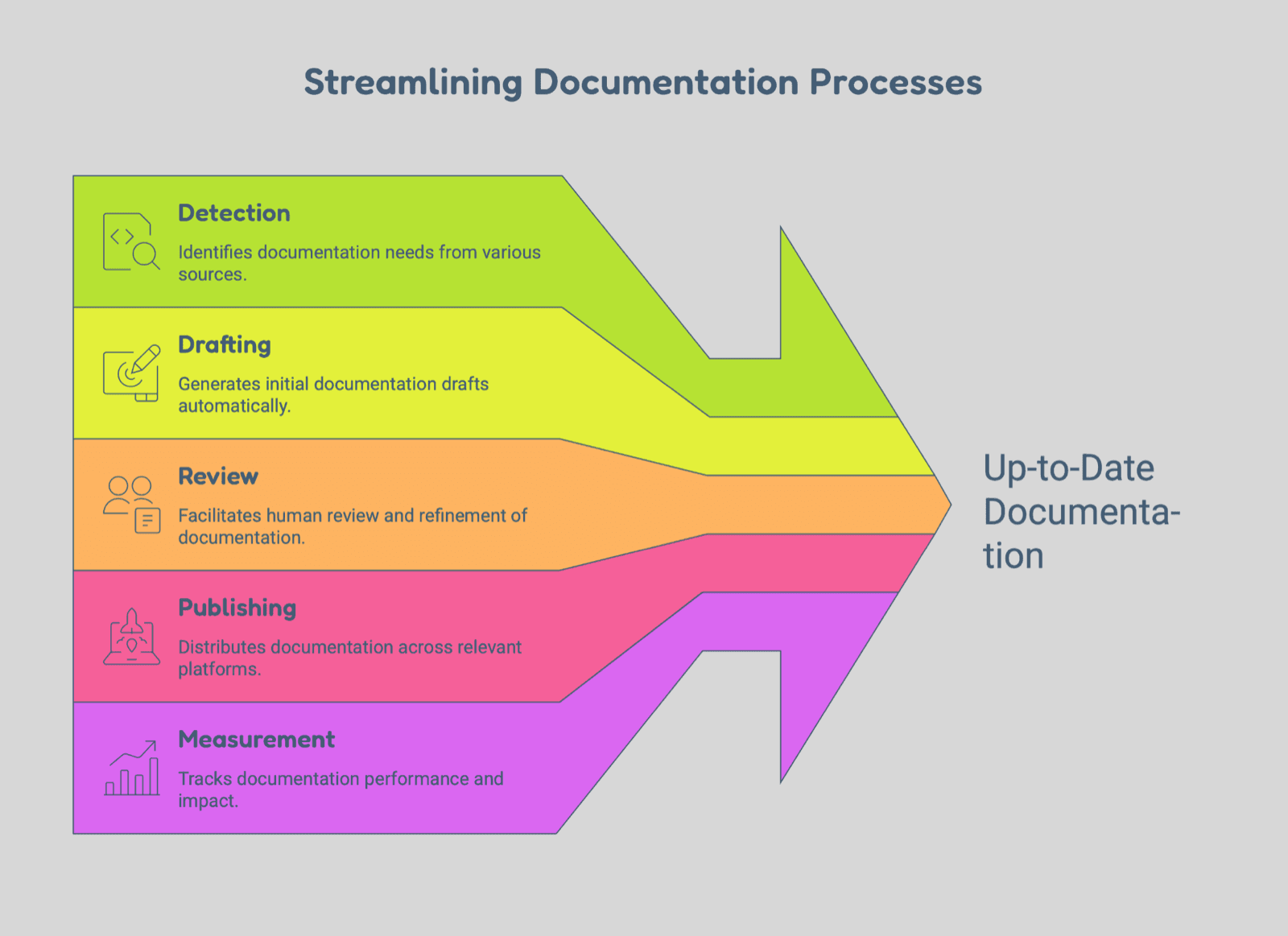
Documentation Lifecycle Automation: What It Is, How It Works, and When Teams Need It
Documentation lifecycle automation connects detection, drafting, review, publishing, and measurement. Learn how it works and when teams need it.
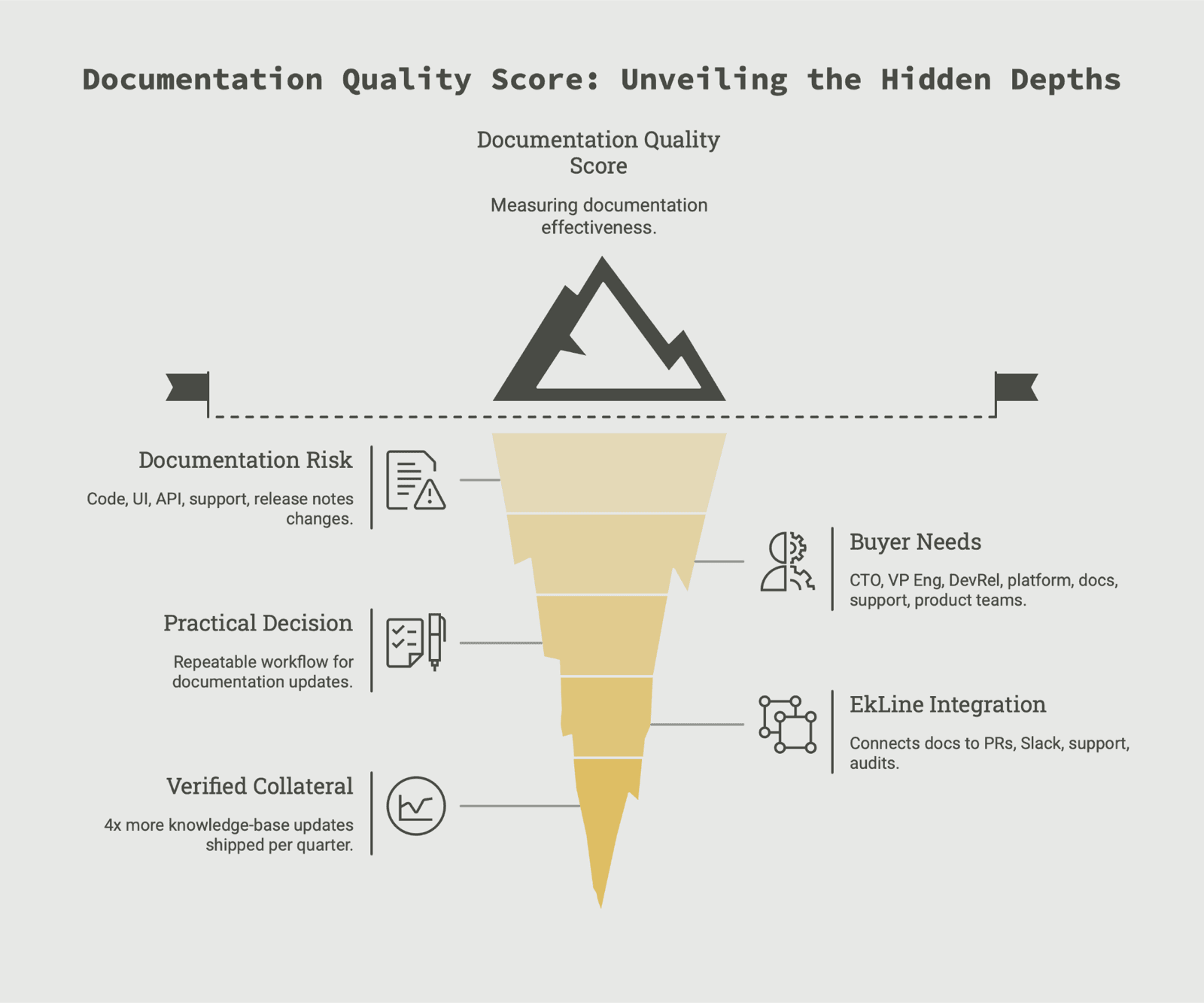
Documentation Quality Score: What to Measure, How to Weight It, and How to Improve It
Build a documentation quality score using accuracy, coverage, freshness, usability, and review metrics instead of relying on page counts.
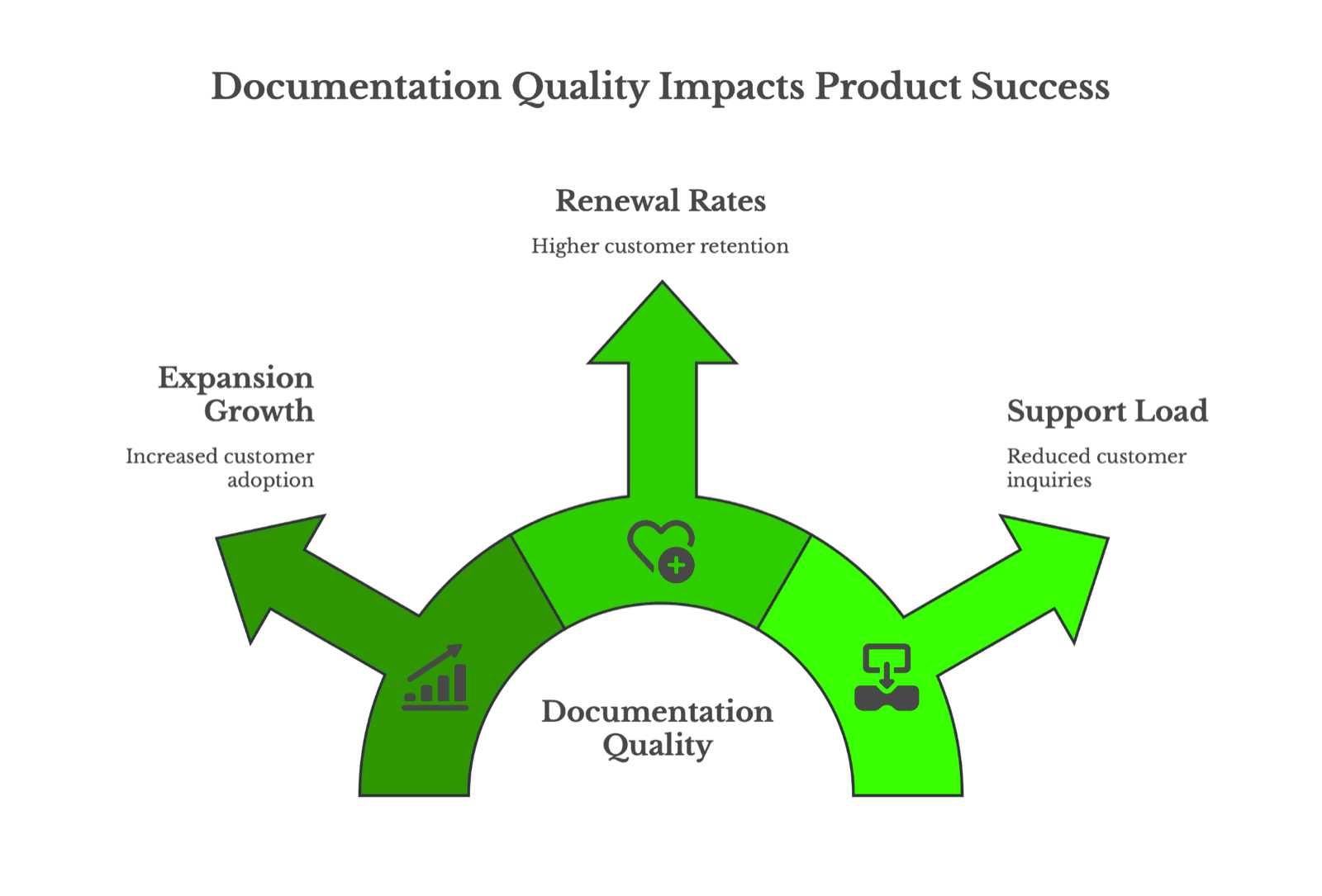
Documentation Quality, Expansion, and Renewals: How Better Docs Reduce Support Load and Revenue Risk
Learn how documentation quality affects expansion, renewals, and support load, including the metrics that connect docs work to customer outcomes.

Documentation Gaps in Enterprise Onboarding: What Slows Buyers Down and How to Fix It
Find the documentation gaps that delay enterprise onboarding, security review, implementation, and buyer trust, then prioritize the right fixes.
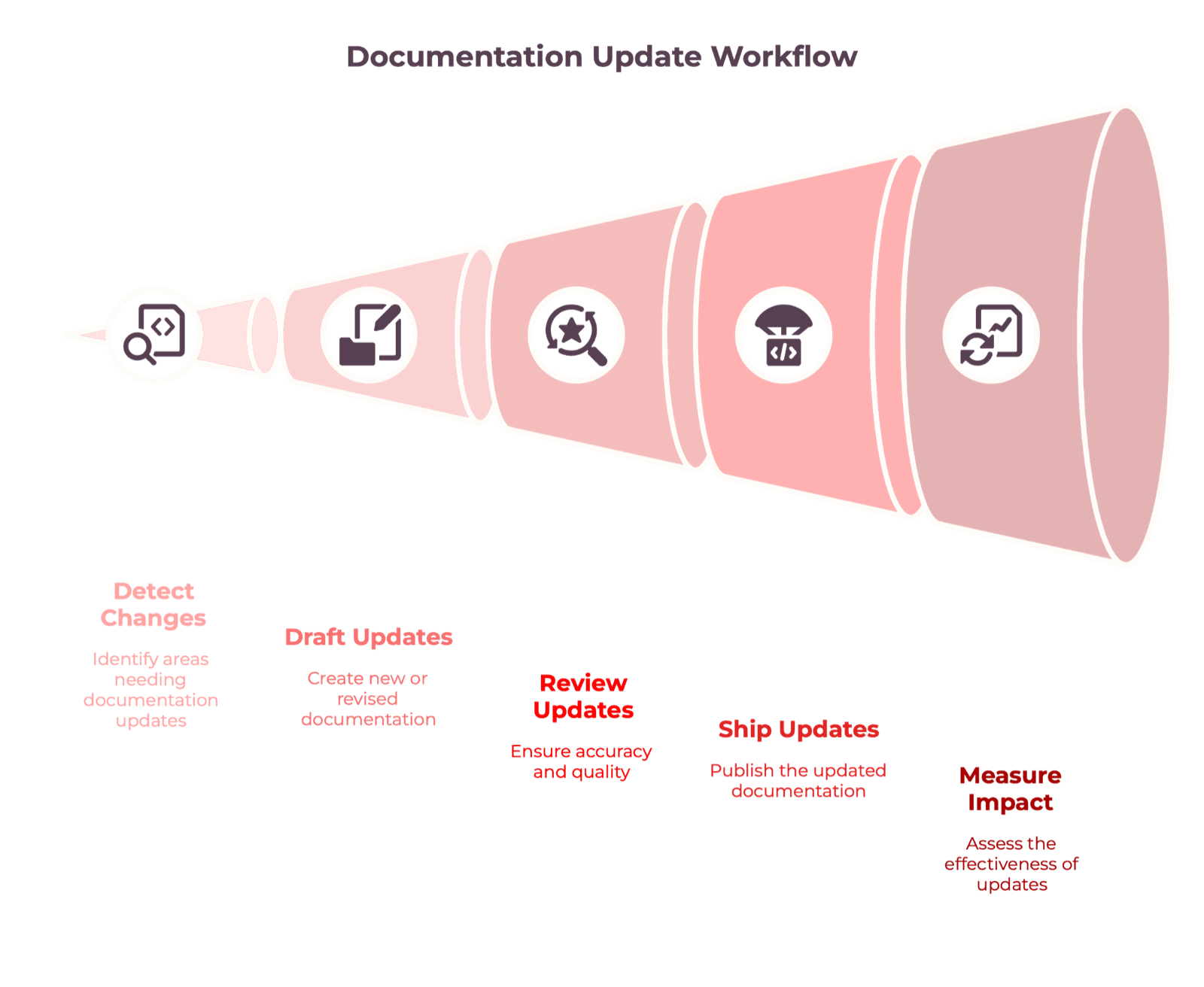
Stale Documentation and Support Tickets: Why Ticket Volume Rises and How to Reduce It
See how stale documentation increases repeat support tickets, resolution time, and support cost, then build a workflow that reduces demand.
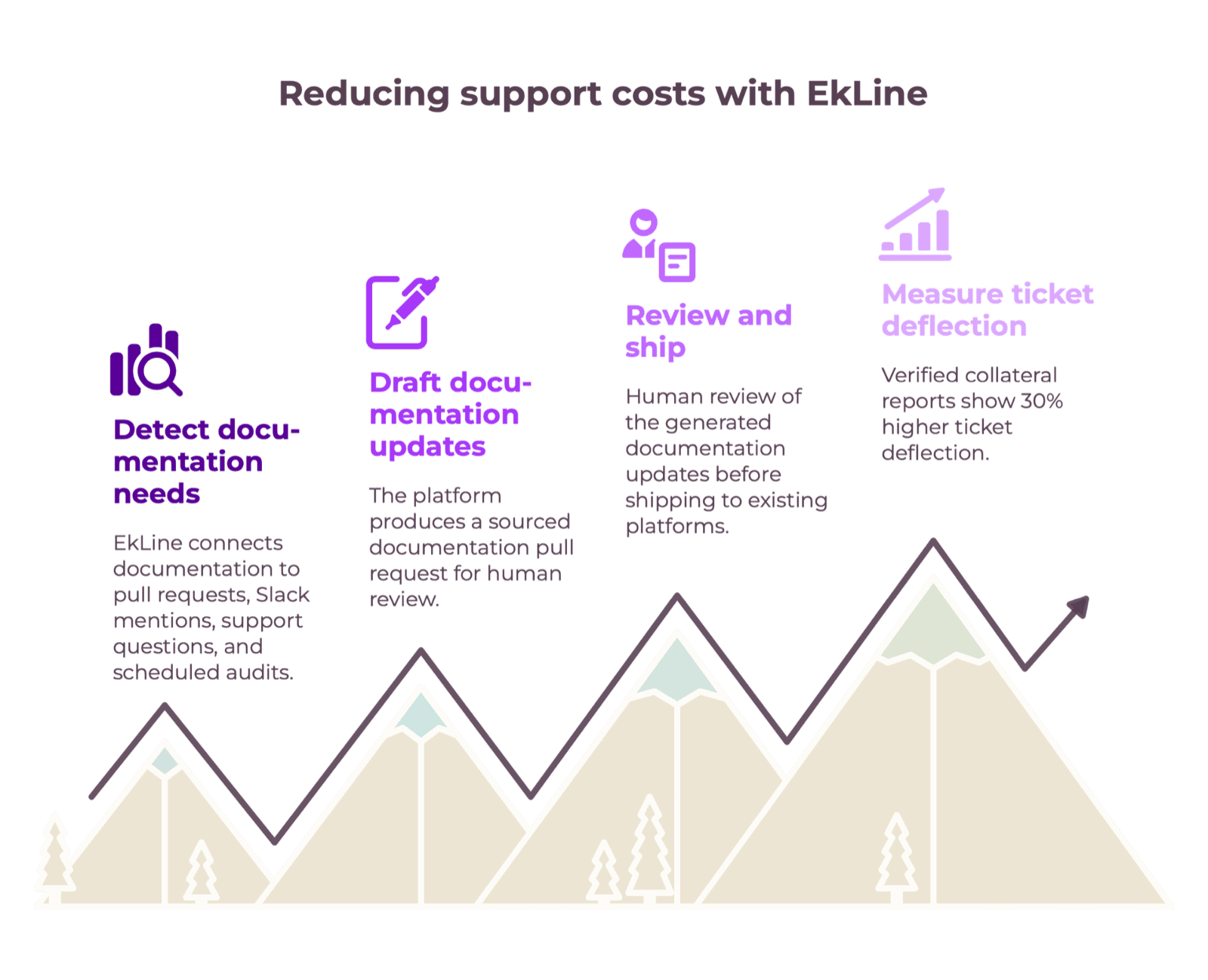
Troubleshooting Documentation and Support Cost: What Missing Guides Cost and How to Fix the Gap
Missing troubleshooting guides drive repeat support tickets. Learn how to measure the cost and convert recurring issues into maintained docs.
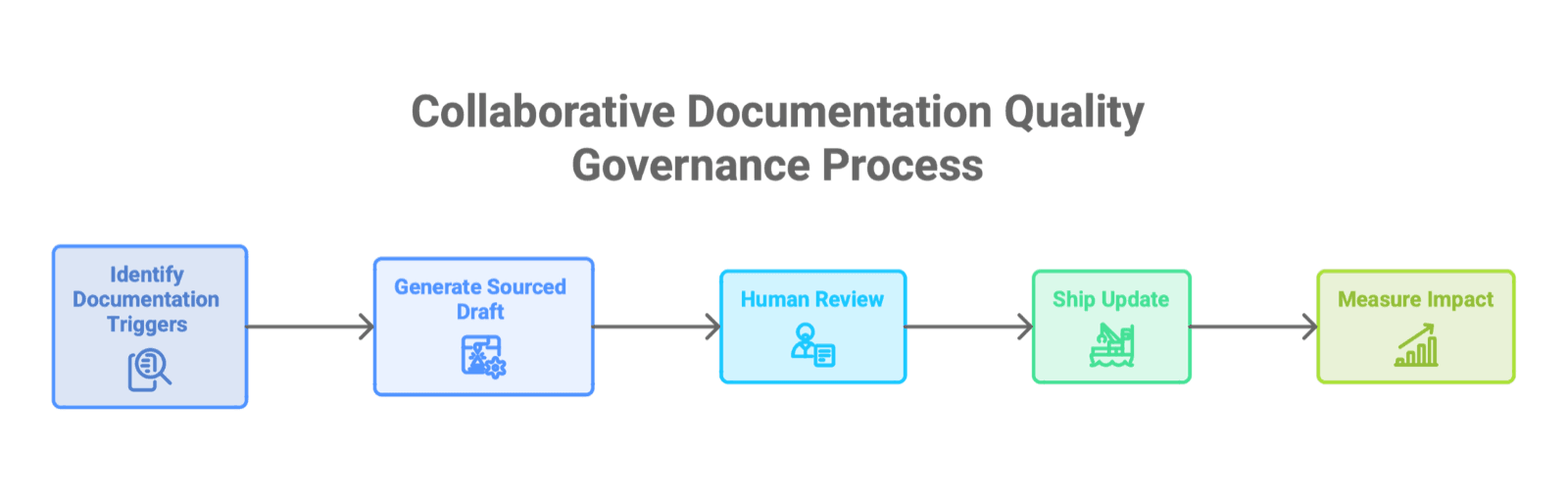
Collaborative Documentation Quality: Why Multi-Contributor Docs Drift and How to Govern Them
Multi-contributor documentation can drift in terminology, structure, and accuracy. Learn how to govern reviews without slowing every contributor.
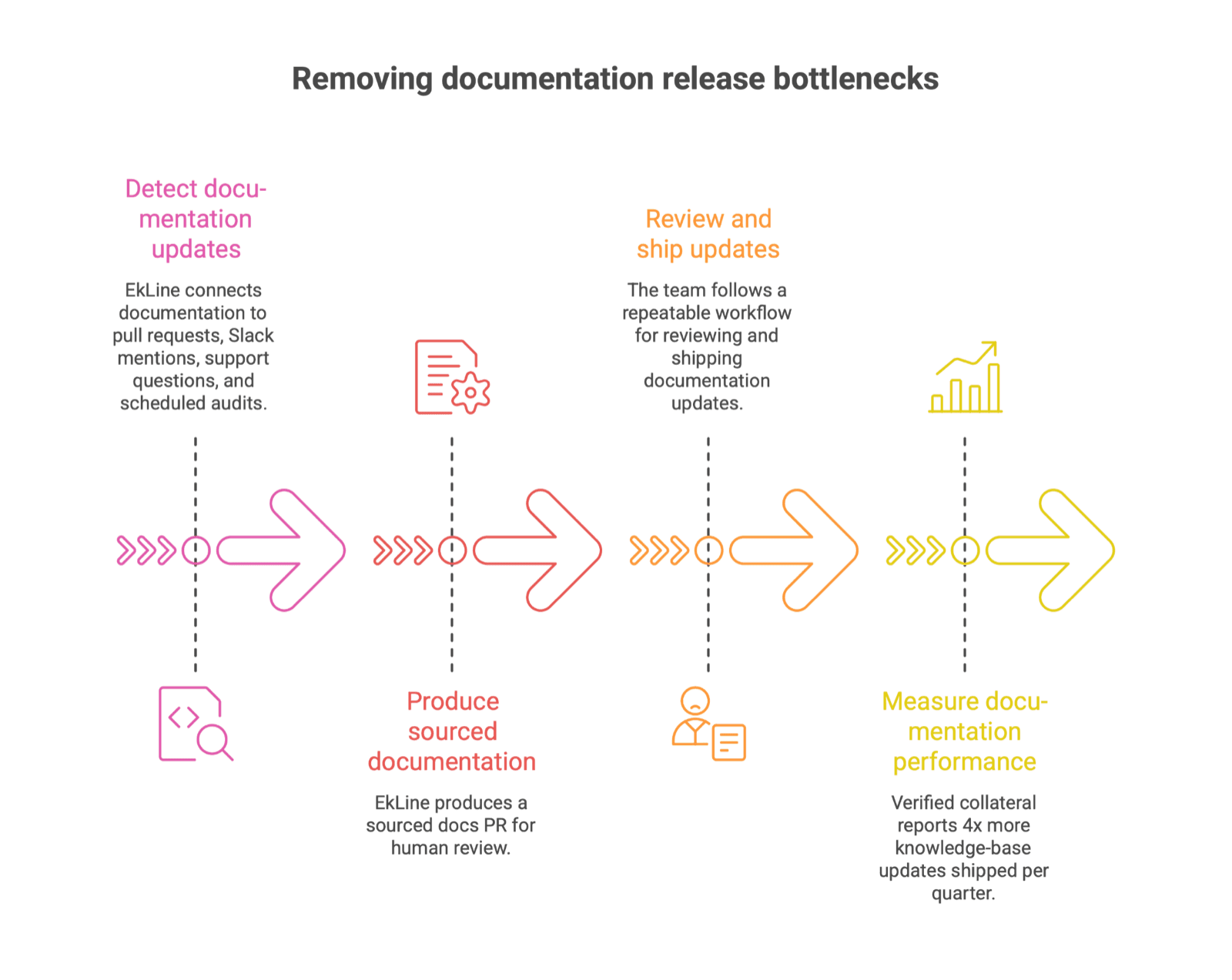
Documentation Release Blockers: Why Docs Delay Shipping and How to Remove the Bottlenecks
Documentation release blockers delay launches and engineering work. Learn where bottlenecks form, what to measure, and how to remove them.
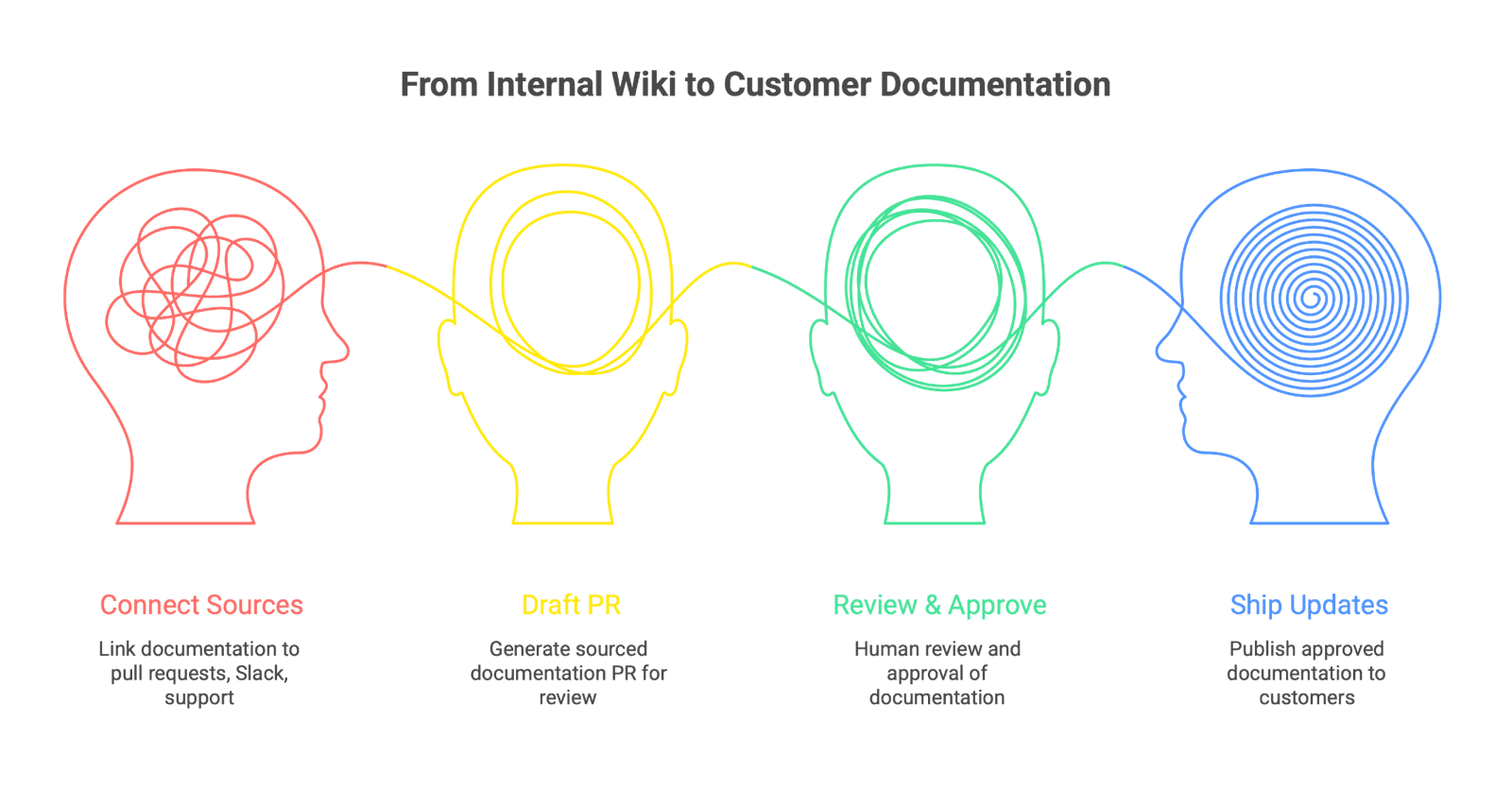
Internal Wiki vs Customer Documentation: What Each Solves, Where Wikis Fail, and How to Close the Gap
Compare internal wikis with customer documentation, identify knowledge gaps, and build a workflow for publishing approved product answers.

Slack Product Knowledge Documentation: How to Turn Internal Answers Into Maintained Customer Docs
Turn recurring Slack product answers into reviewed customer documentation without losing context, ownership, or source-of-truth links.
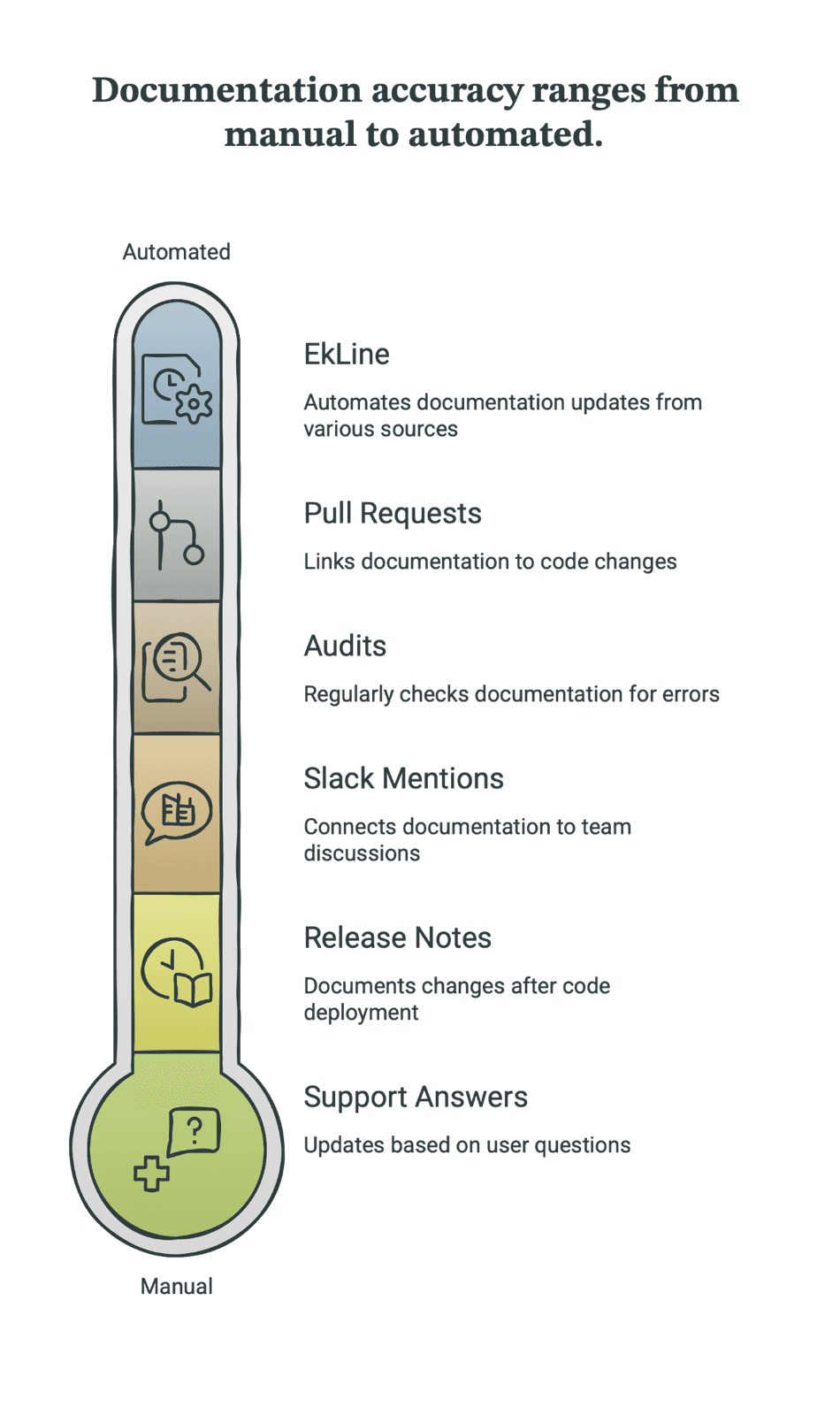
Inaccurate Documentation and Developer Adoption: Why Users Leave and How to Fix the Experience
Inaccurate documentation increases developer drop-off. Learn what breaks trust, how to measure adoption impact, and how to restore accuracy.
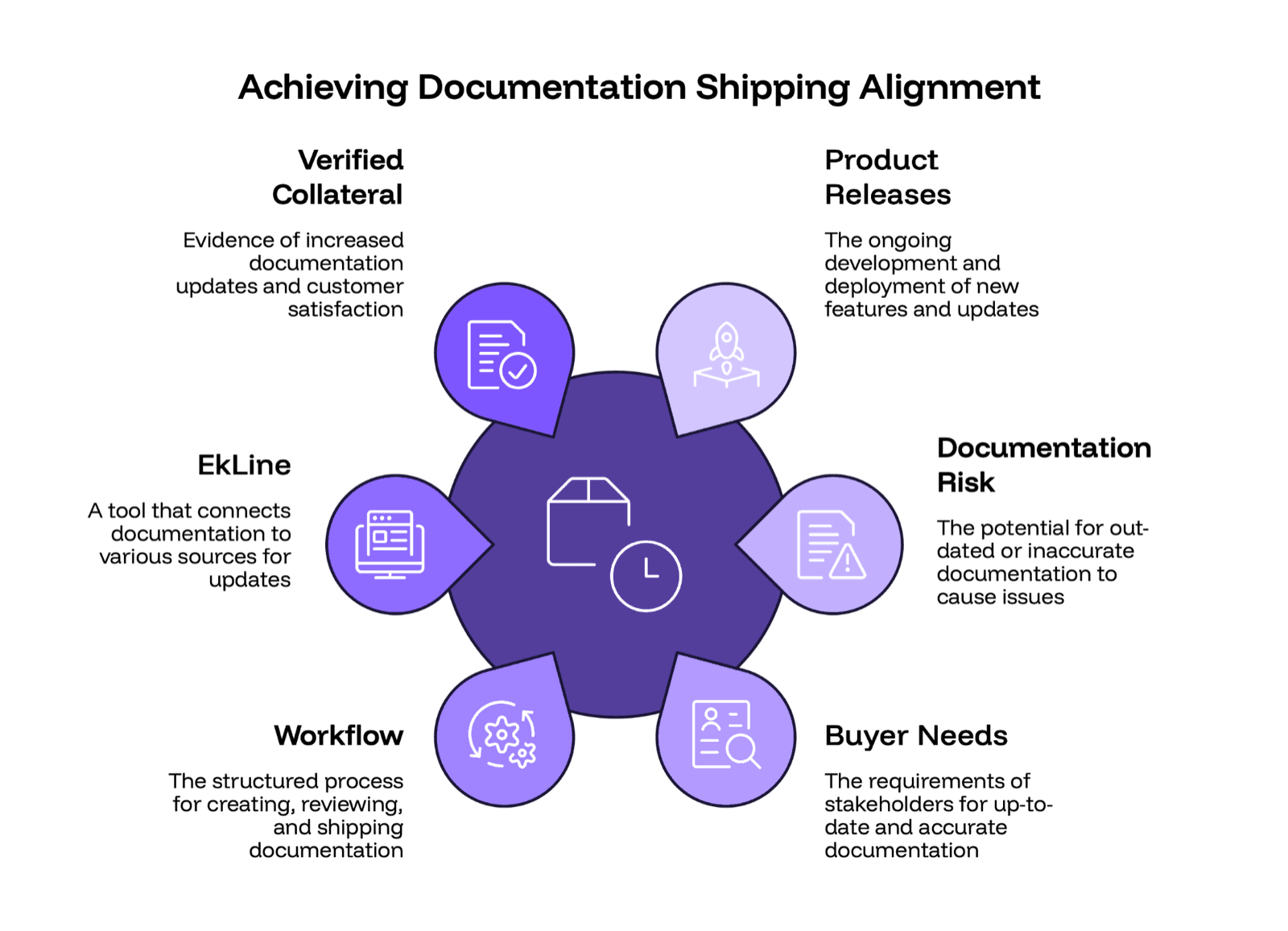
Documentation Shipping Delays: Why Docs Fall Behind Product Releases and How to Fix the Workflow
Learn why documentation falls behind product releases, what the docs-later cycle breaks, and how to keep docs aligned with shipping.
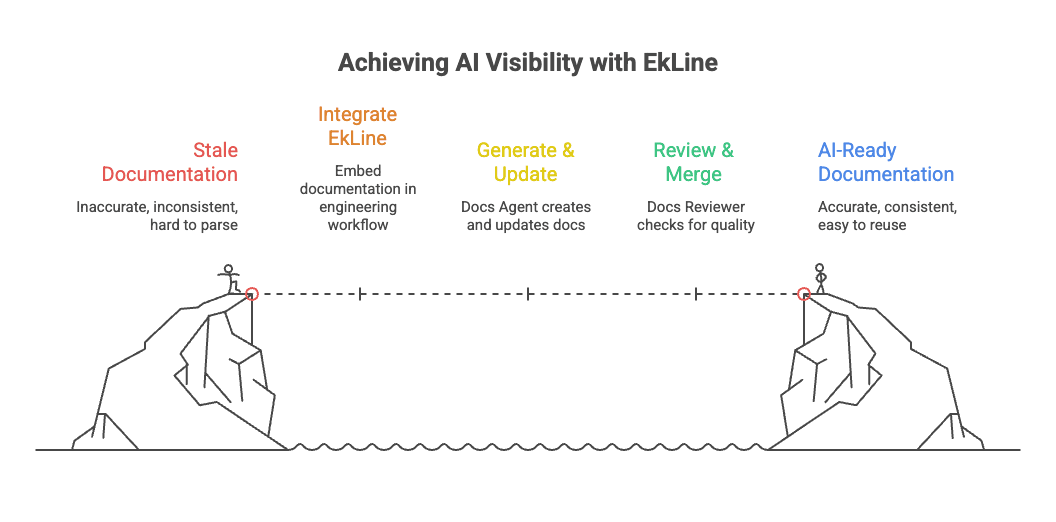
How EkLine Helps Enterprises Win at AI Visibility, GEO, and Agentic Discovery
Learn how EkLine keeps product, API, and developer docs accurate enough for AI engines, search systems, and agents to find, trust, and cite.
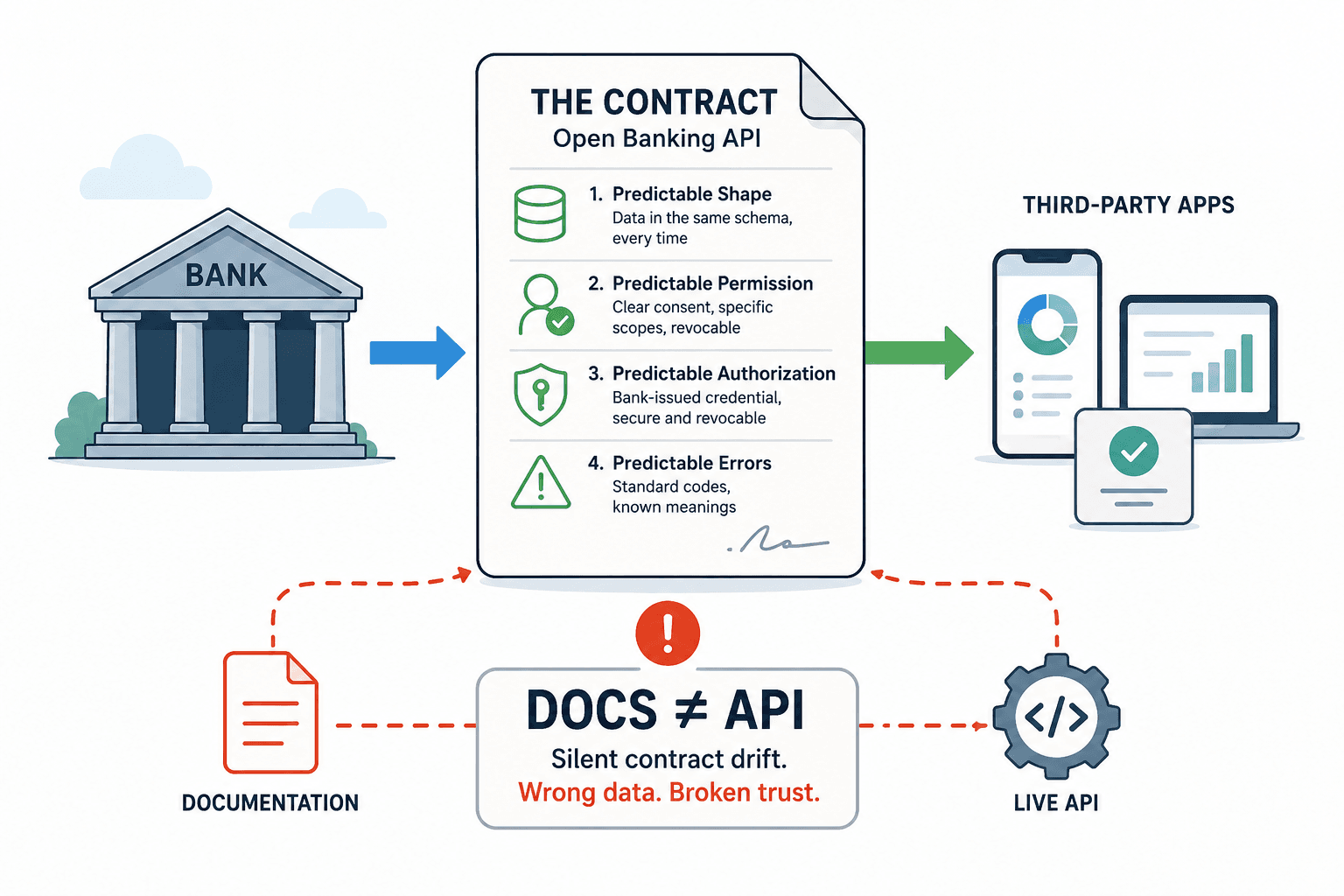
What an Open Banking API Actually Promises (and Where the Docs Quietly Break That Promise)
An open banking API is a four-part contract between a bank and an app. When the docs drift from the API, the contract silently breaks. Here is where it breaks and why it matters.
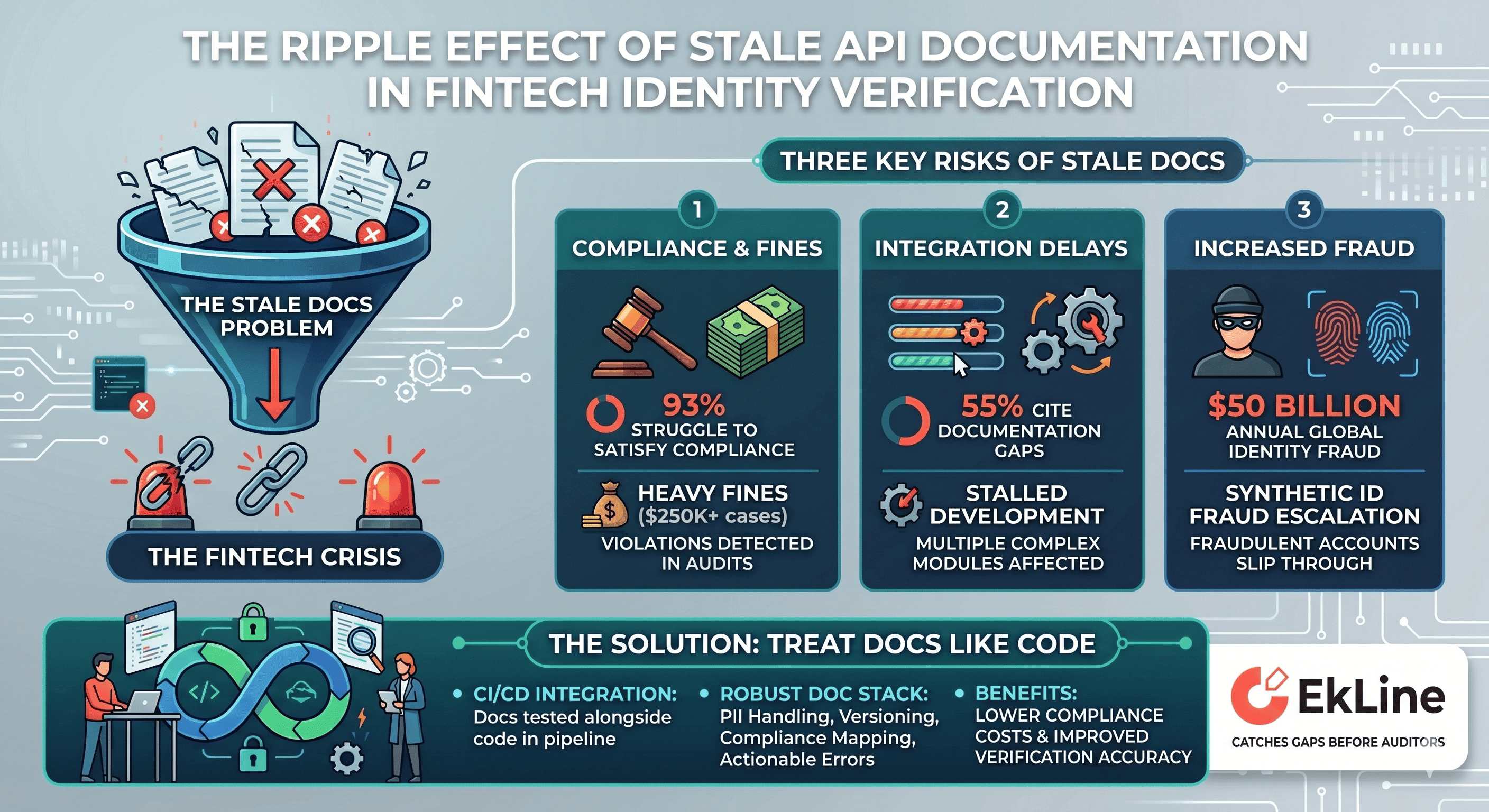
What Wrong API Docs Cost Identity Verification Teams
60% of fintechs paid $250K+ in compliance fines from documentation gaps. Here is what wrong API docs actually cost identity verification teams.

What wrong docs cost test automation teams
A stale Cypress example does not just break one test. It breaks 200 tests across 50 teams on Monday morning. Here is the real cost.
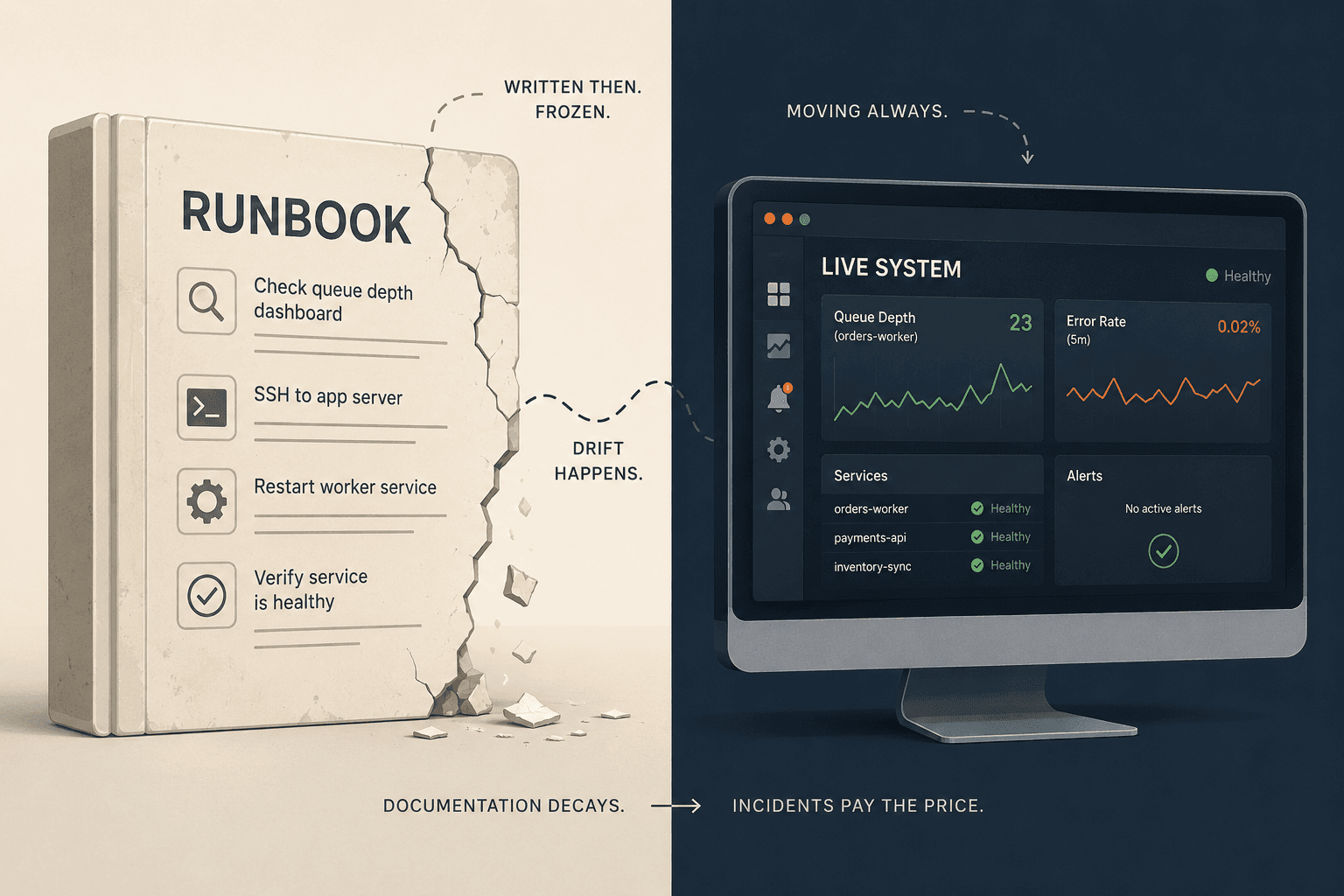
Why Your Incident Runbook Lies to You at 3 a.m. (and How to Tell Before the Page Fires)
A runbook is a frozen snapshot of how your system used to work. The system keeps changing. The runbook does not. Here is the math of MTTR when the runbook lies, and how to catch the lie before the page fires.
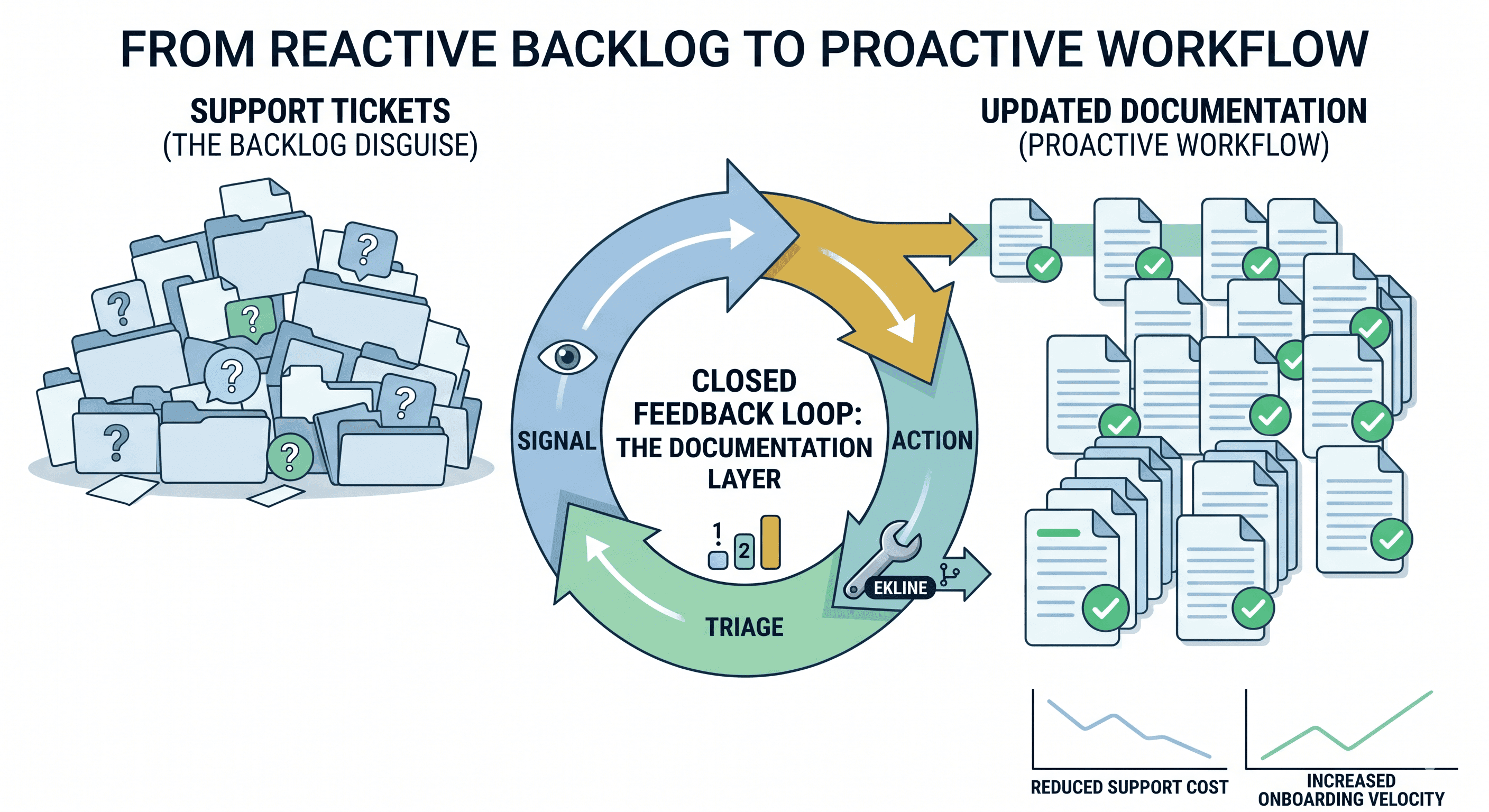
Your Support Tickets Are a Documentation Backlog in Disguise
Every repeated support ticket is a documentation gap you already have the answer for. Here is how to close the loop and stop solving the same problem twice.
Get Cited by ChatGPT Using Your Support Tickets and Engineering Releases
Support tickets and engineering release notes are untapped goldmines for Answer Engine Optimization (AEO). Instead of hiding these insights in private channels or dry changelogs, companies should rewrite them into public, "answer-first" knowledge base articles.
Your Knowledge Base Is Your Next Growth Channel
With 58% of Google searches now ending without a click and AI answer engines (like ChatGPT and Google AI Overviews) handling billions of queries, traditional SEO is losing ground.
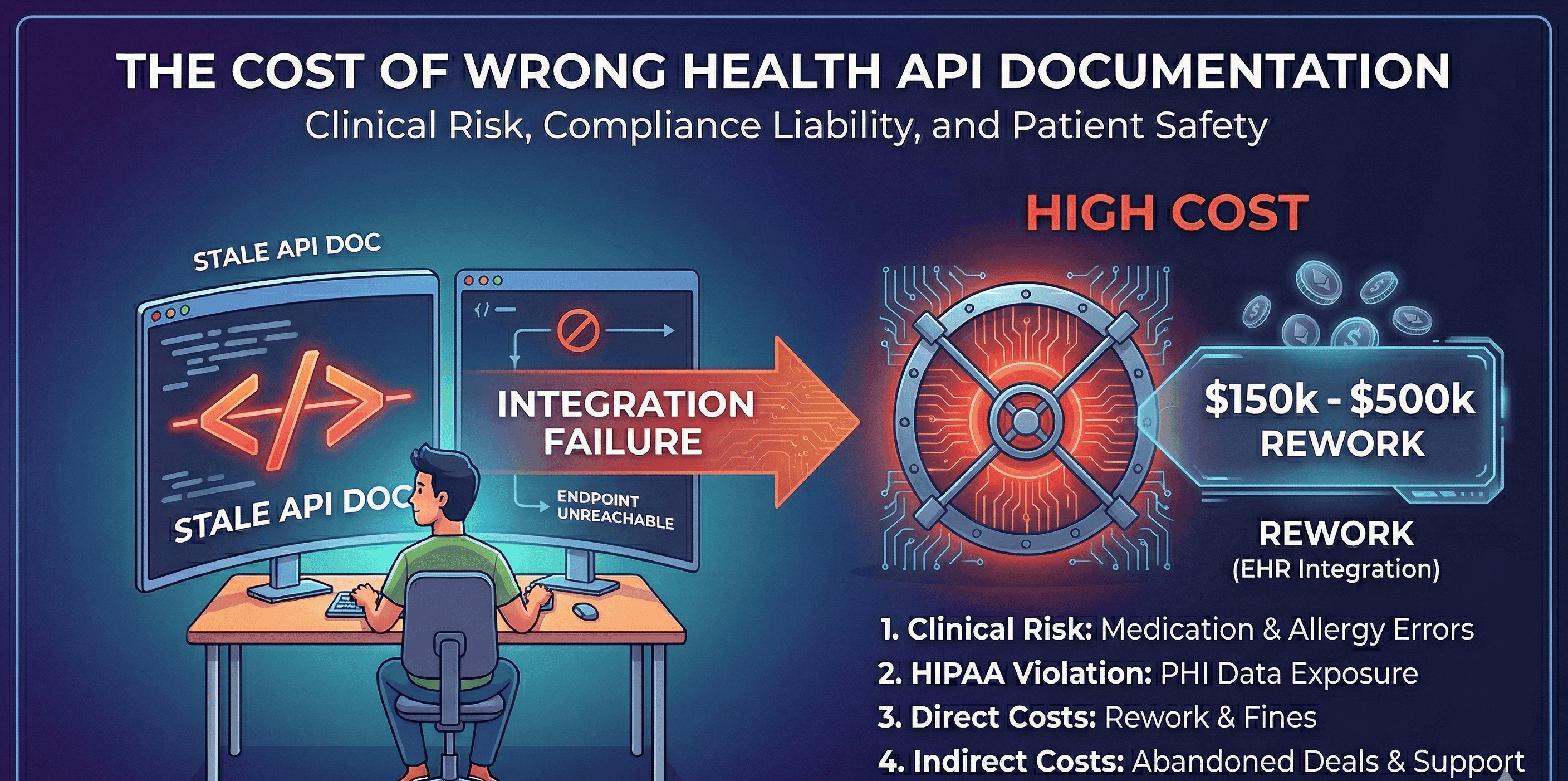
What a wrong API example costs healthtech companies
A wrong code sample in your health API docs does not just waste a developer's afternoon. It can expose patient data, trigger compliance fines, and break clinical workflows.
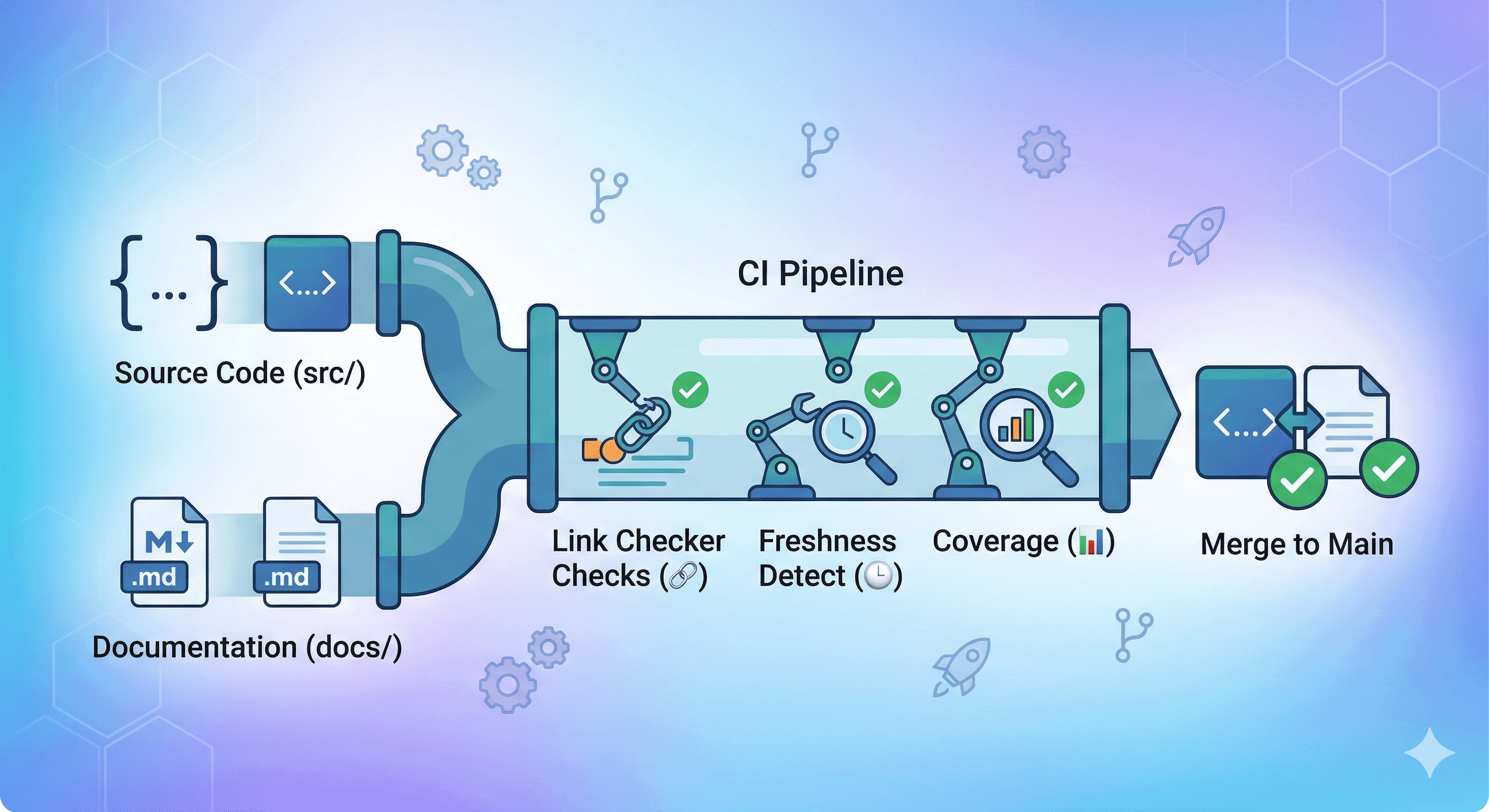
Why the best open-source projects treat docs like code
We ran documentation quality tools against 8 open-source repos. The results show exactly what separates good docs from abandoned ones.
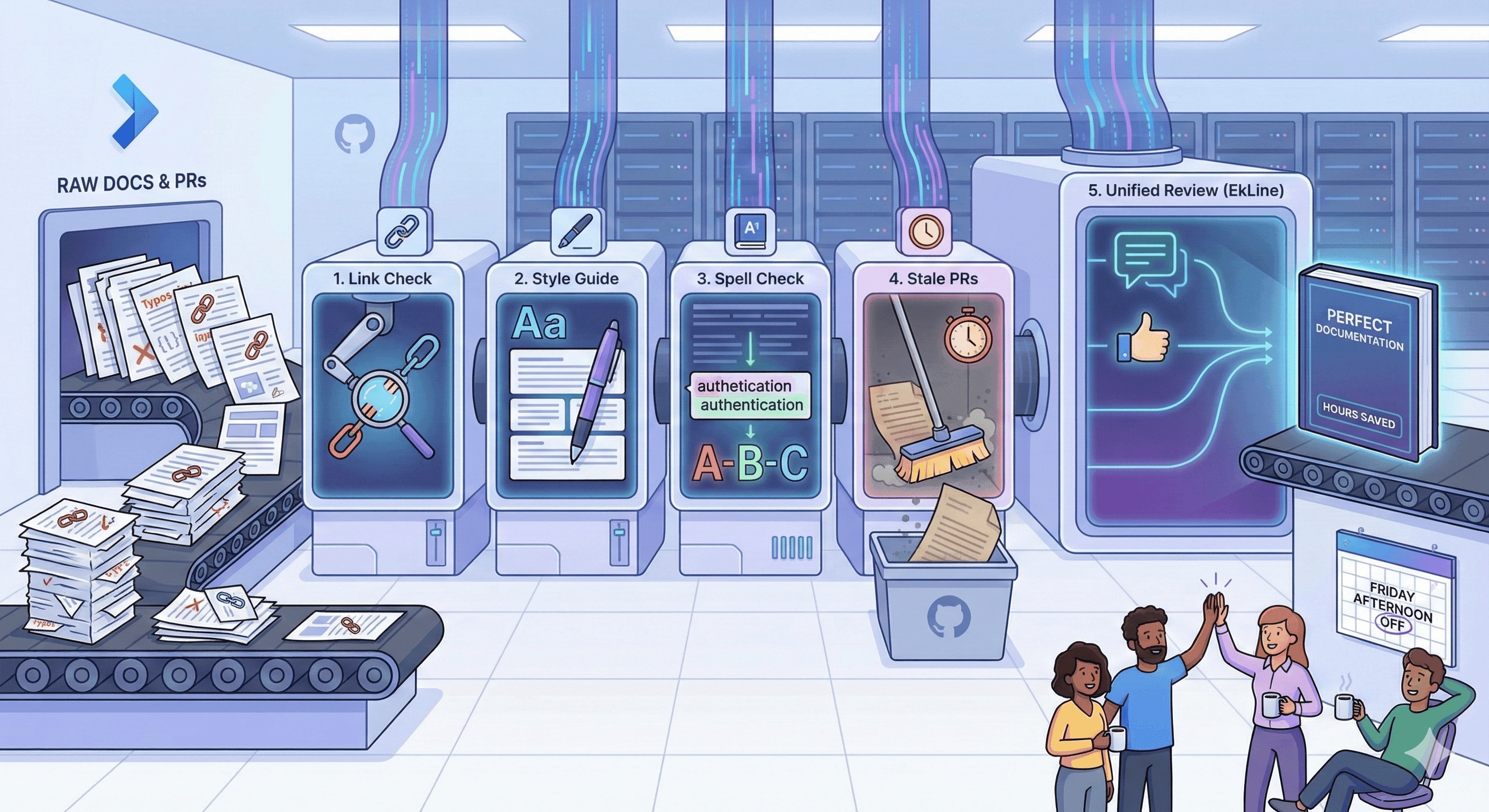
5 GitHub Actions That Save Our Docs Team Hours Every Week
The article details how a small, four-person startup automated their documentation review process to save time and preserve their sanity. By implementing a specific set of GitHub Actions, they shifted the burden of catching mechanical errors (like broken links and typos) from human reviewers to bots
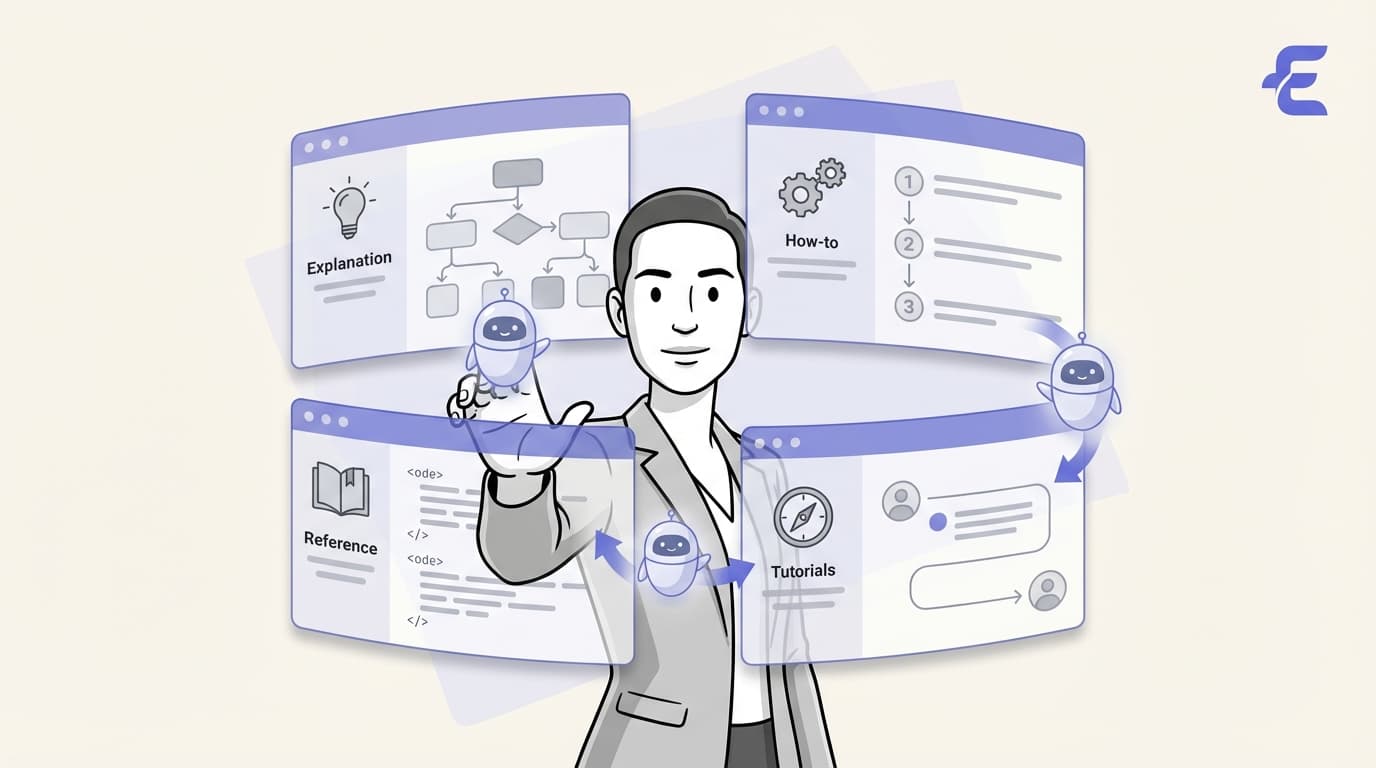
A technical guide to the Diataxis framework for modern documentation
A technical guide to the Diataxis framework for modern documentation
Enhance your software documentation: The impact of active voice
Active voice makes software documentation clearer, concise, and more engaging. Learn how it improves user comprehension, speeds up reading, and reduces ambiguity. Discover industry best practices, when passive voice works, and tools to optimize your writing for better documentation.
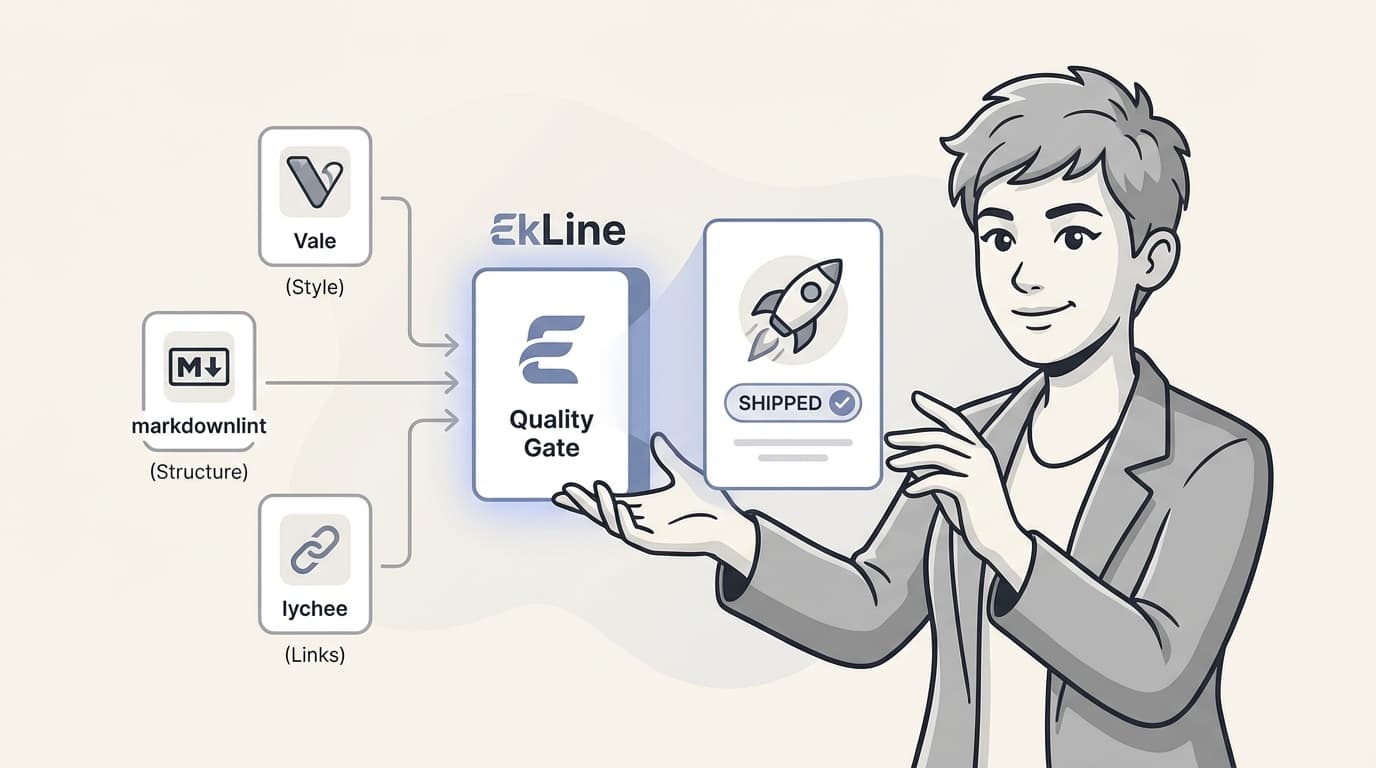
A quality gate that ships: Evolving CI/CD for documentation in 2026
The "docs-as-code" idea was a significant development. We started treating documentation like software, pulling it into developer workflows and making CI/CD for docs a normal thing. And for a while, that was enough.
The API Docs Review Checklist You'll Wish You Had Last Sprint
Your PR shipped. Your docs didn't. Here's the checklist that makes 'I forgot to update the docs' a thing of the past.
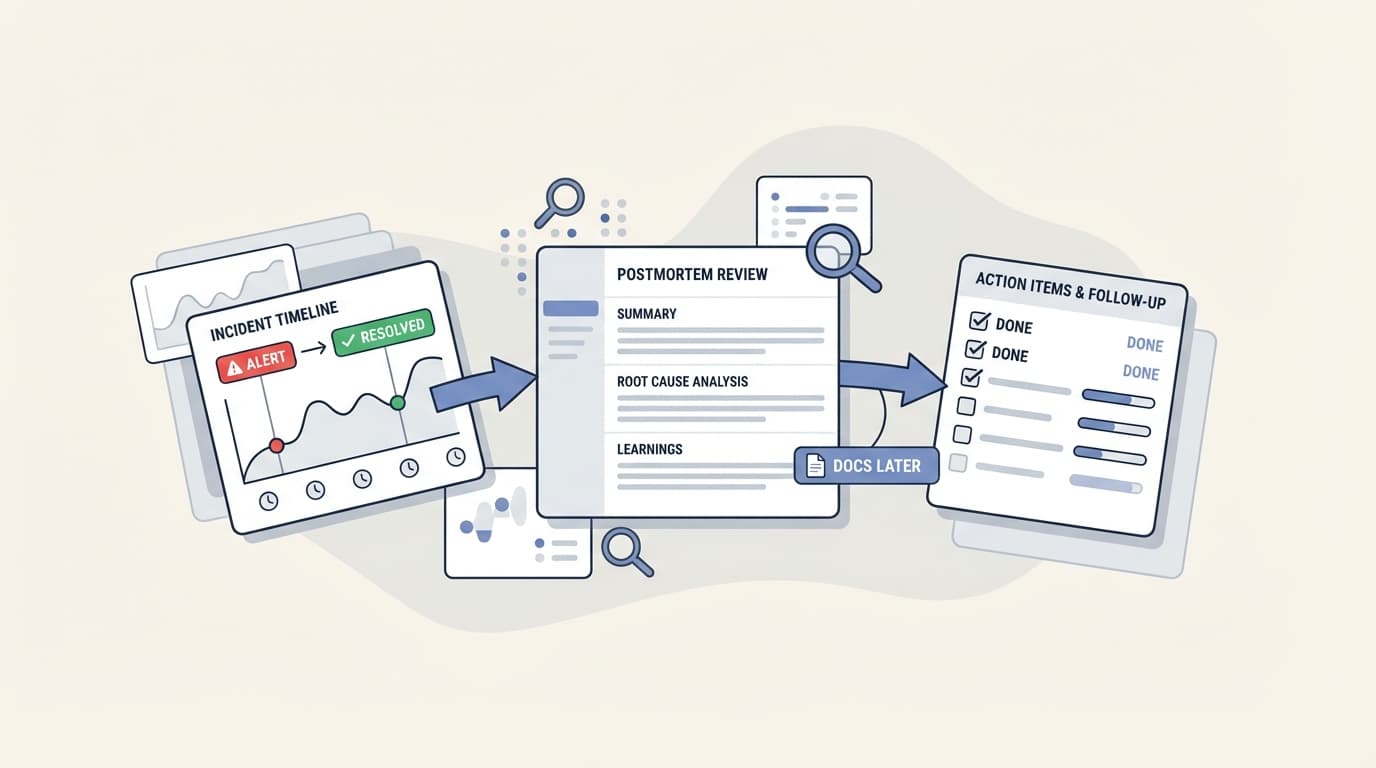
The docs later postmortem pattern: A guide to learning from incidents
The big red alert is gone, the dashboards are green, and the incident channel is finally quiet. The team takes a collective breath. You’ve fixed it. But what comes next is just as important as the fix itself: figuring out what happened so it doesn't happen again.
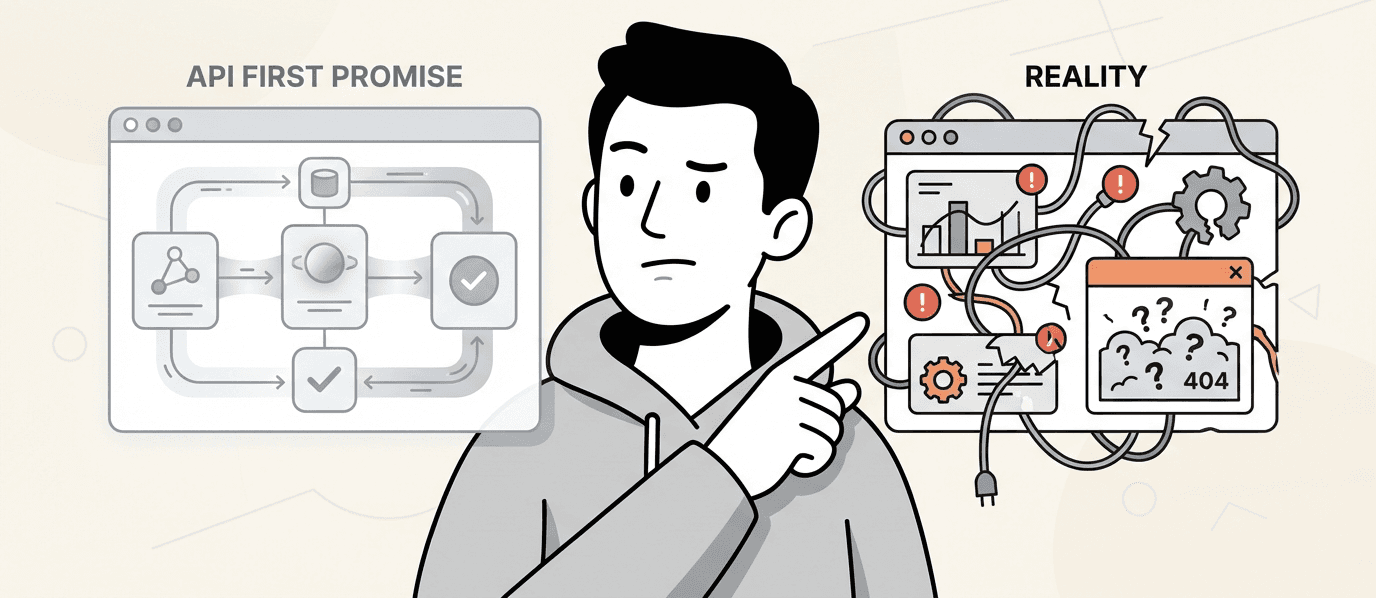
The great API first lie: What it really means and how to get it right
This gap between the buzzword and reality is often called the API First Lie. It’s the promise of a smooth process that turns into a challenge for any developer who has to use the API.
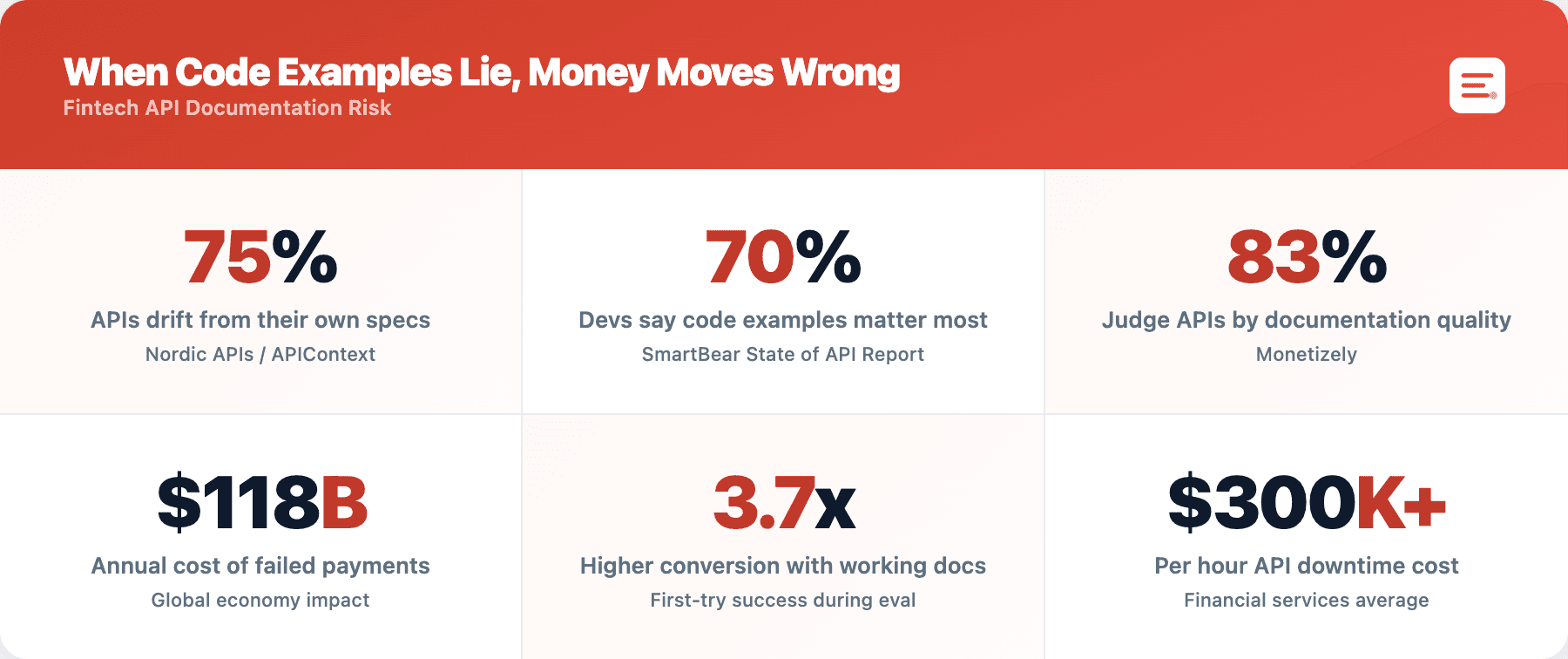
The Real Cost of a Wrong API Example in Financial Services
A wrong code example in a payments API doesn't post the wrong image — it moves real money. Here's why fintech API docs need the same rigor as transaction processing, and what the best platforms do about it.
Why Fintech API Docs Are a Competitive Advantage
In fintech, API documentation isn't just a developer convenience—it's critical infrastructure. Unlike standard SaaS where bad docs merely cause frustration, outdated endpoints or vague error handling in financial APIs can lead to irreversible transactions, compliance breaches, and lost money.
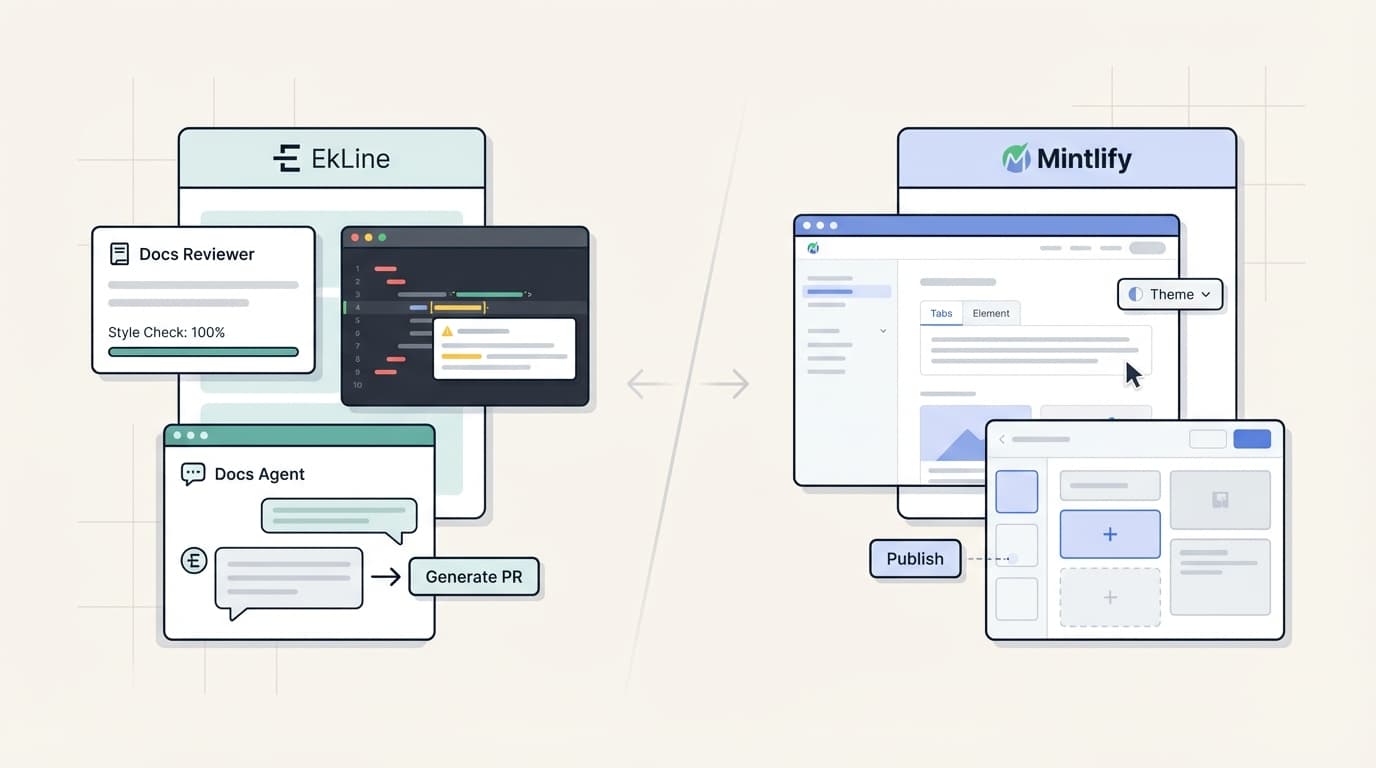
EkLine vs Mintlify: Which documentation tool is right for you?
Quality documentation needs to be well-designed, easy to navigate, and accurate. When docs fall out of sync with a product, it can lead to a poor user experience and increased support tickets. The challenge is keeping everything up-to-date without slowing down the development team.
EkLine vs GitBook
EkLine and GitBook approach documentation from different angles. GitBook is a complete documentation platform for writing, organizing, and hosting. EkLine automates the documentation lifecycle—treating outdated or inconsistent docs as bugs to catch before publication.
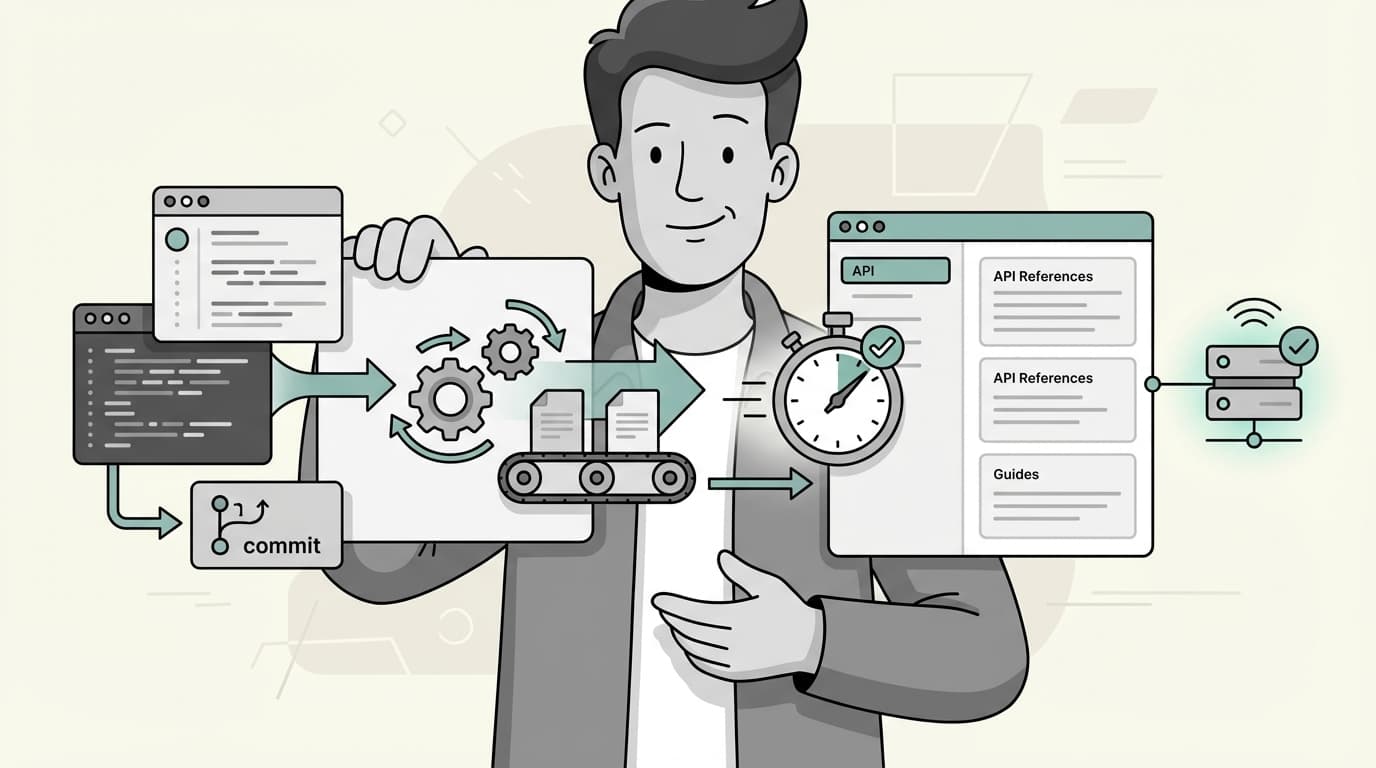
How docs CI/CD reduces time-to-first-call (TTFC)
API developers often abandon a product if they encounter friction during onboarding, such as outdated guides or broken code. The critical metric for measuring this success or failure is Time-to-First-Call (TTFC)—the time elapsed between a developer opening the documentation and making their first su
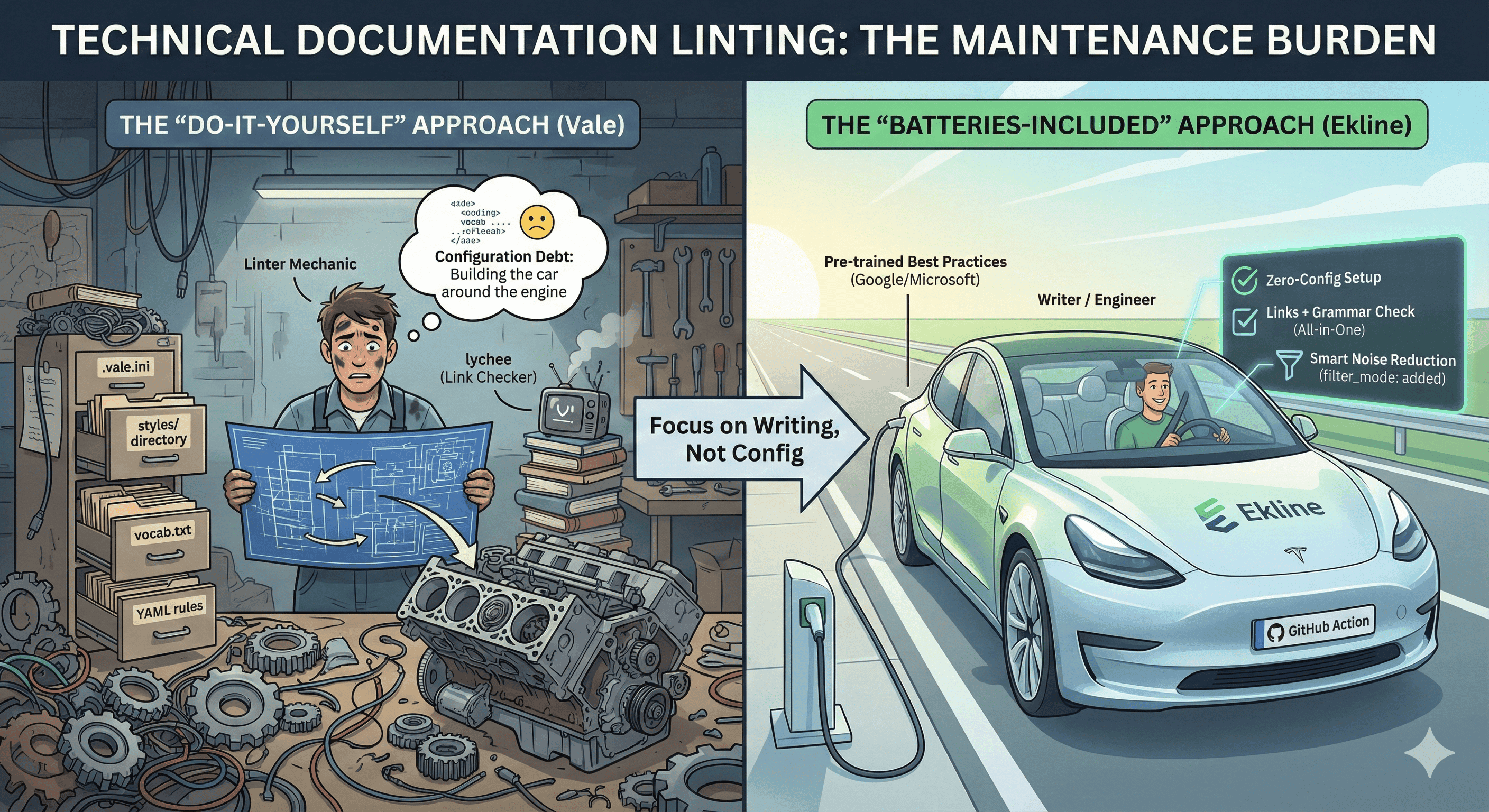
Vale vs. EkLine: Why We Built a "Zero-Config" Alternative for Docs CI
Vale is the industry standard for prose linting, but it requires significant "configuration debt" (managing .ini files, style folders, and regex rules). EkLine offers a "Zero-Config" alternative that works out of the box. Unlike Vale, EkLine includes native broken link validation and uses smart filt
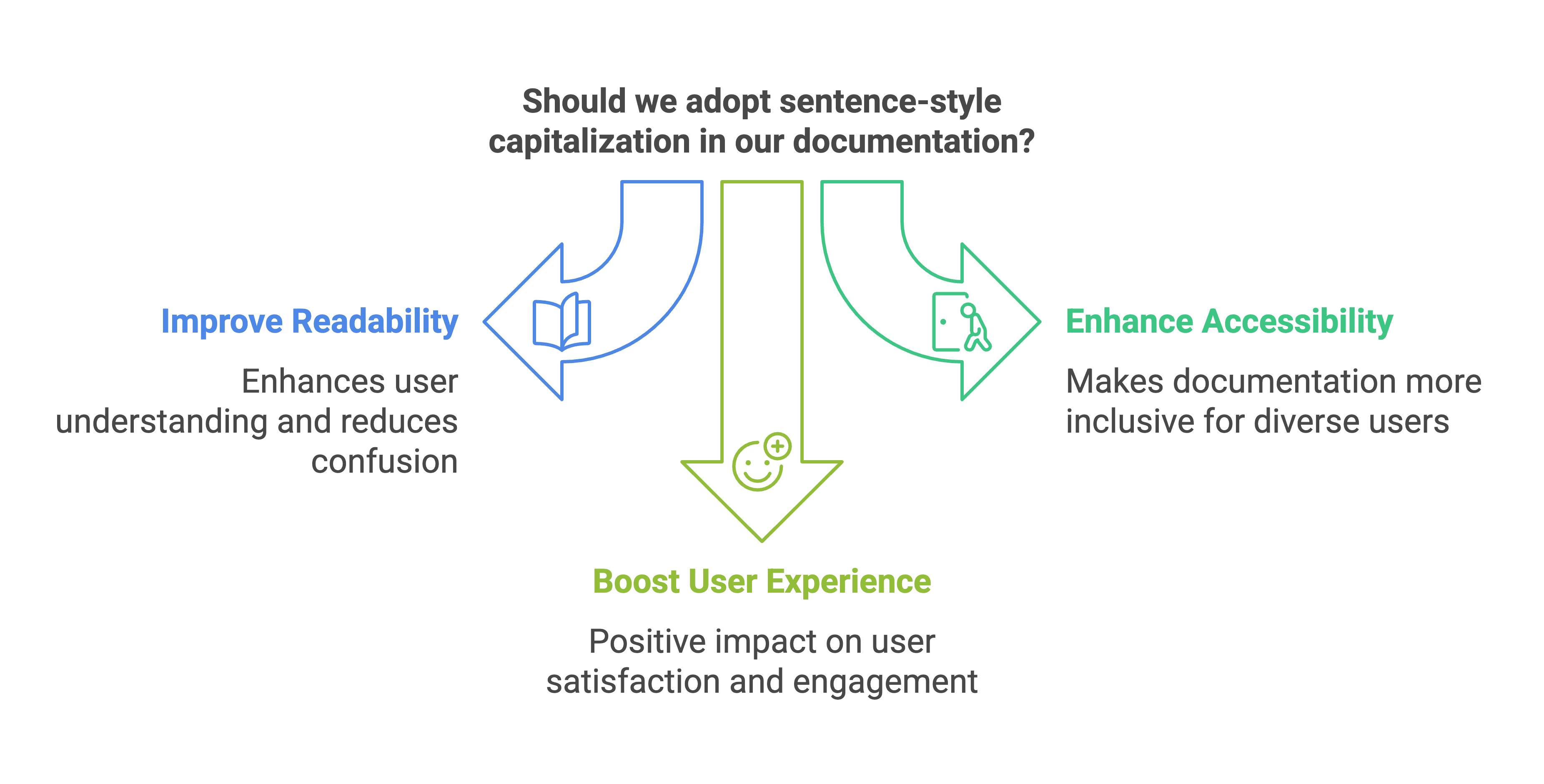
Why sentence-style capitalization matters for better documentation
Did you know that 65% of users struggle with poorly formatted documentation? Sentence-style capitalization improves readability, accessibility, and user experience. Learn why top companies like Microsoft and Google recommend it—and discover tools to enforce it effortlessly.